
De Quervain's Tenosynovitis Treatment Adelaide
Pain and swelling at the base of your thumb that makes gripping, pinching or lifting feel impossible? De Quervain's tenosynovitis is a common but often misunderstood condition that can significantly affect everyday tasks. Our experienced team can help you reduce pain, restore movement and get back to doing what matters.
Acute Wry Neck Treatment Adelaide | Sudden Neck Pain Physio St Marys
De Quervain's Tenosynovitis Treatment in Adelaide
What Is De Quervain's Tenosynovitis?
De Quervain's tenosynovitis is a painful condition affecting two tendons that run along the thumb side of the wrist — the abductor pollicis longus and extensor pollicis brevis. These tendons pass through a narrow tunnel (the first dorsal compartment) at the wrist, and when this tunnel becomes inflamed or thickened, movement of the thumb and wrist becomes painful and restricted.
The condition is named after Swiss surgeon Fritz de Quervain, who first described it in 1895. It is sometimes called "washerwoman's sprain" or "mother's wrist" — reflecting how commonly it develops in people performing repetitive gripping, pinching or twisting motions with the hand.
De Quervain's tenosynovitis is particularly common in new parents — frequently triggered by the repeated lifting of infants using a thumbs-up grip — and in those whose work or hobbies involve repetitive hand and wrist movements.
What is happening in the tendon:
- The tendons that move the thumb become irritated from repetitive use or overload
- The tendon sheath surrounding them becomes inflamed and thickened
- This narrows the tunnel the tendons pass through, causing friction and pain
- Movement of the thumb and wrist pulls the tendons through the narrowed tunnel, reproducing symptoms
Common Symptoms of De Quervain's Tenosynovitis
Symptoms typically develop gradually, though they can follow a sudden increase in hand activity. You may notice:
- Pain and tenderness at the base of the thumb, on the thumb side of the wrist
- Swelling near the base of the thumb
- Pain when gripping, pinching or grasping objects
- Pain when turning the wrist, such as wringing a cloth or opening a jar
- Difficulty lifting with the thumb extended
- A catching or snapping sensation when moving the thumb
- Pain that radiates up the forearm
- Stiffness and swelling that is worse in the morning
- Tenderness when pressing directly over the tendons at the wrist
- Pain that worsens with baby-lifting, typing, scrolling or repetitive hand tasks
A key clinical test is the Finkelstein test — folding the thumb into the palm and tilting the wrist toward the little finger side. Pain with this movement strongly suggests De Quervain's tenosynovitis.
What Can Contribute to De Quervain's Tenosynovitis?
De Quervain's can develop in anyone, but certain factors make it more likely:
- Repetitive gripping, pinching or twisting motions of the hand and wrist
- New parenthood — particularly repeated lifting of infants
- Repetitive use of tools, musical instruments or sporting equipment
- Rapid increase in hand-intensive activity
- Pregnancy and the postpartum period — hormonal changes affect tendon tissue
- Inflammatory conditions such as rheumatoid arthritis
- Direct trauma to the thumb or wrist
- Age 30 to 50 years
- Female sex — women are significantly more likely to be affected, particularly during and after pregnancy
- Hobbies or occupations involving prolonged or repetitive wrist and thumb movements (gaming, knitting, trade work, hairdressing, cooking)
A proper assessment helps identify the factors contributing to your symptoms and guides a targeted, individualised treatment approach.
How Physiotherapy Can Help De Quervain's Tenosynovitis
Our physiotherapists take a hands-on approach from day one. Manual therapy and soft tissue techniques are a core part of how we treat De Quervain's tenosynovitis — not an optional extra. Reducing tendon irritation, improving wrist and thumb movement and addressing the tissues driving the problem are all areas where skilled hands-on treatment delivers real results.
Your treatment plan will be tailored to your specific situation, whether you are a new parent, a tradesperson, an office worker or an athlete.
Where appropriate, treatment may include:
- Soft tissue release to the forearm, wrist and thumb tendons to reduce tension and irritation in the tendon sheath
- Joint mobilisation of the wrist, thumb and forearm to restore pain-free movement
- Manual therapy to the elbow and neck where referred tension is contributing to symptoms
- Dry needling to the forearm and thumb musculature where appropriate
- Taping or splinting to offload the tendons and allow irritation to settle
- Progressive tendon loading and rehabilitation exercises
- Activity and load modification advice specific to your daily tasks
- Guidance on ergonomics, work tasks or infant-handling technique
- Education on managing flare-ups and pacing activity
- Liaison with your GP regarding corticosteroid injection if appropriate
- Post-injection rehabilitation to consolidate recovery
Many people seek help because pain is affecting their ability to care for a baby, perform their job or manage everyday tasks like cooking, dressing or driving. Hands-on treatment can bring meaningful relief quickly — and a structured plan prevents the condition from becoming chronic.
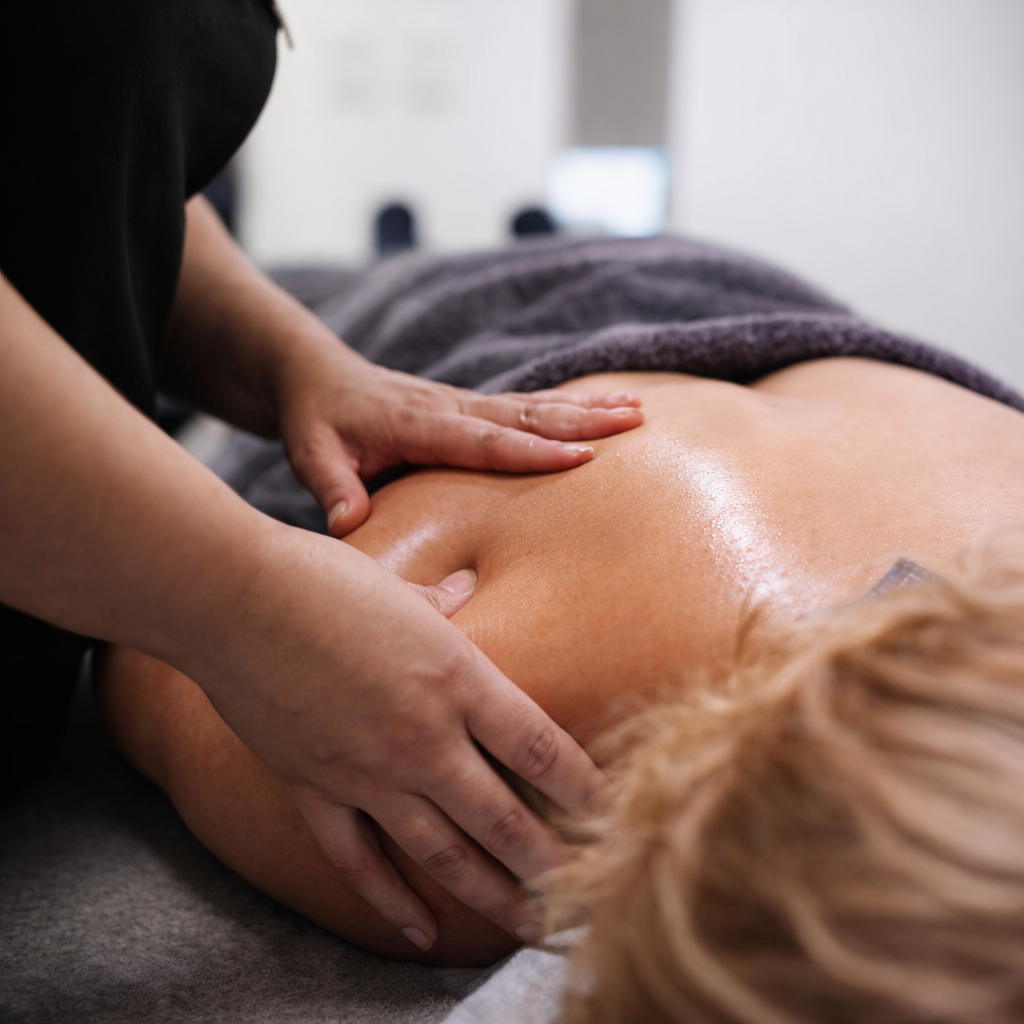
How Massage and Myotherapy Can Help
Massage and myotherapy can be highly effective alongside physiotherapy for De Quervain's tenosynovitis. Our myotherapists and massage therapists can:
- Release forearm muscle tension that places excess load on the thumb tendons
- Reduce tightness through the wrist flexors, extensors and thenar muscles
- Improve circulation and tissue recovery in the hand and forearm
- Address compensatory tension in the elbow, shoulder and neck that often develops alongside wrist pain
- Support comfort and function between physiotherapy appointments
With physiotherapy, massage and myotherapy all available under the one roof, we can coordinate your care and adjust your plan as your recovery progresses.
How Strengthening and Rehabilitation Helps
Once pain is settling, a graduated rehabilitation programme addresses the underlying load deficit and helps prevent recurrence.
Tendon and Wrist Rehabilitation
- Progressive thumb and wrist tendon loading
- Forearm and grip strength exercises
- Wrist mobility and flexibility work
- Pinch and grip endurance training
- Neuromuscular control of the thumb and hand
Return to Activity
- Gradual return to work or sport tasks
- Sport-specific hand and wrist conditioning
- Ergonomic and technique modifications
- Infant-handling strategies for new parents
- Long-term load management to prevent recurrence
- The goal is not just pain relief, but a wrist and thumb that can confidently handle the demands of your daily life, work and activities.
Do I Need a Cortisone Injection or Surgery?
Most people with De Quervain's tenosynovitis recover well with physiotherapy alone. In some cases, additional interventions may be considered.
Corticosteroid injection may be recommended by your GP or specialist if symptoms are severe or not responding adequately to physiotherapy. Injections can be effective at reducing inflammation in the tendon sheath, and are often most beneficial when combined with a physiotherapy rehabilitation programme.
Surgery is rarely required and is generally only considered when symptoms persist despite adequate conservative management including physiotherapy and injection. The procedure involves releasing the first dorsal compartment to give the tendons more room to glide. Recovery with post-surgical physiotherapy is usually straightforward.
Your physiotherapist can advise on whether a referral to your GP or specialist is warranted and provide supporting documentation if needed.
Why Choose Active Balance Physio & Wellness?
Experienced multidisciplinary team
Physio-led integrated care
Physio, massage, myo & rehab under one roof
Individualised treatment plans
Friendly, caring team focused on results
Convenient Adelaide location
After-hours appointments available
Frequently Asked Questions
What is De Quervain's tenosynovitis? De Quervain's tenosynovitis is a painful condition affecting two tendons on the thumb side of the wrist. The tendons and their surrounding sheath become inflamed and thickened, making thumb and wrist movement painful — particularly with gripping, pinching and lifting. It is one of the most common wrist and hand conditions seen in physiotherapy.
What does De Quervain's tenosynovitis feel like? Most people describe pain and tenderness at the base of the thumb, on the wrist side, that worsens with gripping or pinching. Some notice swelling, stiffness or a snapping sensation when moving the thumb. Pain can radiate up the forearm and is often worse first thing in the morning or after repetitive hand use.
How long does De Quervain's tenosynovitis take to heal? Many people see significant improvement within 6 to 12 weeks of appropriate physiotherapy. Longstanding or severe cases may take longer. Continuing to overload the tendons without modification tends to prolong recovery.
Is De Quervain's tenosynovitis common in new mothers? Yes — it is very common in new parents, particularly mothers. Repeatedly lifting an infant using a thumbs-up grip places high load on the tendons at the base of the thumb. Hormonal changes during pregnancy and the postpartum period also affect tendon tissue, increasing susceptibility. The condition is sometimes called "mother's wrist" for this reason.
Does De Quervain's tenosynovitis go away on its own? It can improve over time with rest and activity modification, but without addressing the underlying load and movement factors, symptoms often persist or recur. Physiotherapy helps speed recovery, reduce pain and prevent the condition from becoming chronic.
Do I need a splint for De Quervain's tenosynovitis? Splinting or taping the thumb and wrist can be helpful in the early stages to reduce tendon irritation and allow inflammation to settle. Your physiotherapist can advise on the most appropriate type of support and how long to use it, as prolonged splinting without rehabilitation is not recommended.
What is the Finkelstein test? The Finkelstein test is a clinical assessment used to diagnose De Quervain's tenosynovitis. It involves folding the thumb into the palm, wrapping the fingers around it, and tilting the wrist toward the little finger side. Pain along the thumb side of the wrist with this movement is a strong indicator of De Quervain's tenosynovitis.
Can De Quervain's tenosynovitis affect both wrists? Yes, though it most commonly affects one side. Bilateral De Quervain's can occur, particularly in new parents who are repeatedly lifting with both hands, or in people with inflammatory conditions such as rheumatoid arthritis.
Is cortisone injection necessary? Not always. Many people recover well with physiotherapy alone. A cortisone injection may be considered if symptoms are severe or not responding to conservative management. Injections tend to work best when combined with a rehabilitation programme rather than used in isolation.
When Should I Seek Further Medical Advice?
Seek medical review if you experience:
- Significant trauma to the thumb or wrist before symptoms began
- Marked swelling, bruising or deformity after an injury
- Numbness or tingling in the thumb or fingers
- Symptoms not improving with appropriate management
- Concern about an underlying inflammatory condition such as rheumatoid arthritis
- Symptoms during pregnancy that are significantly affecting function
- Worsening pain despite rest and activity modification
✅Private Health Rebates
✅Same Week Appointments
✅Experienced Team
✅Onsite Parking
Ready to Get Your Thumb and Wrist Moving Again?
De Quervain's tenosynovitis is very treatable. With the right guidance most people recover well and return fully to their daily tasks, work and activities. Book with our team today for a personalised assessment and treatment plan.