
Lower Back Pain Treatment Adelaide
Lower back pain is one of the most common reasons people visit a physiotherapist - and one of the most treatable. Whether it's a sudden sharp pain from lifting, a deep ache that's been building for months, or stiffness that makes getting out of bed difficult, our team can help you understand what's going on and get you moving comfortably again.
Acute Wry Neck Treatment Adelaide | Sudden Neck Pain Physio St Marys
Lower Back Pain Treatment in Adelaide
What Is Lower Back Pain?
Lower back pain refers to pain, stiffness or discomfort anywhere in the lumbar spine — the region between the bottom of your ribcage and the top of your buttocks. It is one of the leading causes of disability worldwide and affects around 80% of people at some point in their lives.
The good news is that the vast majority of lower back pain responds very well to physiotherapy. Understanding what's causing your pain is the first step to treating it effectively.
Types of Lower Back Pain
Lower back pain isn't one single condition — it can come from several different structures and present in very different ways.
- Acute lower back pain comes on suddenly, often after a specific movement like lifting, bending or twisting. It can feel sharp, severe and alarming — but most acute episodes settle significantly within a few weeks with the right management.
- Chronic lower back pain persists for more than three months. It may have started with an acute episode that never fully resolved, or developed gradually over time. Chronic pain often involves changes in how the nervous system processes pain signals, which is why it needs a different approach to acute pain.
- Non-specific lower back pain — the most common type — has no single identifiable structural cause. It involves a combination of muscle, joint, disc and nervous system factors that all contribute to symptoms.
- Specific lower back pain has a clearly identifiable cause — such as a disc herniation, nerve compression, fractures or serious pathology. This represents a smaller proportion of cases but needs careful assessment and management.
Common Causes of Lower Back Pain
Lower back pain is almost always multifactorial — meaning several things are contributing at once. Common drivers include:
- Muscle and ligament strain from sudden movements, heavy lifting or awkward postures
- Disc injury — including disc bulges or herniations that can irritate nearby nerves
- Joint dysfunction — stiffness or irritation in the facet joints of the lumbar spine
- Poor load management — doing too much too quickly, or sustained postures that overload the spine
- Muscle weakness or imbalance — particularly in the deep core, glutes and hip stabilisers
- Prolonged sitting or desk work — sustained postures that increase load on spinal structures
- Stress, poor sleep and psychological factors — which are strongly linked to pain sensitivity and recovery outcomes
- Degenerative changes — wear and tear in discs and joints that is a normal part of ageing and often not the cause of pain despite how it looks on a scan
Symptoms
Lower back pain can present in many ways depending on the cause:
- A dull, persistent ache in the lower back
- Sharp or stabbing pain with certain movements
- Stiffness that is worst in the morning or after sitting for long periods
- Pain that refers into the buttocks or thighs
- Muscle spasm or tightness through the lower back and hips
- Pain that improves with gentle movement and worsens with prolonged rest
In some cases, pain, numbness or tingling that radiates down one or both legs — which may indicate nerve involvement
How We Treat Lower Back Pain at Active Balance
When you come in with lower back pain, we start with a thorough assessment to understand what's driving your symptoms — not just where it hurts, but why it's there and what's maintaining it. This includes your movement patterns, strength, lifestyle, work demands and pain history.
Treatment is always tailored to you. It may include:
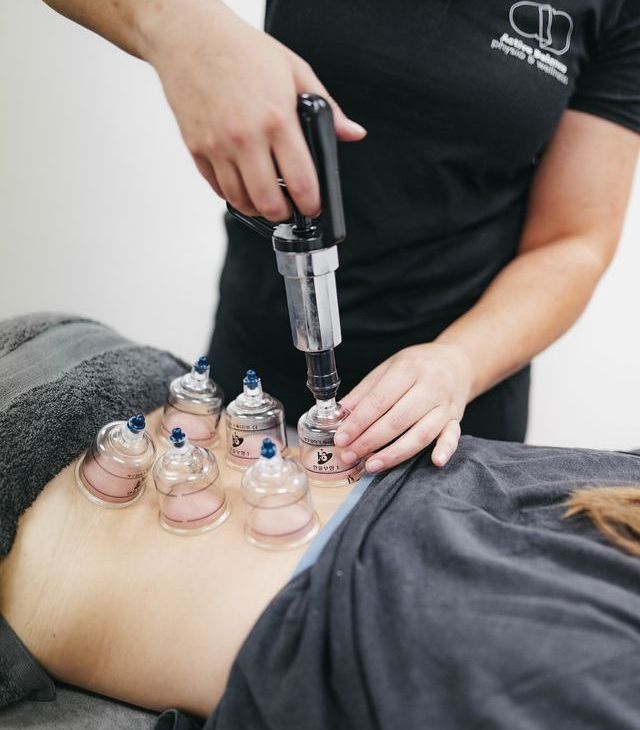
- Hands-on treatment — joint mobilisation and manipulation to restore movement and reduce pain, soft tissue therapy and trigger point release for tight muscles, dry needling and myofascial cupping for persistent muscular contributors.
- Exercise and rehabilitation — targeted strengthening of the deep core, glutes and hip stabilisers, progressive loading to build the spine's capacity to handle the demands of your daily life and sport, and movement retraining to address any compensatory patterns that have developed.
- Load management — helping you understand what activities to continue, modify or temporarily avoid, and how to gradually build back to full activity without flare-ups.
- Education — understanding your pain is one of the most powerful tools in recovery. We'll explain what's happening, what the research says about your condition, and give you practical strategies to manage symptoms and reduce the risk of recurrence.
- Lifestyle advice — sleep position, workplace ergonomics, activity modification and stress management all play a role in lower back pain recovery and we'll address these as part of your plan.
When to Seek Urgent Medical Attention 🚩
While most lower back pain is not serious, some symptoms warrant prompt medical assessment. Seek urgent attention if you experience:
- Loss of bladder or bowel control
- Numbness or tingling in the groin or inner thighs
- Severe pain that is constant and not relieved by any position
- Lower back pain following significant trauma
- Unexplained weight loss alongside back pain
- Back pain accompanied by fever
These may indicate a more serious underlying condition requiring immediate investigation.
How Remedial Massage & Myotherapy Can Help
Massage and myotherapy may assist by:
- Reducing muscular tension
- Easing protective spasm
- Improving lower back and hip mobility
- Supporting comfort between physio sessions
- Helping recurrent tightness patterns
These services often complement physiotherapy well.
How Exercise Rehabilitation Can Help
Once acute pain settles, exercise rehab may include:
- Gentle spine mobility drills
- Muscle strengthening
- Postural endurance work
- Pelvic control
- Thoracic mobility exercises
- Strategies to reduce repeat flare-ups
Why Choose Active Balance Physio & Wellness?
Experienced multidisciplinary team
Physio-led integrated care
Physio, massage, myo & rehab under one roof
Individualised treatment plans
Friendly, caring team focused on results
Convenient Adelaide location
After-hours appointments available
FAQs
- Do I need a scan for my lower back pain? In most cases, no. Research consistently shows that scans like MRI and X-ray frequently show changes — disc bulges, degeneration, osteophytes — that are present in people with no pain at all. These findings are often a normal part of ageing and don't necessarily explain your symptoms. Your physiotherapist will assess whether imaging is warranted based on your clinical presentation.
- How long will it take to recover from lower back pain? This depends on how long symptoms have been present, the underlying cause and how consistently you follow your rehabilitation plan. Many acute episodes improve significantly within 2-6 weeks. Chronic lower back pain typically requires a longer, more structured rehabilitation process — but meaningful improvement is achievable for the vast majority of people.
- Can I keep exercising with lower back pain? In most cases, yes — and staying active is generally better for recovery than rest. The key is choosing appropriate activities and managing load carefully. Your physiotherapist will guide you on what's safe to continue and what to modify.
- Should I use heat or ice for lower back pain? Heat is generally more helpful for lower back pain — it relaxes muscles, increases circulation and reduces stiffness. Ice can be useful in the first 24-48 hours after an acute injury. Your physiotherapist will advise based on your specific presentation.
- Is lower back pain just part of getting older? No. While degenerative changes in the spine are a normal part of ageing, pain is not inevitable and does not have to be permanent. Many people in their 60s, 70s and beyond live completely pain-free. With the right management, most people can return to full activity regardless of age.
- Do I need a referral to see a physiotherapist for lower back pain? No referral is needed for a private physiotherapy appointment at Active Balance. You can book directly online or call us on (08) 7123 4148.
✅Private Health Rebates
✅Same Week Appointments
✅Experienced Team
✅Onsite Parking