
Sever's Disease Treatment Adelaide
Heel pain stopping your child from playing sport or keeping up at school? Our experienced team helps young athletes get back on their feet with a personalised, age-appropriate treatment plan.
Acute Wry Neck Treatment Adelaide | Sudden Neck Pain Physio St Marys
Sever's disease Treatment in Adelaide
What Is Sever's Disease?
Sever's disease — also known as calcaneal apophysitis — is the most common cause of heel pain in children and adolescents. Despite the name, it is not an actual disease. It is a temporary but painful condition affecting the growth plate at the back of the heel bone (the calcaneal apophysis).
During periods of rapid growth, the heel bone can grow faster than the surrounding muscles and tendons. This creates tension at the point where the Achilles tendon attaches to the growth plate, leading to pain and inflammation. It most commonly affects active children between the ages of 8 and 15, and often coincides with a growth spurt.
The good news is that Sever's disease is self-limiting — it resolves once the growth plate closes, typically by the mid-teenage years. The right management helps your child stay as active as possible in the meantime.
Who does it affect?
- Most common between ages 8 and 15
- Girls are often affected between 8 and 12; boys between 10 and 15
- Active children in running and jumping sports (football, netball, basketball, athletics)
- Can affect one or both heels at the same time
Common Symptoms of Sever's Disease
Symptoms typically flare with physical activity and ease with rest. You or your child may notice:
- Heel pain during or after sport or activity
- Pain when the sides of the heel are squeezed
- Limping during or after exercise
- Stiffness in the heel first thing in the morning
- Pain when running, jumping or changing direction
- Walking on tiptoes to avoid putting pressure on the heel
- Pain that eases with rest but returns with activity
- Swelling or warmth around the heel (less common)
- Reluctance to participate in sport or physical education
- Pain in one or both heels
A key clinical sign is the "squeeze test" — pain when the sides of the heel are gently compressed. This helps confirm Sever's disease and distinguish it from other causes of heel pain in children.
What Can Contribute to Sever's Disease?
Sever's disease can occur in any active child, but certain factors increase the likelihood:
- Rapid growth spurts — bones grow faster than muscles and tendons can adapt
- Participation in sports involving repetitive running, jumping or direction changes
- Tight calf muscles and Achilles tendon, placing greater load on the growth plate
- Sudden increase in training volume or intensity
- Training on hard surfaces
- Poor footwear support or worn-out shoes
- Foot posture factors such as flat feet or high arches
- Higher body weight, which increases load through the heel
- Playing in cleated footwear (football boots, soccer boots)
A proper assessment helps identify the factors contributing to your child's symptoms and guides a targeted, personalised treatment plan.
How Physiotherapy Can Help Sever's Disease
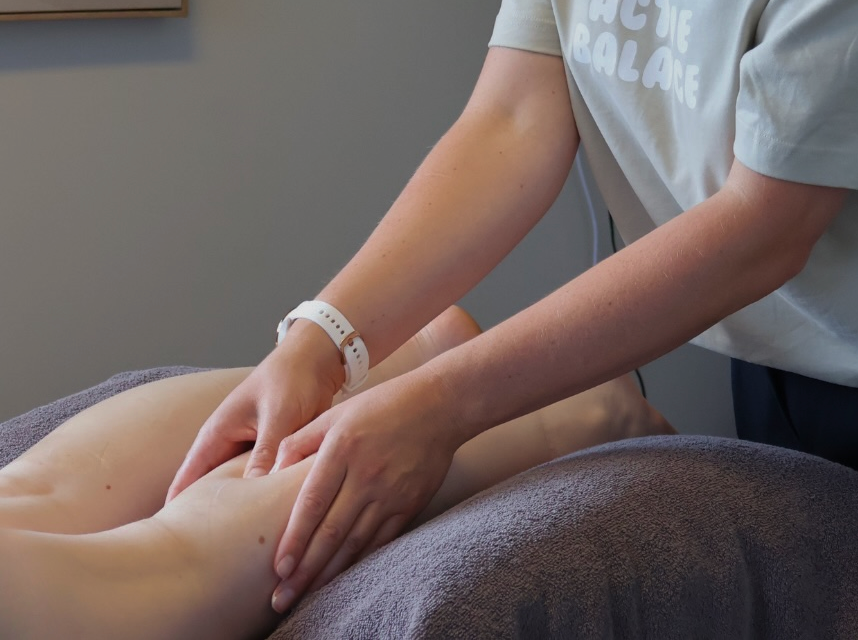
Our physiotherapists take a hands-on approach from the very first appointment. Rather than simply handing your child a sheet of exercises, we use manual therapy and soft tissue techniques as a core part of treatment — working directly on the structures contributing to your child's heel pain.
The goal is not always complete rest — it is finding the right balance of hands-on treatment, activity modification and targeted exercise so your child can continue participating while their heel settles.
Treatment is tailored to your child's age, sport, growth stage and current symptom irritability. Where appropriate, treatment may include:
- Manual therapy to the ankle, foot and lower leg to restore joint movement and reduce stiffness
- Soft tissue release to the calf, Achilles tendon and plantar fascia to ease tension on the growth plate
- Dry needling to tight calf and lower leg muscles where appropriate
- Taping to offload the heel and support the Achilles during activity
- Heel raise inserts or orthotic prescription if foot posture is a contributing factor
- Footwear assessment and recommendations
- A progressive home exercise programme
- Clear guidance for parents and coaches about what to expect
- Ongoing monitoring and plan adjustment as your child grows
Many families seek help because their child is limping, avoiding sport or waking with morning heel stiffness. Hands-on treatment can make a meaningful difference to comfort and recovery speed — often from the very first session.
How Strengthening and Rehabilitation Helps
As pain settles, a structured rehabilitation programme helps address the underlying contributors and reduce the risk of recurrence during future growth spurts.
Lower Limb Rehabilitation
- Progressive calf and Achilles stretching
- Eccentric calf strengthening exercises
- Foot and ankle mobility work
- Single-leg balance and lower limb control
- Graduated heel raise and loading progressions
Return to Sport
- Gradual return-to-running programme
- Sport-specific drills and loading
- Jumping and landing mechanics guidance
- Ongoing monitoring through growth periods
- Clear communication with coaches, parents and schools
The goal is not just pain relief, but a stronger, more resilient lower limb that can handle the demands of sport as your child continues to grow.
When Should I Seek Further Medical Advice?
Seek medical review if your child experiences:
- Significant trauma or injury before heel pain began
- Sudden severe pain that is different from their usual symptoms
- Increasing swelling, redness or warmth around the heel
- Fever or feeling generally unwell alongside heel pain
- Heel pain in a child younger than 7 or older than 16
- No improvement with appropriate management
- Pain at rest or severe pain waking them at night
- Visible deformity of the foot or heel
Why Choose Active Balance Physio & Wellness?
Experienced multidisciplinary team
Physio-led integrated care
Physio, massage, myo & rehab under one roof
Individualised treatment plans
Friendly, caring team focused on results
Convenient Adelaide location
After-hours appointments available
Frequently Asked Questions
- What is Sever's disease and is it serious? Sever's disease is a temporary, painful condition affecting the heel growth plate in children and teenagers. Despite the name, it is not a disease in the traditional sense and does not cause lasting damage to the heel. It resolves on its own once the growth plate closes, usually by the mid-teenage years. Without proper management, however, it can significantly impact a child's activity levels and quality of life.
- Does my child have to stop playing sport? Not necessarily. Many children can continue modified activity during treatment. Complete rest is rarely required and is often counterproductive. A physiotherapist can help find the right balance — reducing load enough to allow recovery while keeping your child as active as possible. A short period of reduced activity may be recommended during a significant flare-up, but the aim is always to maintain participation where possible.
- How long does Sever's disease last? Sever's disease typically lasts from a few months up to one to two years, depending on your child's growth stage and how well symptoms are managed. It can recur during subsequent growth spurts. The condition resolves permanently once the growth plate fuses — usually between ages 13 and 16.
- Do heel raises or orthotics help? Heel raises can be very effective for reducing tension on the Achilles tendon and offloading the growth plate. Simple over-the-counter heel raises are often a helpful first step. Orthotics may be recommended if foot posture is a contributing factor. Your physiotherapist can advise on what is most appropriate for your child.
- Can both heels be affected at the same time? Yes — bilateral (both heels) Sever's disease is quite common. If your child is experiencing pain in both heels, this actually makes Sever's disease more likely, as it reflects a growth-related cause rather than a specific injury to one side.
- Is Sever's disease common in girls? Absolutely. While Sever's disease is often associated with boys, it is very common in active girls as well. Girls tend to experience their growth spurt earlier, so symptoms may appear around 8 to 12 years — compared to boys, who tend to be affected between 10 and 15.
- Does Sever's disease need an X-ray or scan? In most cases, Sever's disease is diagnosed clinically — based on age, activity history, symptoms and the squeeze test — without the need for imaging. An X-ray or ultrasound may be requested to rule out other causes if the diagnosis is unclear or symptoms are not improving as expected.
- Can massage help? Massage and myotherapy may help by reducing calf and lower leg tension, improving muscle flexibility and easing discomfort between physiotherapy sessions. These services can complement physiotherapy well as part of a broader treatment approach.
- What is the difference between Sever's disease and plantar fasciitis? Plantar fasciitis causes pain at the bottom of the heel and is more common in adults. Sever's disease causes pain at the back of the heel where the Achilles tendon attaches to the growth plate, and occurs in children during growth. Different conditions, different causes, different management.
✅Private Health Rebates
✅Same Week Appointments
✅Experienced Team
✅Onsite Parking
Get Your Child Back to the Sport They Love! Book with our team today and start a personalised plan to reduce heel pain, stay active and support your child through their growth.