
Meniscus Tear Treatment Adelaide
Knee Pain Physiotherapy St Marys
A meniscus tear can stop you in your tracks — whether it happens on the field, at the gym or simply from an awkward twist. The good news is that many meniscus tears respond very well to physiotherapy, and surgery is not always necessary or inevitable. Our experienced team will assess your knee, identify what is driving your symptoms and build a plan to get you back to full activity.
meniscus tear Treatment in Adelaide
What Is a Meniscus Tear?
The meniscus is a C-shaped piece of cartilage that sits between the thigh bone (femur) and shin bone (tibia) in the knee. Each knee has two — a medial meniscus on the inside and a lateral meniscus on the outside. They act as shock absorbers, distribute load across the joint and contribute to knee stability.
A meniscus tear occurs when this cartilage is damaged — either through a sudden traumatic event such as a twisting injury, or gradually through repetitive load and age-related degeneration. Tears are classified by their shape and location, which influences both symptoms and the response to conservative management versus surgery.
Research consistently shows that many people with meniscus tears on imaging — including significant tears — recover fully with physiotherapy and do not require surgical intervention. The clinical picture matters far more than the scan alone.
Who Does It Affect?
- Footballers, basketballers, netballers and rugby players — from pivoting, twisting and contact
- Runners and cyclists — particularly with a sudden increase in load
- Gym goers and weightlifters — deep squatting under load
- Skiers and court sport athletes — from high-speed direction changes
- Older adults — degenerative meniscus tears are common from the mid-40s onward and often occur without a specific injury
- Anyone with a history of knee injuries or prior cartilage damage
Common Symptoms of a Meniscus Tear
- Pain along the inner or outer joint line of the knee
- Swelling that develops over hours to days following injury
- Stiffness and difficulty fully straightening or bending the knee
- A clicking, catching or locking sensation within the joint
- Pain with squatting, twisting, pivoting or going up and down stairs
- Giving way or a sense of instability under load
- Tenderness when pressing directly on the joint line
A key clinical sign is joint line tenderness — pain at the exact level of the joint when pressed — which alongside specific movement tests helps distinguish a meniscus tear from other knee pathology. True locking of the knee, where it cannot be fully straightened, warrants prompt assessment.
What Can Contribute to a Meniscus Tear?
Meniscus injuries rarely occur in complete isolation. Understanding the contributors helps address the cause and reduce the risk of recurrence:
What most people don't realise is loading their meniscus:
- Weak quadriceps and hamstrings — the muscles around the knee absorb force before it reaches the joint. When they are weak or fatigued, the meniscus carries a disproportionate share of load
- Poor single-leg stability — inadequate hip and knee control during landing, cutting and pivoting places abnormal rotational stress on the meniscus
- Stiff ankle or hip — restricted mobility above or below the knee forces the joint to compensate, increasing rotational load through the cartilage
- Sudden load spikes — returning from a break, pre-season ramp-ups or a sudden increase in training volume without adequate preparation
- Degenerative changes — in older adults, the meniscus becomes less resilient over time and can tear with minimal force; underlying osteoarthritis often coexists and needs to be factored into management
- Previous knee injuries — a history of ACL injury, prior meniscus damage or joint instability increases vulnerability significantly
How Physiotherapy Can Help a Meniscus Tear
Assessment
Our assessment covers the specific location and nature of your tear, joint swelling and range of motion, neuromuscular control, strength deficits and functional movement patterns. We also consider your sport, occupation and activity goals — because what full recovery looks like for a footballer is different from what it looks like for an office worker.
Hands-On Treatment
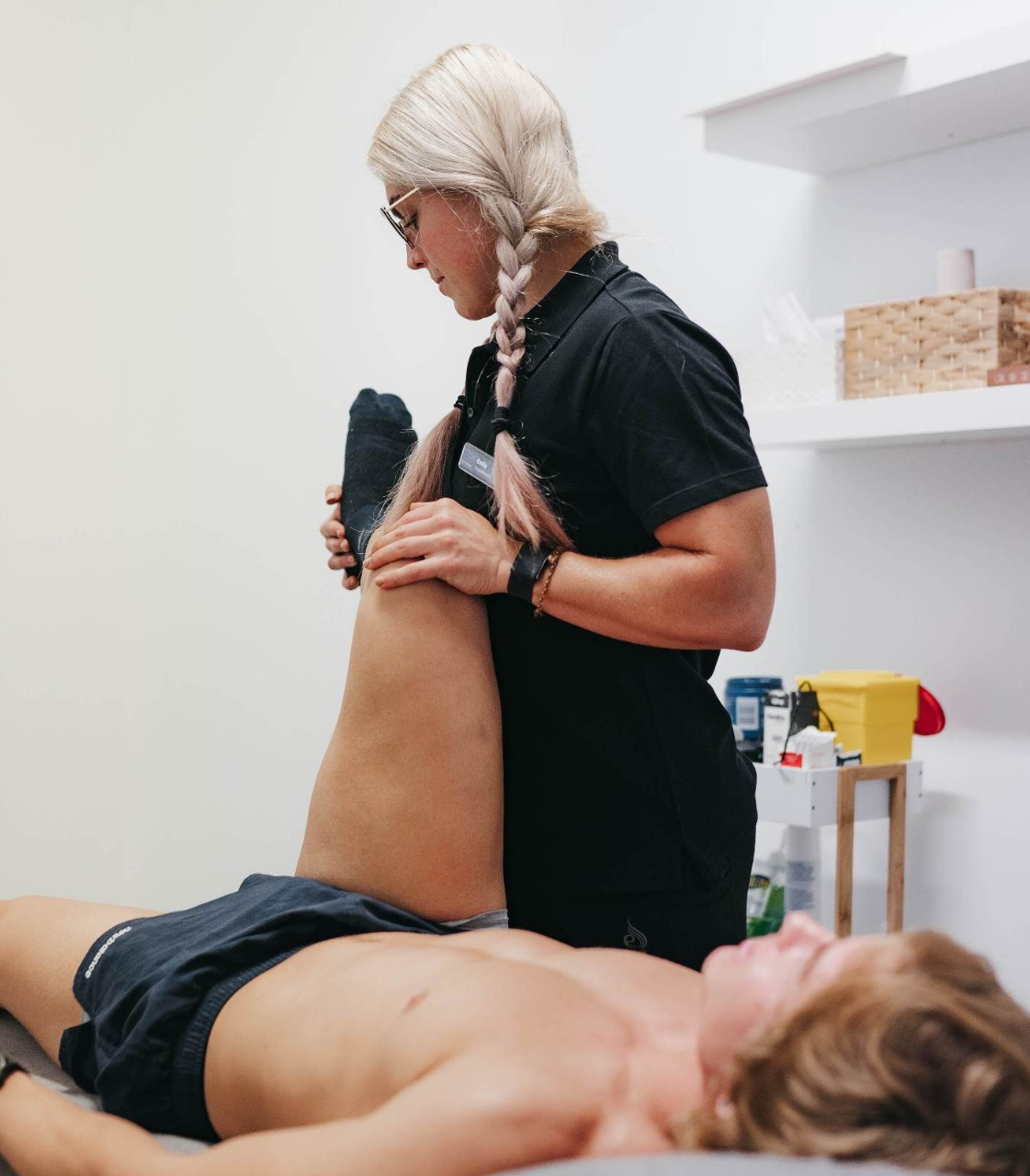
Hands-on treatment begins from your first appointment and is central to reducing pain, restoring movement and preparing the knee for progressive loading. This may include:
- Joint mobilisation — restoring full knee flexion and extension and reducing joint stiffness without aggravating the torn tissue
- Myofascial release and cupping — addressing the quadriceps, hamstrings, IT band and calf tightness that develops rapidly after a knee injury and perpetuates restriction and pain
- Trigger point therapy — releasing referral patterns in the quadriceps and hip muscles that contribute to knee pain and altered movement
- Dry needling and electro dry needling — reducing pain sensitivity and muscle inhibition around the knee joint, particularly in the vastus medialis and hip stabilisers that switch off after injury
Load Management
Managing load is critical — particularly in the early and middle phases of recovery. Too much compressive or rotational load through the knee too soon can aggravate the tear and delay healing; too little leads to muscle wasting and joint stiffness. We will modify your training, sport and daily activities in a way that protects the knee while keeping you as fit and active as possible throughout recovery.
Rehabilitation Exercises
Rehabilitation is carefully phased to match tissue healing and avoid provocative loading too early:
- Early phase — swelling and pain management, restoring full range of motion, quadriceps activation and straight-leg strengthening
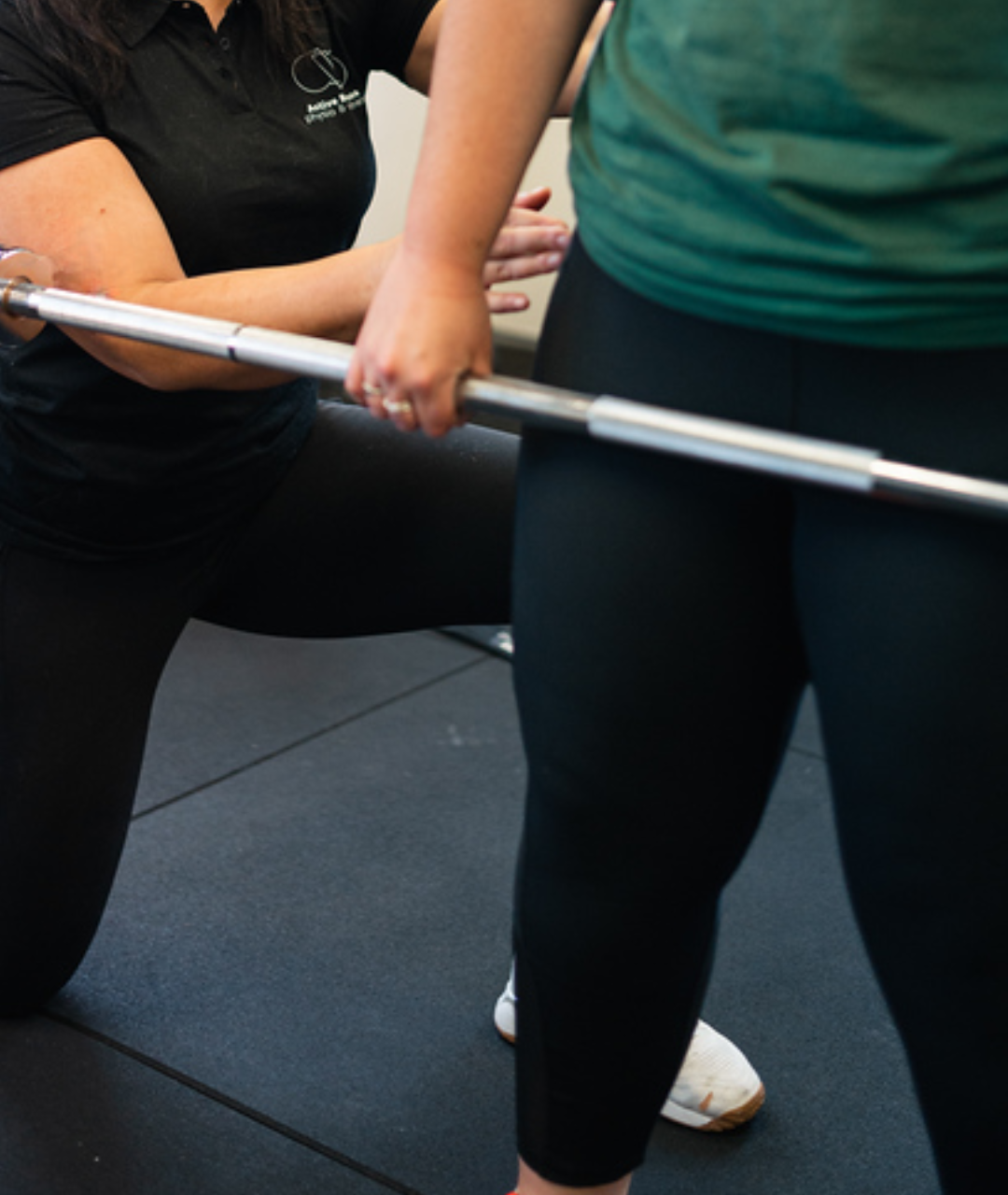
- Middle phase — progressive closed-chain strengthening (squats, lunges, step work), single-leg stability, hip and glute loading
- Late phase — plyometrics, change of direction, sport-specific loading and return-to-sport criteria testing

Other Services That Can Help
At Active Balance, your physiotherapist, myotherapist and exercise rehabilitation clinician work together under one roof — coordinating your care so every session builds on the last.
- Massage Therapy reduces the protective muscle guarding that develops around an injured knee, improving circulation, reducing tightness in the quadriceps and hamstrings and supporting recovery between sessions.
- Myotherapy provides targeted deep tissue work, dry needling and cupping to the muscles that inhibit or overload around a meniscus injury — addressing the soft tissue contributors that physio alone may not have time to fully resolve.
- Supervised Exercise & Rehab Gym allows your strength and conditioning programme to be progressed under direct clinician supervision — with real-time feedback on technique and load. Essential for anyone returning to contact sport, heavy training or a physical occupation.
- Recovery Services — including compression therapy and heat and cold modalities — help manage swelling, reduce post-exercise soreness and support tissue recovery between rehabilitation sessions.
Return to Activity & Prognosis
Prognosis for meniscus tears managed conservatively is good — particularly for degenerative tears and partial thickness injuries. Many people return to full sport and activity within 6–12 weeks with appropriate rehabilitation. More complex or traumatic tears, or those requiring surgical management, typically require a longer rehabilitation timeline of 3–6 months post-operatively.
Return to sport is guided by clear functional milestones — not just time — including strength symmetry, single-leg stability and sport-specific movement testing. We will give you honest timelines and guide you through each stage.
When To Seek Further Medical Advice
Seek prompt medical review if you experience:
- True locking of the knee — inability to fully straighten the joint
- Significant swelling developing rapidly within the first hour of injury
- Complete inability to weight bear following the injury
- Giving way that is frequent, progressive or associated with significant instability
- No improvement with appropriate physiotherapy management
- Symptoms suggesting ACL involvement — a pop at the time of injury, immediate swelling and instability
These features may indicate a more complex injury requiring orthopaedic assessment and imaging before physiotherapy proceeds.
Could It Be Something Else?
Knee pain is notoriously complex and several conditions can mimic a meniscus tear:
- Medial collateral ligament (MCL) sprain — inner knee pain following a valgus force; often occurs alongside meniscus injury
- Patellofemoral pain syndrome — anterior knee pain with squatting and stairs, typically without joint line tenderness
- ACL injury — significant instability and swelling following a pivoting or hyperextension mechanism
- Osteoarthritis — diffuse joint pain and stiffness, particularly in older adults; frequently coexists with degenerative meniscus tears
- Bursitis or fat pad impingement — localised pain around the kneecap or joint line that can closely resemble meniscal symptoms
A thorough physiotherapy assessment, including specific orthopaedic tests, can differentiate between these conditions and guide the right treatment approach.
Do I Need a Scan?
Not always. Many meniscus tears are diagnosed clinically through assessment and orthopaedic testing without requiring an MRI. Imaging may be recommended if the diagnosis is unclear, symptoms are not progressing as expected, or surgical consultation is being considered. We will advise when a scan is warranted and communicate with your GP to arrange it.
Why Choose Active Balance Physio & Wellness?
Physio-led integrated care
Physio, massage, myo & rehab under one roof
Individualised treatment plans
Friendly, caring team focused on results
Convenient Adelaide location
After-hours appointments available
Frequently Asked Questions
- Do all meniscus tears need surgery? No — and research increasingly supports conservative management as the first-line approach for most tears, particularly degenerative tears in middle-aged adults. Studies show that physiotherapy produces outcomes equivalent to surgery for many meniscus presentations. Surgery is typically reserved for mechanical symptoms such as true locking, or for tears that do not respond to thorough conservative management.
- How long does a meniscus tear take to heal? This depends on the type, location and severity of the tear. The outer third of the meniscus has a blood supply and heals more reliably; the inner portion does not and relies on load management and rehabilitation rather than biological healing. Most people with uncomplicated tears return to full activity within 6–12 weeks of starting physiotherapy. Complex or surgical cases take longer.
- Can I still exercise with a meniscus tear? Yes — modified exercise is an important part of recovery, not something to avoid. The key is selecting movements that load the knee without provocative compression or rotation through the torn tissue. Your physiotherapist will prescribe a specific, progressive programme appropriate for your tear type and current symptom level.
- What is the difference between a meniscus tear and a ligament sprain? A meniscus tear involves the cartilage inside the joint and typically causes joint line tenderness, swelling and clicking or catching. A ligament sprain involves the stabilising structures around the joint and tends to cause instability and pain on specific stress tests. Both can occur simultaneously, particularly in contact or pivoting injuries — which is why a thorough assessment is important.
- Will my meniscus tear show up on an X-ray? No. Cartilage does not show on X-ray. An MRI is the appropriate imaging for a suspected meniscus tear if imaging is required. X-rays may be ordered alongside an MRI to assess for bony involvement or joint space narrowing, particularly in older adults where osteoarthritis may coexist.
- Do you treat post-surgical meniscus rehabilitation? Yes. We work with patients who have undergone meniscectomy (partial removal) or meniscus repair, providing structured post-operative rehabilitation from the early protected phase through to full return to sport or activity.
✅Private Health Rebates
✅Same Week Appointments
✅Experienced Team
✅Onsite Parking
Knee pain does not have to keep you sidelined. Book with our team today for a thorough assessment and an integrated plan to get you back to full activity — confidently and without the guesswork.