
Whiplash Physiotherapy Adelaide | Whiplash Treatment St Marys
Whiplash Treatment
Whether your whiplash injury was caused by a car accident, sporting incident or sudden jolt, our experienced team can help reduce pain, restore movement and guide your recovery with a personalised treatment plan.
Whiplash Treatment in Adelaide
What Is Whiplash?
Whiplash is a neck injury caused by a sudden acceleration-deceleration force, often from motor vehicle accidents, contact sport or unexpected impact. This rapid movement can irritate joints, muscles, ligaments and nerves around the neck. Symptoms can begin immediately or develop over the following hours or days.
Common Whiplash Symptoms:
You may notice:
- Neck pain or stiffness
- Difficulty turning your head
- Headaches
- Shoulder or upper back pain
- Muscle spasm or tightness
- Dizziness
- Jaw discomfort
- Pins and needles into the arm
- Fatigue
- Reduced confidence driving or moving
In some cases, whiplash symptoms can be ongoing, causing pain & dysfunction for an extended period.
What can cause ongoing symptoms after whiplash?
Ongoing whiplash symptoms may be influenced by:
- Joint irritation in the neck
- Muscle guarding and tension
- Reduced neck strength/endurance
- Altered movement patterns
- Head position control changes
- Nervous system sensitivity
- Stress after the incident
- Reduced confidence with movement
A proper assessment helps identify the key drivers of your symptoms.
Possible Conditions Associated With Whiplash
Symptoms after whiplash can involve one or more issues, including:
- Cervical joint sprain
- Muscle strain
- Cervicogenic headaches
- Temporomandibular (jaw) irritation
- Dizziness related to neck dysfunction
- Nerve irritation
- Upper back strain
An assessment can help determine the most likely contributors and best treatment pathway.
How Physiotherapy Can Help Whiplash
Our physiotherapists assess movement, strength, joint function, balance and symptom triggers to create a tailored recovery plan. We have a strong focus on hands on treatment for symptom relief, combined with individualised rehab & strengthening programs to help improve symptoms long term.
Treatments may include:
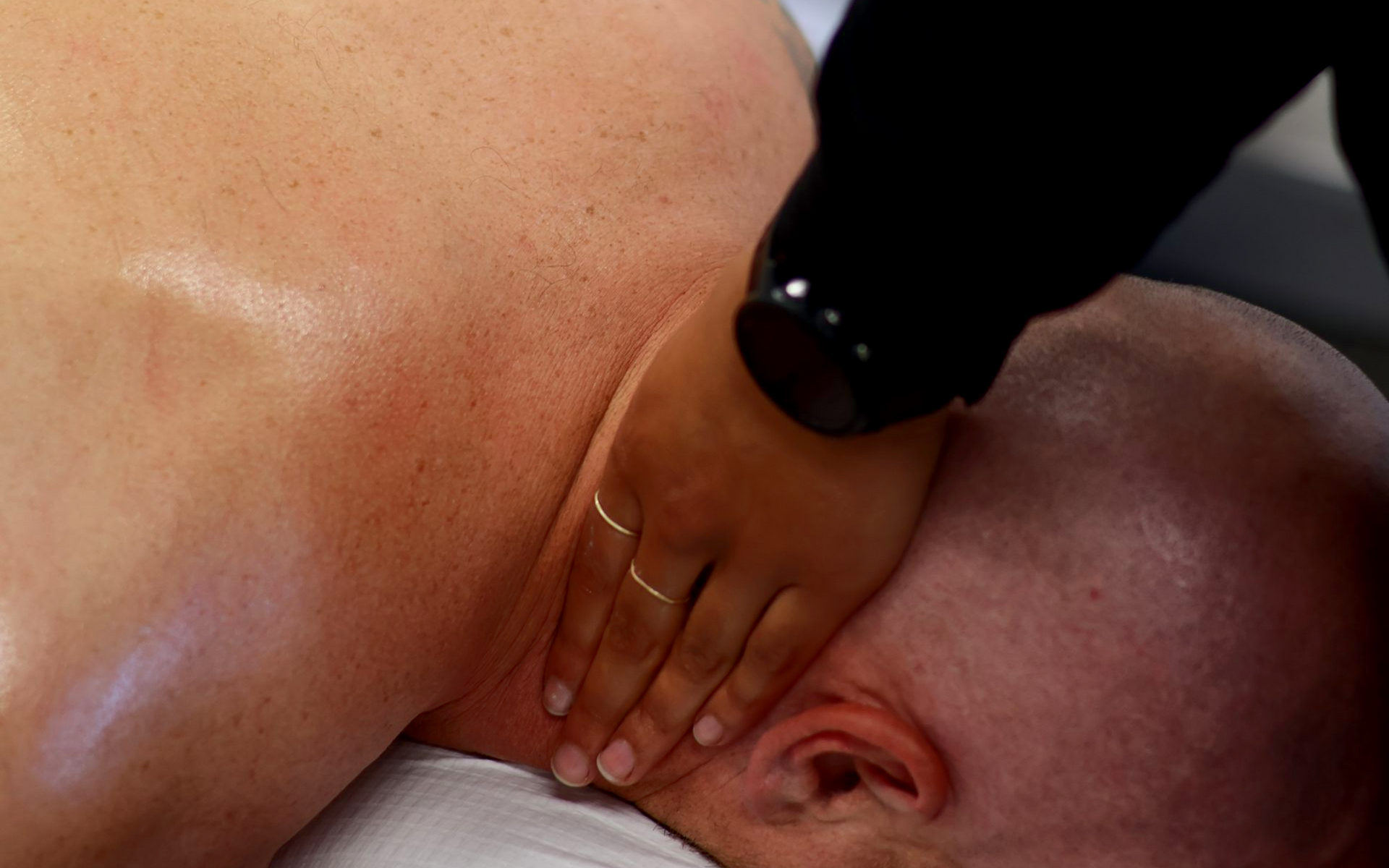
- Hands-on treatment such as dry needling, soft tissue release & gentle mobilisation
- Mobility restoration
- Pain management strategies
- Deep neck flexor retraining
- Postural and ergonomic advice
- Graded return to driving, work or sport
- Headache management strategies
- Confidence-building movement progressions
Advanced Assessment & Rehab Technology
Laser Headlamp Retraining
For selected whiplash cases, we may use laser headlamp training to assess and retrain head and neck movement accuracy.
This can help with:
- Joint position sense
- Head movement control
- Neck coordination
- Confidence turning the head
- Dizziness related to neck movement
It can be particularly useful when symptoms persist despite rest alone.
How Remedial Massage & Myotherapy Can Help
Massage and myotherapy may assist by:
- Reducing muscle tension in the neck and shoulders
- Improving upper back mobility
- Easing protective muscle guarding
- Supporting comfort between physio sessions
- Helping you move more freely
These therapies often work well alongside physiotherapy and exercise rehab.
How Exercise Rehabilitation Can Help
Clinical rehab is often important for lasting improvement after whiplash.
Programs may include:
- Neck strength and endurance training
- Shoulder blade control work
- Balance exercises
- Eye-head coordination drills
- Return to gym or sport progressions
- Mobility and confidence rebuilding
Why Choose Active Balance Physio & Wellness?
Experienced multidisciplinary team
Physio-led integrated care
Physio, massage, myo & rehab under one roof
Individualised treatment plans
Friendly, caring team focused on results
Convenient Adelaide location
After-hours appointments available
Frequently Asked Questions
How soon should I get whiplash assessed?
Early assessment is often helpful to guide safe movement and reduce the risk of ongoing stiffness or fear of movement.
Do I need scans?
Not always. Many whiplash injuries improve with conservative care, but imaging may be recommended depending on symptoms and mechanism of injury.
Can massage help whiplash?
Massage may help reduce surrounding muscle tension and improve comfort as part of a broader treatment plan.
How long does recovery take?
Recovery varies depending on severity, previous history and symptom drivers. Many people improve well with guided management.
When Should I Seek Urgent Medical Attention?
Seek prompt medical review if you experience:
- Significant trauma
- Loss of consciousness
- Severe or worsening neurological symptoms
- Progressive arm weakness
- Difficulty walking
- Severe headache unlike usual symptoms
- Visual disturbance
- Symptoms not improving
Ready to Start Recovering From Whiplash?
Book with our friendly team today and begin a personalised recovery plan, focused on pain relief, movement and confidence.