
Ankylosing Spondylitis Treatment Adelaide
Back Pain Physiotherapy St Marys
Do you have lower back pain and stiffness that’s worst in the morning or after rest, and eases once you get moving? Pain that wakes you in the second half of the night?
These can be signs of ankylosing spondylitis, an inflammatory condition of the spine. Living with a long-term condition can be tiring and frustrating, but staying active is one of the best ways to manage it. At Active Balance, we work alongside your GP and rheumatologist with tailored exercise, hands-on treatment and practical strategies to help you stay mobile, strong and doing what you love.
Ankylosing Spondylitis Treatment in Adelaide
What Is Ankylosing Spondylitis?
Ankylosing spondylitis (AS) is a long-term inflammatory condition that mainly affects the spine and the sacroiliac joints, where the spine meets the pelvis. It’s part of a group of conditions now often called axial spondyloarthritis.
In AS, the immune system causes inflammation in the joints and where ligaments and tendons attach to bone. Over time, this can lead to stiffness and reduced spinal movement. In some people, parts of the spine may gradually fuse together.
Unlike mechanical back pain, AS pain usually improves with movement and gets worse with rest. That’s why exercise is such an important part of managing it.
AS is diagnosed and medically managed by a GP and rheumatologist. Physiotherapy plays a key role alongside medical care.
Who Does Ankylosing Spondylitis Affect?
- Symptoms usually start in late teens to mid-40s, and rarely start after 45
- It’s diagnosed more often in men, but women are affected too and are often diagnosed later
- People with a family history of AS or related conditions
- People who carry the HLA-B27 gene, which is linked with AS (though many people with this gene never develop it)
- People with related conditions, such as psoriasis, inflammatory bowel disease or uveitis (eye inflammation)
Contributing Factors & Causes
The exact cause of AS isn’t fully understood, but it’s thought to involve a mix of:
- Genetics, particularly the HLA-B27 gene
- Immune system factors that drive inflammation
- Family history
Smoking is linked with more severe symptoms and faster progression.
- AS is
not caused by injury, posture, your job or the sport you play.
Symptoms & Signs
- Lower back and buttock pain that has come on gradually over months
- Morning stiffness lasting more than 30 minutes
- Pain and stiffness that improve with exercise and get worse with rest
- Night pain, often waking you in the second half of the night
- Buttock pain that may alternate between sides
- Pain at tendon attachments, such as the heel, Achilles or bottom of the foot
- Fatigue
- Reduced flexibility in the spine and difficulty taking a deep breath, in more advanced cases
- Red, painful eyes (uveitis) in some people

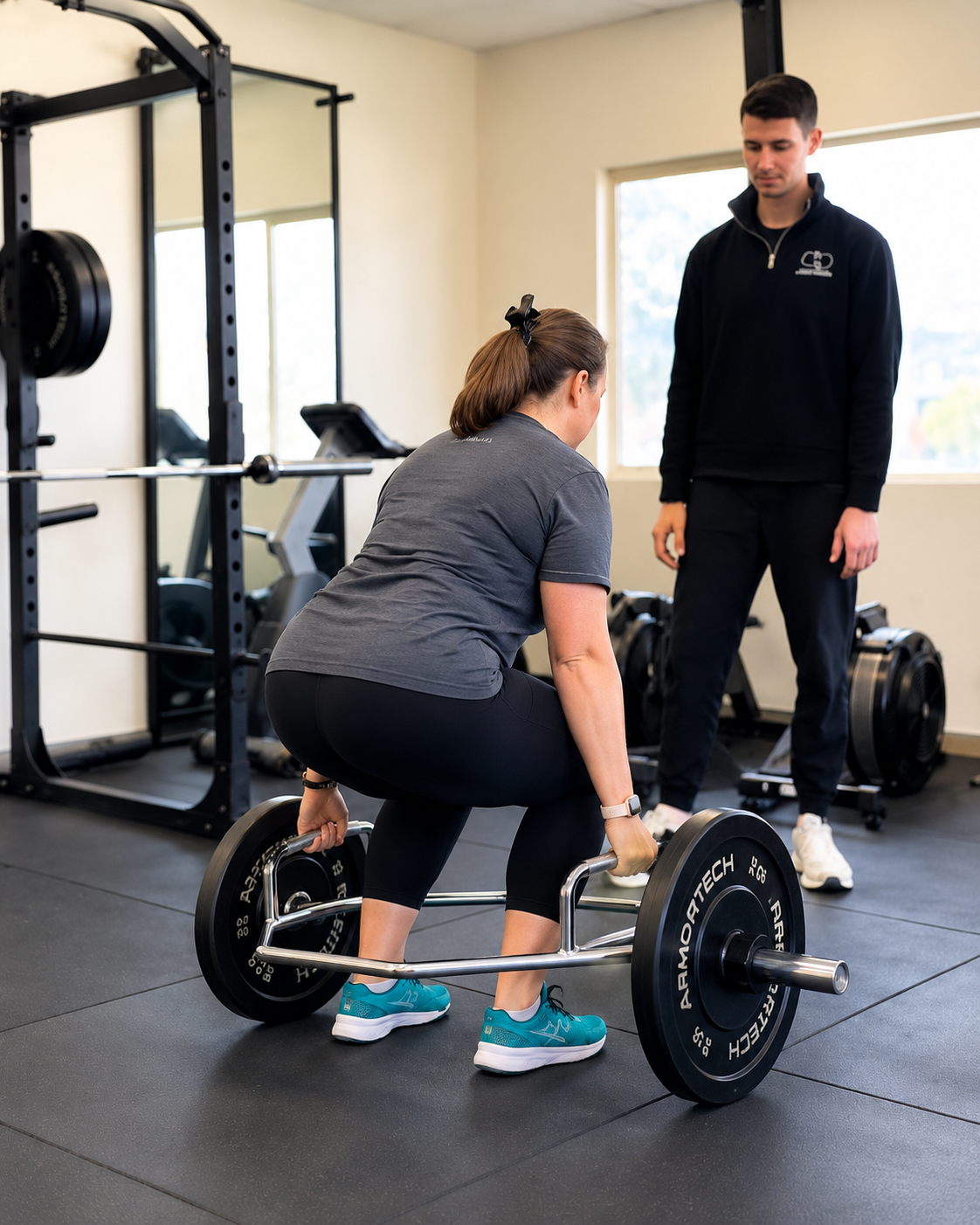
How Physiotherapy Can Help Manage Ankylosing Spondylitis
Exercise and physiotherapy are recommended as a core part of managing AS, alongside medical treatment from your rheumatologist.
- Education and support help you understand your condition and how to manage flare-ups, so you feel more in control day to day.
- Mobility exercises help maintain movement through the spine, hips and shoulders. Keeping your spine moving through its full range is especially important with AS.
- Strengthening and posture work target the muscles that support an upright posture, particularly the back extensors, hips and core.
- Breathing and chest exercises help maintain rib cage movement and lung capacity.
- Hands-on treatment, including gentle mobilisation and soft tissue work, can ease stiffness and pain. Treatment is always tailored to your presentation and stage of the condition.
- A long-term home program is essential. AS responds best to regular movement, so we’ll help you build a realistic routine that fits into your life. Our group classes, such as Clinical Mat Pilates and Move Well For Life, can also be a great way to stay consistent.
How Massage & Myotherapy Can Help
Ongoing stiffness and altered posture can lead to muscle tension through the back, neck, hips and shoulders. Remedial massage and myotherapy can ease this tension, improve comfort, and support your exercise program.
Our massage and myotherapy team works closely with your physio so treatment is suited to your condition and supports your overall care.

When to Seek Further Medical Advice
If you think you might have AS, see your GP. Early diagnosis and medical treatment can make a big difference to long-term outcomes.
Seek urgent medical care if you have:
- A painful, red eye, blurred vision or sensitivity to light, which may be uveitis and needs prompt treatment
- Sudden new back or neck pain after a fall or minor knock, as a stiff spine is more prone to fracture
- Numbness, tingling or weakness in the arms or legs, or changes to bladder or bowel control
See your GP or rheumatologist if you have:
- Back pain and stiffness that fit the pattern above and haven’t been investigated
- A flare-up that isn’t settling
- New joint swelling, or worsening fatigue or symptoms despite treatment
If anything in your assessment suggests further investigation is needed, we’ll refer you to your GP or rheumatologist.
Prognosis
AS is a lifelong condition, but many people live full, active lives with the right management.
- Medical treatments have improved significantly and can be very effective at controlling inflammation
- Regular exercise is one of the most important factors in maintaining mobility, posture and function
- Symptoms often come and go, with flare-ups and calmer periods
- Early diagnosis and consistent management give the best long-term outcome
Why Choose Active Balance Physio & Wellness?
Physio-led integrated care
Physio, massage, myo & rehab under one roof
Individualised treatment plans
Friendly, caring team focused on results
Convenient Adelaide location
After-hours appointments available
Frequently Asked Questions
Q: Did I do something to cause this?
No. AS is an inflammatory condition linked to genetics and the immune system. It isn’t caused by your posture, your job, an injury or anything you did. What you do now can make a real difference, though, and staying active is one of the most helpful things for managing it.
Q: Should I rest when my back is sore?
Usually not. Unlike many types of back pain, AS tends to feel better with movement and worse with rest. During a flare-up, you may need to adjust your exercise, but gentle movement is generally better than staying still.
Q: What kind of exercise is best?
A mix of mobility, strengthening, posture and breathing exercises is ideal. Swimming and water-based exercise are often very comfortable. Your physio will build a program that suits your symptoms, goals and lifestyle.
Q: How is AS diagnosed?
Diagnosis is made by a GP and rheumatologist, usually based on your symptoms, blood tests and imaging such as X-rays or MRI. If your physio suspects AS, we’ll let you know and recommend you see your GP.
Q: Can I still play sport?
Many people with AS keep playing sport and staying active. Your physio and rheumatologist can help you choose activities that suit you, and modify them during flare-ups if needed.
✅Private Health Rebates
✅Same Week Appointments
✅Experienced Team
✅Onsite Parking
Ready to Take Control of Your Back Pain?
Living with ankylosing spondylitis doesn’t mean giving up the things you love. With the right support and a tailored exercise program, you can stay moving, stay strong, and feel more in control.