
Baker’s Cyst Treatment Adelaide
Knee Pain Physiotherapy St Marys
Noticed a lump or swelling behind your knee? A tight, full feeling when you bend or straighten your leg, or an ache after you’ve been on your feet?
This could be a Baker’s cyst. They’re common and usually not serious, but they can be uncomfortable and limit how freely you move. In adults, a Baker’s cyst is rarely a problem on its own. It’s usually a sign of something else going on inside the knee. That’s why at Active Balance we focus on finding and treating the underlying cause, not just the lump.
baker's cyst Treatment in Adelaide
What Is A Baker's Cyst?
A Baker’s cyst, also called a popliteal cyst, is a fluid-filled swelling at the back of the knee.
Your knee joint naturally produces a small amount of fluid to keep it moving smoothly. When the knee is irritated or injured, it can produce extra fluid. This fluid can push into a small pouch at the back of the knee and form a cyst.
In adults, a Baker’s cyst is usually not a diagnosis on its own. It’s a symptom of something else happening inside the knee joint. Think of it as a warning light: the cyst is what you notice, but the real issue is whatever is causing the extra fluid.
Common causes include:
- Knee osteoarthritis
- A meniscus (cartilage) tear
- Inflammatory arthritis, such as rheumatoid arthritis
- Other knee injuries or conditions that cause ongoing swelling
This is why treating the cyst alone, for example by draining it, often doesn’t fix the problem. If the underlying cause isn’t addressed, the fluid tends to build up again.
In children, Baker’s cysts are different. They can occur without any underlying knee problem and often go away on their own.
Who Do Baker's Cysts Affect?
- Adults over 40, especially those with knee osteoarthritis
- People with a previous or current meniscus tear or knee injury
- People with inflammatory arthritis
- Active people with ongoing knee swelling
- Children, often between ages 4 and 7, usually without an underlying knee problem
Contributing Factors & Causes
- Knee osteoarthritis
- Meniscus or cartilage tears
- Inflammatory arthritis
- Ongoing knee swelling from injury or overuse
- Activities that repeatedly load an already irritated knee, such as deep squatting, kneeling or high-impact exercise
Is It a Baker’s Cyst or Something Else?
Swelling and pain behind the knee or in the calf can have other causes, so an accurate assessment is important.
- Deep vein thrombosis (DVT) is a blood clot in the leg that causes calf pain, swelling, warmth and redness. A Baker’s cyst that leaks or ruptures can cause very similar symptoms. Because a DVT needs urgent medical treatment, any sudden calf swelling should be checked by a doctor straight away.
- Hamstring or calf injury can cause pain behind the knee, but it usually follows a specific strain or activity and doesn’t produce a fluid-filled lump.
- Meniscus tear can cause pain, swelling and catching in the knee, and is often the underlying cause of a Baker’s cyst.
- Other lumps behind the knee, such as a popliteal artery aneurysm (a lump that pulses) or, rarely, other soft tissue lumps, need medical review.
Symptoms & Signs
- A soft lump or swelling behind the knee, often more noticeable when standing
- A tight or full feeling behind the knee
- Pain or aching behind the knee, especially after activity
- Stiffness or difficulty fully bending or straightening the knee
- Symptoms of the underlying knee problem, such as joint pain, swelling or clicking
If the cyst leaks or ruptures, you may notice sudden pain, swelling and bruising in the calf.
Some Baker’s cysts cause no symptoms at all and are found during a scan for something else.

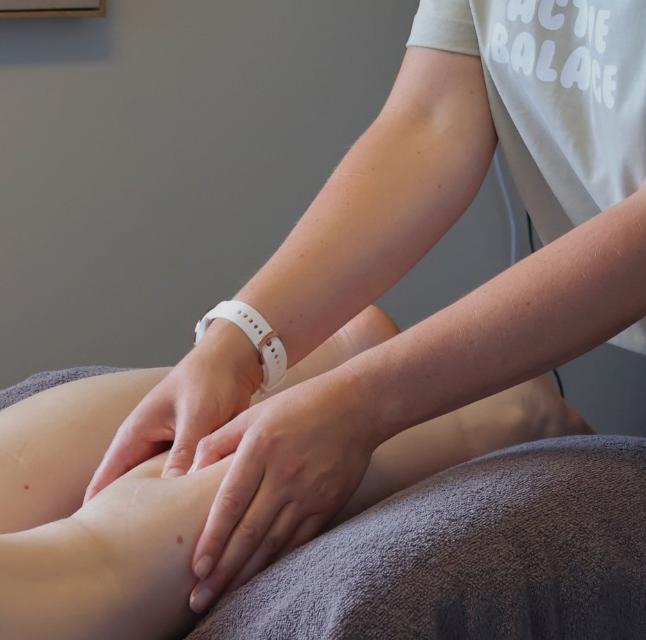
How Physiotherapy Can Help Manage A Baker’s Cyst
Because a Baker’s cyst is usually a symptom rather than the main problem, physiotherapy focuses on finding and treating what’s going on inside the knee, while easing the symptoms from the cyst.
- A thorough assessment helps identify the underlying cause and rule out conditions that need medical attention.
- Swelling management may include compression, elevation, ice and activity modification to help reduce fluid in the knee.
- Hands-on treatment, including soft tissue work and joint mobilisation, can ease pain and stiffness and help restore knee movement.
- Range of motion exercises help you gradually get back full bending and straightening of the knee.
- Strengthening of the quads, hamstrings, calves and hips improves knee support and reduces load on the joint. This is especially helpful when the cause is osteoarthritis or a meniscus problem.
- Load management helps you stay active while avoiding the activities that flare your knee, then gradually build back up.
How Massage & Myotherapy Can Help
A Baker’s cyst and an irritated knee can lead to tension in the hamstrings, calves and quads. Remedial massage and myotherapy around these areas can ease tightness and improve comfort. Treatment is gentle around the cyst itself.
Our massage and myotherapy team works with your physio so your care is coordinated and supports your rehab.

When to Seek Further Medical Advice
Most Baker’s cysts are not serious. However, seek medical advice promptly if you have:
- Sudden calf pain, swelling, warmth or redness, which needs urgent review to rule out a blood clot (DVT)
- A lump behind the knee that pulses
- Fever or feeling unwell with a hot, swollen knee, which may indicate infection
- Significant knee locking, giving way, or being unable to straighten the knee
- A lump that keeps growing, feels hard, or is very painful
- No improvement after six to eight weeks of consistent treatment
If any of these apply, we can identify them at your assessment and refer you to your GP, for imaging or to a specialist.
Prognosis
The outlook for a Baker’s cyst is generally good.
- The cyst usually depends on the underlying knee problem. When that’s well managed, the cyst often settles or shrinks too
- Cysts can come and go, especially with osteoarthritis or if the knee flares up
- In children, cysts often resolve on their own
- For persistent or troublesome cysts, a doctor may consider aspiration (draining the fluid) or an injection. Surgery is rarely needed
Why Choose Active Balance Physio & Wellness?
Physio-led integrated care
Physio, massage, myo & rehab under one roof
Individualised treatment plans
Friendly, caring team focused on results
Convenient Adelaide location
After-hours appointments available
Frequently Asked Questions
Q: If I have a Baker’s cyst, does that mean something else is wrong with my knee?
In adults, usually yes. A Baker’s cyst forms when the knee produces extra fluid, which is generally a response to something else, such as arthritis or a cartilage tear. That’s why a thorough knee assessment is so important. Treating the underlying cause gives you the best chance of the cyst settling and staying away.
Q: Did I do something to cause this?
Not really. A Baker’s cyst is your knee’s response to extra fluid, often from arthritis or a cartilage injury. It isn’t caused by anything you did wrong. Some activities, like deep squatting or kneeling, may make it more noticeable, so we’ll help you manage these while your knee settles.
Q: Is a Baker’s cyst dangerous?
Usually not. It’s generally a harmless swelling. The main thing to watch for is sudden calf pain and swelling, which should be checked by a doctor to rule out a blood clot.
Q: Will it go away on its own?
Sometimes, especially in children. In adults, the cyst usually depends on what’s happening inside the knee. If the underlying problem is managed, the cyst often shrinks. If it isn’t, the cyst may persist or keep coming back.
Q: Do I need a scan?
An ultrasound is often used to confirm a Baker’s cyst and rule out other causes. An MRI may be recommended if a meniscus tear or other knee problem is suspected.
Q: Can I keep exercising?
In most cases, yes. Low-impact exercise such as cycling, swimming and walking is often well tolerated. Your physio will help you work out what’s best for your knee and build back up from there.
✅Private Health Rebates
✅Same Week Appointments
✅Experienced Team
✅Onsite Parking
Ready to Get Your Knee Pain Sorted?
Don’t let a Baker’s cyst slow you down. By looking beyond the lump and treating what’s really going on inside your knee, most people get back to moving comfortably.