
ITB Syndrome Treatment Adelaide
Knee Pain Physiotherapy St Marys
Sharp or burning pain on the outside of your knee when you run or cycle? Pain that kicks in at the same point every run and won’t let you push through?
ITB syndrome is one of the most common causes of outer knee pain in runners and cyclists. It can be frustrating, especially when it keeps cutting your sessions short. At Active Balance, we use hands-on treatment to settle your pain, then a targeted strength and load program to address the cause and get you back to doing what you love.
itb syndrome Treatment in Adelaide
What Is ITB Syndrome?
Iliotibial band syndrome, or ITBS, causes pain on the outer side of the knee. The iliotibial band (ITB) is a thick band of connective tissue that runs down the outside of your thigh from the hip to just below the knee.
As your knee bends and straightens, the ITB puts pressure on the tissue beneath it, near the outer knee. When repetitive load is more than that area can tolerate, it becomes irritated and painful.
The ITB itself doesn’t “tighten” in a way you can stretch or roll out, despite what many people think. The problem is usually about load: how much you’re doing, and how well your hips and legs control movement while you do it. That’s why strengthening and load management work better than foam rolling alone.
Who Does ITB Syndrome Affect?
ITB syndrome is most common in people doing repetitive knee bending, including:
- Runners, especially distance runners and those increasing their mileage
- Cyclists, particularly after a change in bike setup or a jump in riding volume
- Hikers and trail runners, especially on long downhill sections
- Rowers and field sport athletes
- People who’ve recently started running or returned after a break
Contributing Factors & Causes
- A sudden increase in training volume, especially running distance
- Hip and glute weakness, which reduces control of the knee and thigh
- Running downhill or on cambered roads
- Running form, such as a narrow stride or crossover gait
- Bike fit issues, such as saddle height or cleat position
- Not enough recovery between sessions
- Worn-out footwear or a recent change in shoes
Symptoms & Signs
- Sharp, burning or aching pain on the outside of the knee
- Pain that starts at a predictable point in a run or ride, then gets worse until you have to stop
- Pain that’s worse running downhill or going down stairs
- Tenderness on the outer knee when pressed
- A clicking or snapping feeling on the outer knee in some cases
- Pain that settles with rest but returns as soon as you start again

How Physiotherapy Can Help Manage ITB Syndrome
Physiotherapy is a well-supported first-line treatment for ITB syndrome. Most people respond well to a structured approach.
- Hands-on treatment, including soft tissue work, joint mobilisation and dry needling, helps reduce pain early so you can move and load more comfortably.
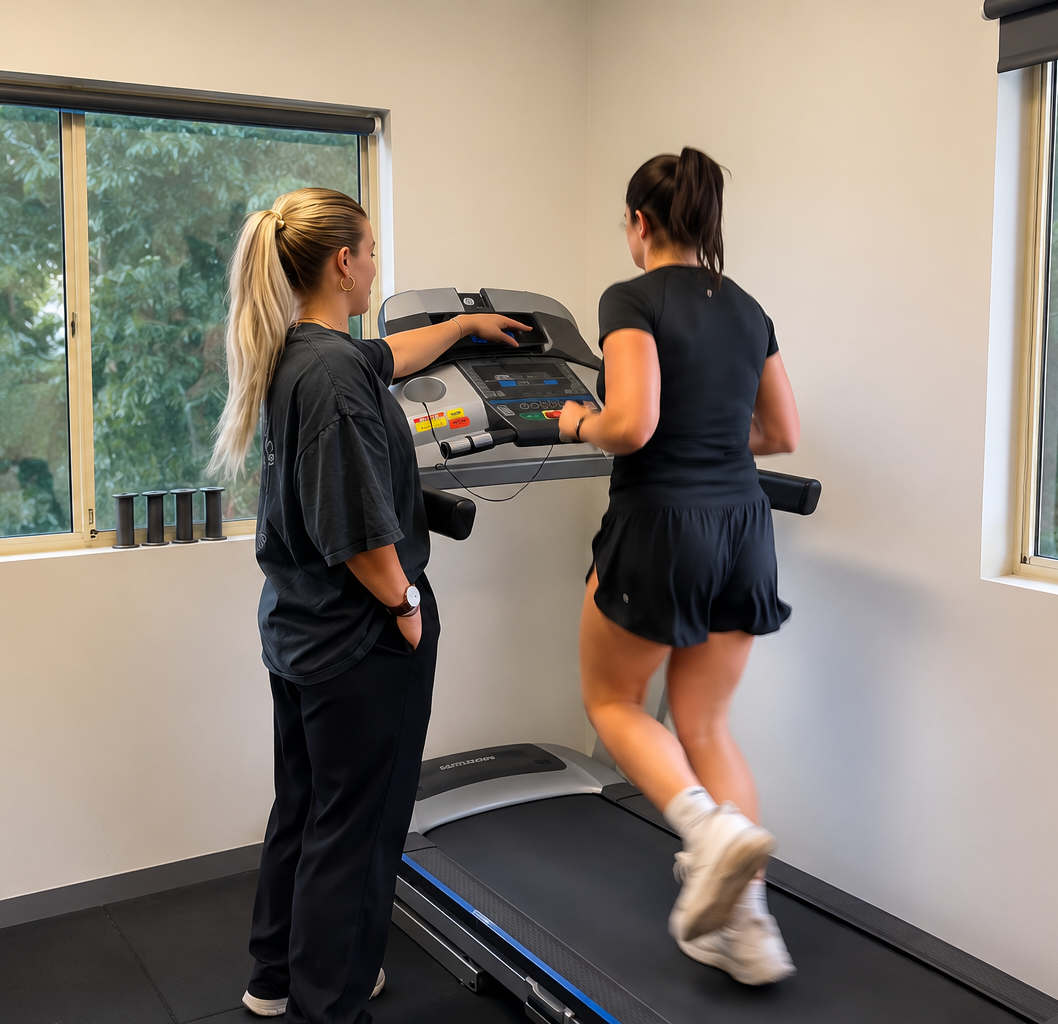
- A running assessment can help identify any issues with strength, mobility and running technique that may be contributing
- Load management starts straight away. Rather than stopping completely, we’ll help you modify your running or riding (distance, terrain, intensity) to settle symptoms while keeping you as active as possible.
- Strengthening is the key to long-term recovery. We focus on the hips, glutes and legs to improve control of the knee and reduce the load on the outer knee, progressing from basic exercises to more sport-specific work.
- Movement and technique retraining looks at the factors driving the problem, such as your running gait, stride and cadence, or your bike setup. Small changes here can make a big difference.
- A graded return to running or riding means we build you back up gradually, starting with flat and shorter sessions, so the pain doesn’t return when you increase load.
How Massage & Myotherapy Can Help
People with ITB syndrome often develop tension in the glutes, tensor fasciae latae (TFL), quads and hip muscles. Remedial massage and myotherapy targeting these areas can ease discomfort and help you move more freely.
Trigger point therapy, cupping and soft tissue work to the hip and thigh muscles can complement your rehab program. Our massage and myotherapy team works with your physio so your treatment is coordinated at every stage.

When to Seek Further Medical Advice
ITB syndrome is not a serious condition and usually responds well to physiotherapy. However, see a doctor or get a prompt assessment if you have:
- Significant swelling, locking, or the knee giving way, which may point to an injury inside the joint, such as a meniscus or ligament problem
- Pain after a fall, twist or direct knock to the knee
- Constant pain that doesn’t change with activity or rest
- Night pain, fever, or feeling generally unwell
- No improvement after six to eight weeks of consistent, well-structured treatment
If any of these apply, we can often pick them up at your first assessment and refer you to the right health professional.
Prognosis
Most people with ITB syndrome recover well with the right management.
- Mild or early cases: often a few weeks of modified training and strengthening
- More persistent cases: around six to twelve weeks, sometimes longer if symptoms have been present for a while
The most common reason for symptoms coming back is returning to full training too quickly, before hip strength and running mechanics have been addressed.
Why Choose Active Balance Physio & Wellness?
Physio-led integrated care
Physio, massage, myo & rehab under one roof
Individualised treatment plans
Friendly, caring team focused on results
Convenient Adelaide location
After-hours appointments available
Frequently Asked Questions
Q: Should I stop running completely?
Usually not. Complete rest may settle the pain, but it often comes back once you return. It’s better to reduce and modify your training to a level that doesn’t flare symptoms while you build strength. Your physio will help you work out what that looks like.
Q: Will foam rolling fix my ITB?
Foam rolling may give short-term relief, but it won’t lengthen or “release” the ITB. It can be part of your routine, but strength work and load management are what bring lasting results.
Q: How is ITB syndrome different from runner’s knee?
ITB syndrome causes pain on the outside of the knee. Runner’s knee, or patellofemoral pain, causes pain around or behind the kneecap. They need different treatment approaches, so an accurate assessment matters.
Q: Do I need a scan?
Usually not. ITB syndrome is diagnosed clinically from your history and a physical assessment. Imaging may be recommended if something else is suspected or you aren’t improving as expected.
Q: Will a cortisone injection help?
A cortisone injection may help in some stubborn cases, but it’s not usually the first option. If used, it should be combined with a rehab program that addresses the underlying cause.
Related articles:
Why "Just Resting" an Injury Usually Isn't Enough
What's actually involved in a running assessment
✅Private Health Rebates
✅Same Week Appointments
✅Experienced Team
✅Onsite Parking
Ready to Get Your Knee Pain Sorted?
Don’t let ITB syndrome cut your runs or rides short. With the right treatment and a structured strengthening program, most people get back to full training without the pain.