
Osteitis Pubis Treatment Adelaide
Groin Pain Physiotherapy St Marys
Pain in the front of your pelvis or groin that’s worse with running, kicking or changing direction? Pain getting out of bed, rolling over, or getting in and out of the car?
Osteitis pubis is a common cause of groin pain in active people, especially in kicking and running sports. It can be stubborn and frustrating, particularly if it keeps you out of your season. At Active Balance, we start with an accurate diagnosis, then use load management and a structured strengthening program to settle your pain and get you back to sport.
Osteitis Pubis Treatment in Adelaide
What Is Osteitis Pubis?
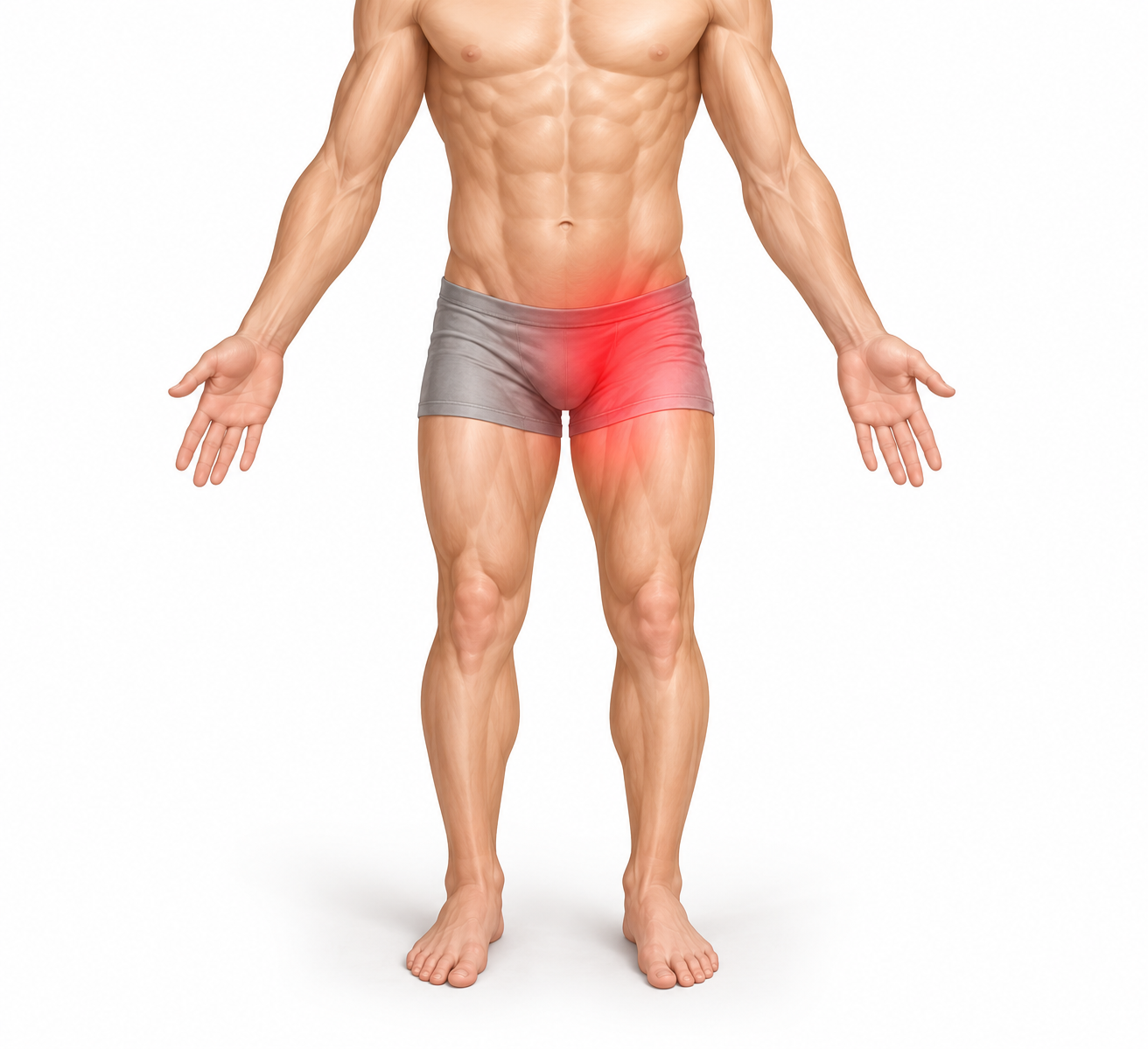
Osteitis pubis is an overload injury of the pubic symphysis, the joint at the front of the pelvis where the two pubic bones meet. It’s now often called pubic-related groin pain.
Many strong muscles attach around this area, including the adductors (inner thigh) and the abdominal muscles. When repeated forces from running, kicking and twisting are more than the bone and joint can handle, the area becomes stressed and painful. This can include irritation in the bone itself (bone stress).
Like other overload injuries, it usually develops gradually and responds best to a structured approach to rest and load, not complete rest alone.
Is It Osteitis Pubis or Something Else?
Groin pain can come from several structures, and they often overlap. Getting the diagnosis right is key, because each one is managed a bit differently. Common causes include:
- Adductor-related groin pain (including adductor tendinopathy) is the most common cause of groin pain in athletes. Pain is usually felt in the inner thigh and where the adductor tendons attach to the pubic bone, and is often worse with squeezing your knees together or kicking. It can occur alongside osteitis pubis.
- Pubic-related groin pain (osteitis pubis) is felt more centrally, over the pubic bone at the front of the pelvis. It’s often worse with running, kicking, sit-ups and turning in bed, and tends to be slower to settle.
- Inguinal-related groin pain (sometimes called a sporting hernia or inguinal disruption) is felt higher, in the lower abdomen and inguinal canal area. It’s often worse with coughing, sneezing, sit-ups or sprinting.
- Iliopsoas-related groin pain is felt deeper at the front of the hip and groin. It’s often worse with lifting the knee, sprinting and kicking.
- Hip-related groin pain, such as hip impingement (FAI) or a labral tear, causes a deep, pinching pain in the front of the hip. It may come with clicking or catching, and is often worse with deep squats or prolonged sitting.
Less common but important causes include stress fractures, referred pain from the lower back, and abdominal or urological conditions.
Who Does Osteitis Pubis Affect?
- AFL and soccer players, especially those who kick a lot
- Rugby, hockey and other sports with sprinting and changes of direction
- Runners, particularly with increased training load
- Athletes in pre-season or early season, when training volume increases quickly
- Pregnant women and new mothers, due to changes in the pelvis during pregnancy and childbirth (this is managed a little differently)
- It’s more common in men, but can affect anyone.
Contributing Factors & Causes
- A rapid increase in training load, such as pre-season or returning from a break
- Repetitive kicking, sprinting, twisting and changing direction
- Adductor (inner thigh) weakness relative to the abdominal muscles
- Reduced hip range of motion, especially rotation
- Poor core and pelvic control
- Training on hard surfaces
- Not enough recovery between sessions
- Previous groin injury
Symptoms & Signs
- Pain at the front of the pelvis, over the pubic bone
- Pain that may spread into the groin, inner thigh or lower abdomen
- Pain that’s worse with running, kicking, sprinting and changing direction
- Pain with sit-ups, getting out of bed, rolling over, or getting in and out of the car
- Pain on standing on one leg, such as putting on pants or climbing stairs
- Tenderness when pressing on the pubic bone
- Stiffness and pain the morning after activity
How Physiotherapy Can Help Manage Osteitis Pubis
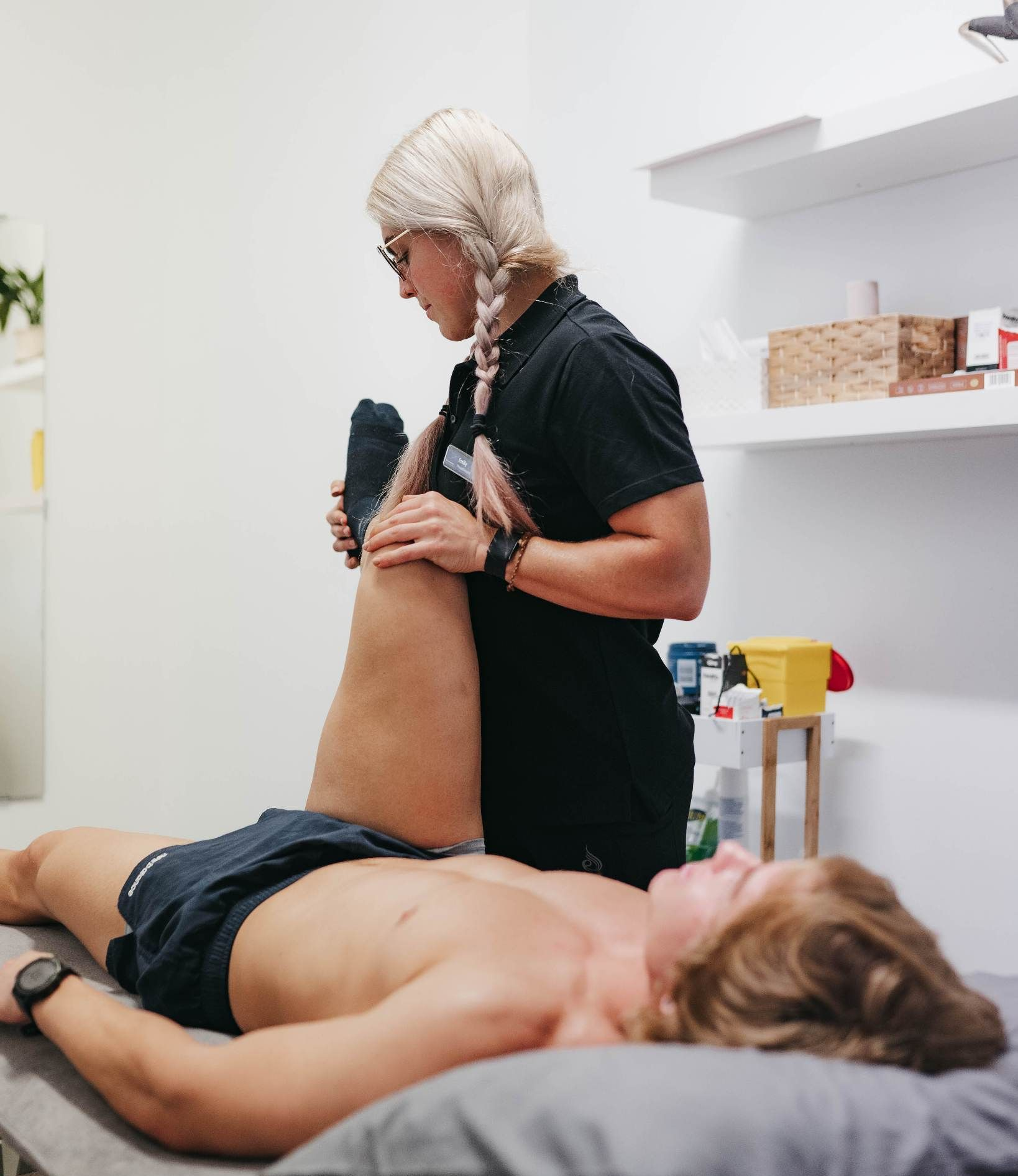
Physiotherapy is the main treatment for osteitis pubis, and most people recover without needing surgery.
- An accurate assessment comes first, to work out exactly which structures are involved and rule out other causes of groin pain.
- Load management starts straight away. We’ll reduce the activities that aggravate your pain, such as kicking and sprinting, while keeping you as fit and active as possible with alternatives like cycling, swimming or upper-body work.
- Progressive strengthening is the foundation of recovery. We focus on the adductors, hips, core and abdominals, building from gentle exercises to more demanding strength and power work, such as Copenhagen adductor exercises.
- Hip mobility work addresses any restrictions in hip movement, especially rotation, that may be adding load to the pelvis.
- Hands-on treatment, including soft tissue work and joint mobilisation, can ease pain and stiffness through the hips, groin and lower back.
- A graded return to sport rebuilds running, change of direction and kicking in stages, so you get back to your sport without the pain coming back. Kicking is usually the last thing to return.
How Massage & Myotherapy Can Help
People with groin pain often develop tension in the adductors, hip flexors, glutes and lower back. Remedial massage and myotherapy can ease this tension and help you move more comfortably.
Our massage and myotherapy team works closely with your physio so soft tissue treatment complements your rehab program at every stage.
When to Seek Further Medical Advice
Osteitis pubis responds well to physiotherapy in most cases. However, see a doctor promptly if you have:
- Fever, chills or feeling generally unwell with groin pain, which may indicate infection
- Deep groin or hip pain that’s worse with weight bearing, or night pain, especially in runners, which may indicate a stress fracture
- A lump in the groin or lower abdomen, which may be a hernia
- Testicular pain or swelling, or urinary symptoms
- Sudden severe pain after a fall or injury
- No improvement after eight to twelve weeks of consistent, well-structured treatment
If any of these apply, we can identify them at your assessment and refer you for imaging or to the right medical professional.
Prognosis
Osteitis pubis can be slow to settle, so patience and consistency are important.
- Early or mild cases: often six to twelve weeks of structured rehab
- More established cases: around three to six months
- Long-standing or severe cases: six months or longer, especially in kicking sports
The best outcomes come from early diagnosis and completing a full rehab program. The most common reason for setbacks is returning to running, kicking or full training too soon.
Why Choose Active Balance Physio & Wellness?
Physio-led integrated care
Physio, massage, myo & rehab under one roof
Individualised treatment plans
Friendly, caring team focused on results
Convenient Adelaide location
After-hours appointments available
Frequently Asked Questions
Q: Is this because of my training or how I kick?
Usually it’s a combination of things rather than one mistake. The most common factor is training load increasing faster than your body can adapt, often in pre-season or after a break. Kicking technique, hip mobility and strength can also play a part. It’s a very common injury in kicking and running sports, not a sign you’ve done anything wrong. We’ll look at all the factors and help you adjust them.
Q: Should I stop training completely?
Not usually. Complete rest may ease pain, but symptoms often come back once you return. We’ll modify your training to settle your symptoms while keeping your fitness up, then build you back to full training gradually.
Q: Do I need a scan?
Not always to begin treatment. An MRI can help confirm the diagnosis and rule out other causes, especially if symptoms are severe, long-standing or not improving. Your physio can advise whether imaging is needed.
Q: How do I know if it’s osteitis pubis or an adductor problem?
They can feel similar and often occur together. A thorough assessment, including specific tests for each area, helps work out which structures are involved so we can target your treatment.
Q: Will I miss my season?
It depends on how long you’ve had symptoms and how irritable they are. Many people can stay involved in modified training. The earlier you start treatment, the better your chances of a quicker return.
✅Private Health Rebates
✅Same Week Appointments
✅Experienced Team
✅Onsite Parking
Ready to get your groin pain sorted?
Don’t let groin pain keep you out of the sport and training you love. With an accurate diagnosis and a structured rehab program, most people with osteitis pubis get back to full sport.