Spinal Stenosis Treatment Adelaide
Back Pain Physiotherapy St Marys
Do your legs feel heavy, achy or tingly when you walk or stand for a while, but ease when you sit down or lean forward? Do you find yourself leaning on the shopping trolley to get through the supermarket?
These are common signs of spinal stenosis, a condition that can gradually limit how far you walk and how much you enjoy everyday life. The good news is that many people manage their symptoms well with the right approach. At Active Balance, we use hands-on treatment, tailored exercise and practical strategies to help you stay active, walk further and feel more confident in your body.
Spinal Stenosis Treatment in Adelaide
What Is Spinal Stenosis?
Spinal stenosis means narrowing of the spaces in the spine where the spinal cord and nerves travel. When these spaces narrow, the nerves can become compressed or irritated, causing pain, numbness, tingling or weakness.
It most often affects the lower back (lumbar stenosis), but it can also occur in the neck (cervical stenosis).
Stenosis is usually caused by gradual age-related changes in the spine, such as:
- Disc bulging or disc height loss
- Thickening of the ligaments in the spine
- Arthritis and bony changes in the spinal joints
Changes on a scan don’t always match how much pain you feel. Many people have narrowing on imaging with few symptoms, so treatment focuses on how you’re feeling and functioning, not just what the scan shows.
Who Does Osteitis Pubis Affect?
Spinal stenosis is most common in:
- Adults over 50, as age-related spinal changes become more common
- People with a history of back pain or spinal arthritis
- People with previous spinal injury or surgery
- Those with certain spinal conditions, such as spondylolisthesis (one vertebra slipping forward on another)
Contributing Factors & Causes
- Age-related changes to the discs, joints and ligaments
- Spinal arthritis
- Disc bulges
- Spondylolisthesis
- Previous spinal injury or surgery
- Reduced fitness and general deconditioning, which can make symptoms harder to manage
- Some people are born with a narrower spinal canal
Symptoms & Signs
Lumbar (lower back) stenosis:
- Pain, heaviness, cramping or tingling in the buttocks or legs when walking or standing
- Symptoms that ease when you sit down or bend forward
- Finding it easier to walk uphill or lean on a trolley than to walk upright
- Lower back pain and stiffness
- Legs that feel weak or tired after a short distance
Cervical (neck) stenosis:
- Neck pain and stiffness
- Pain, tingling or numbness in the arms or hands
- Clumsiness or difficulty with fine hand tasks, such as buttons or writing
- Changes to balance or walking

How Physiotherapy Can Help Manage Spinal Stenosis
Physiotherapy is a recommended first-line treatment for most people with spinal stenosis. Our goal is to ease your symptoms, improve your walking tolerance, and help you keep doing the things that matter to you.
- Thorough assessment and education come first. Understanding what’s going on, and what you can do about it, is a big part of managing stenosis with confidence.
- Hands-on treatment, including joint mobilisation and soft tissue work, can ease stiffness and discomfort through the back and hips.
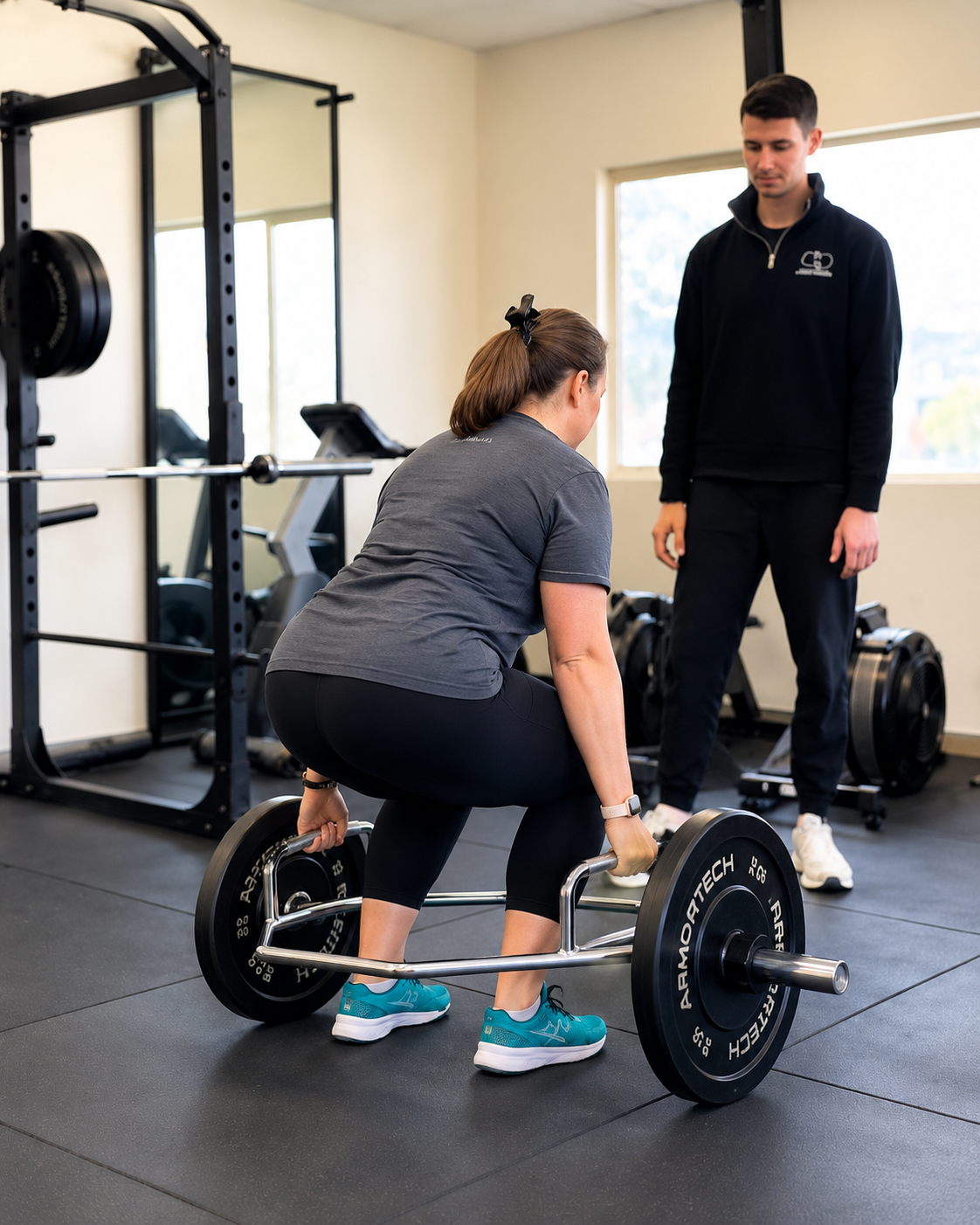
- Tailored exercise is the foundation of treatment. We focus on improving strength in the core, hips and legs, along with spinal mobility and general fitness. Flexion-based exercises (where the spine bends forward) often help relieve symptoms.
- Walking and activity strategies help you gradually build how far you can walk or stand. This may include pacing, rest breaks, walking aids, or alternatives like cycling or water-based exercise, which are often more comfortable.
- Balance training is especially important if your stenosis is affecting your legs or walking, to reduce your risk of falls.
- Ongoing support through our group classes, such as Move Well For Life and Clinical Mat Pilates, can help you keep active and build on your progress in a supportive environment.
How Massage & Myotherapy Can Help
People with spinal stenosis often develop muscle tension in the lower back, glutes and hips, especially when walking or standing becomes uncomfortable. Both remedial massage and myotherapy can ease this tension, improve comfort and help you move more freely.
Our massage and myotherapy team works alongside your physio so your care is coordinated and supports your exercise program.

When to Seek Further Medical Advice
Spinal stenosis is usually a gradual condition that can be well managed with physiotherapy. However, some symptoms need urgent attention.
Seek urgent medical care (go to your nearest emergency department) if you have:
- New loss of bladder or bowel control, or difficulty passing urine
- Numbness around the groin, inner thighs or buttocks (saddle area)
- Rapidly worsening weakness in the legs
See your GP promptly if you have:
- Progressive weakness in the legs, or foot drop
- Worsening clumsiness in the hands or changes to your balance
- Pain that is constant, severe and not affected by position or movement
- Night pain, unexplained weight loss, or feeling generally unwell
- No improvement after a reasonable trial of consistent treatment
If any of these apply, we can identify them at your assessment and refer you to the right health professional, such as your GP or a spinal specialist.
Prognosis
Spinal stenosis affects everyone differently, but many people manage their symptoms well with exercise and the right strategies.
- For many people, symptoms stay stable or improve over time with conservative treatment
- Regular exercise and staying active are some of the most important factors in managing symptoms long term
- For people with severe or worsening symptoms that don’t respond to conservative treatment, surgery may be considered.
If surgery is needed, a structured rehab program afterwards is important for recovery.
Why Choose Active Balance Physio & Wellness?
Physio-led integrated care
Physio, massage, myo & rehab under one roof
Individualised treatment plans
Friendly, caring team focused on results
Convenient Adelaide location
After-hours appointments available
Frequently Asked Questions
Q: Will exercise make my stenosis worse?
The right kind of exercise is one of the best ways to manage spinal stenosis. Your physio will tailor a program to your symptoms, starting with exercises that feel comfortable and building gradually from there.
Q: Did I do something to cause this?
Very unlikely. Spinal stenosis is mostly caused by gradual, age-related changes in the spine, similar to how hair goes grey or skin wrinkles. It isn’t caused by bad posture, your job, or lifting the wrong way. Staying active and keeping strong is one of the best things you can do to manage it, so there’s plenty you can do from here.
Q: Why do my legs feel better when I sit down or lean forward?
Bending forward opens up the spaces where the nerves travel, which takes pressure off them. Standing upright and walking narrows these spaces slightly, which is why symptoms often come on with walking and ease with sitting.
Q: Do I need a scan?
Not always to begin treatment. A scan such as an MRI may be useful if your symptoms are severe or getting worse, or if surgery is being considered. Your physio or GP can advise whether imaging is needed.
Q: Will I need surgery?
Most people with spinal stenosis don’t need surgery. It’s usually only considered when symptoms are severe, getting worse, or haven’t improved with conservative treatment.
Q: Is it too late to start exercising?
No. People of all ages and fitness levels can benefit from a tailored exercise program. We’ll start where you’re at and build from there.
✅Private Health Rebates
✅Same Week Appointments
✅Experienced Team
✅Onsite Parking
Ready to Get Moving Again?
Don’t let spinal stenosis limit how far you walk or what you enjoy doing. With the right treatment and a tailored exercise program, many people get back to living more actively and comfortably.