
Syndesmosis Sprain Treatment Adelaide
Ankle Pain Physiotherapy St Marys
Rolled or twisted your ankle, but the pain is higher up than a typical sprain? Is it sore to push off, walk up stairs, or bend your ankle forward? You may have a syndesmosis sprain, also known as a high ankle sprain. These injuries are often mistaken for a regular ankle sprain, but they usually take longer to recover and need a more careful approach.
SYNDESMOSIS SPRAIN Treatment in Adelaide
What Is a Syndesmosis Sprain?
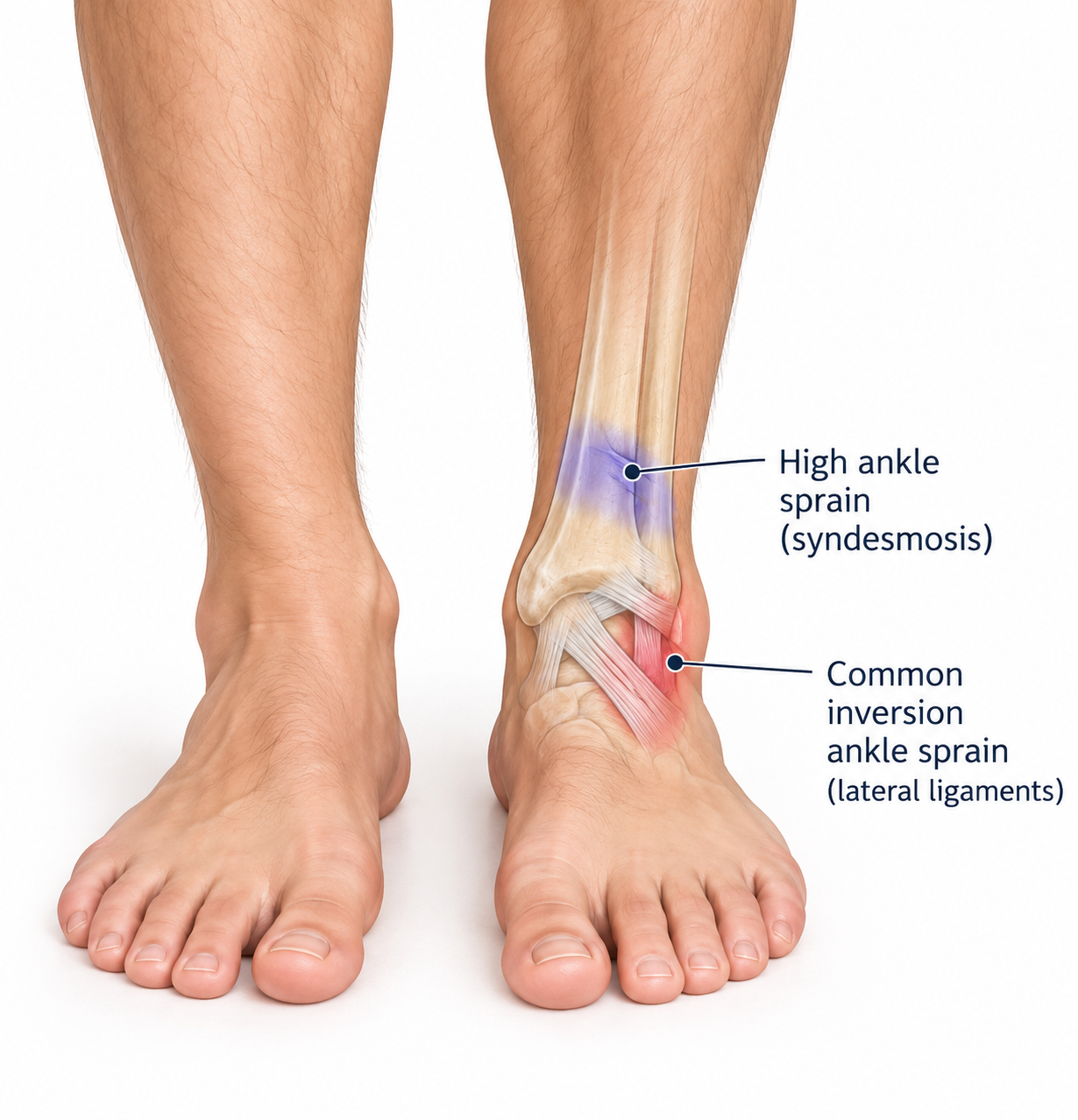
The syndesmosis is a group of strong ligaments that hold the two lower leg bones, the tibia and fibula, together just above the ankle joint. These ligaments keep the ankle stable, especially when you push off, land or change direction.
A syndesmosis sprain happens when these ligaments are stretched or torn. This usually happens when the foot is planted and the leg twists, or when the foot is forced outwards. It’s common in tackles, awkward landings, and when someone falls onto the back of your leg.
Syndesmosis sprains range from mild injuries where the ankle stays stable, to more severe injuries where the bones can separate slightly and the ankle becomes unstable. Working out which type you have is key, because it guides your treatment.
High Ankle Sprain vs Regular Ankle Sprain
A regular (lateral) ankle sprain usually happens when the foot rolls inwards, injuring the ligaments on the outside of the ankle. Pain and swelling are mostly on the outer ankle.
A high ankle sprain (syndesmosis sprain) usually happens with a twisting or outward force. Pain is felt higher up, at the front of the ankle and between the shin bones. It’s often more painful to push off, squat or climb stairs, and it generally takes longer to recover.
Some people have both injuries at the same time.
Who Does It Affect?
This type of injury often happens in sports involving running, fast changes or direction, and contact with other players. We tend to see these in sports such as:
- AFL, rugby and soccer players, especially in tackles and contested situations
- Basketball, netball and other court sport athletes
- Skiers and snowboarders
- Athletes on firm or grippy surfaces where the foot can stay planted
- Anyone who has a twisting injury with the foot fixed on the ground
Contributing Factors & Causes
- Twisting of the leg with the foot planted
- The foot being forced outwards or upwards
- Tackles, collisions or someone landing on the back of the leg
- Awkward landings
- Footwear with high grip, such as studs or cleats, which keeps the foot fixed
- Previous ankle injuries
Symptoms & Signs
- Pain at the front of the ankle and up between the shin bones
- Pain when pushing off, walking, running or going up stairs
- Pain when bending the ankle forward, such as squatting or lunging
- Pain when the foot is turned outwards
- Swelling higher up the ankle than with a regular sprain
- Difficulty putting weight on the foot
- A feeling of weakness or instability in the ankle
How Physiotherapy Can Help Manage a Syndesmosis Sprain
- An accurate assessment comes first. We’ll use specific tests to identify a syndesmosis injury and refer you for imaging where needed to check the stability of the ankle and rule out fractures.
- Protection and early management may include a moon boot, crutches, compression and ice to settle pain and swelling and protect the healing ligaments.
- Progressive weight bearing is guided by your symptoms and the severity of your injury, gradually moving from the boot back to normal walking.
- Mobility work and hands-on treatment, including joint mobilisation and soft tissue work, help restore ankle movement and ease stiffness.
- Strengthening of the calf, foot, lower leg and hips builds support around the ankle.
- Balance and proprioception training helps retrain ankle control and stability.
- Running, agility and sport-specific training progressively prepares your ankle for the demands of your sport, including sprinting, cutting, jumping and landing.
- Return to sport testing helps make sure your ankle is ready before returning to full training and games, reducing the risk of re-injury.
How Massage & Myotherapy Can Help
After a high ankle sprain, the calf, shin and foot muscles often become tight from altered walking and time in a boot. Remedial massage and myotherapy can ease this tension and help you move more comfortably as you recover.
Our massage and myotherapy team works with your physio so your soft tissue treatment supports your rehab.
When to Seek Further Medical Advice
Some syndesmosis injuries need specialist management, so an early assessment is important. Seek prompt medical advice if you have:
- Being unable to put any weight on your foot, or significant pain over the ankle bones, which may indicate a fracture
- Pain near the top of the fibula (outer side of the lower leg, near the knee), which can occur with some high ankle injuries
- Obvious deformity of the ankle
- Numbness, tingling, or a cold or pale foot
- Calf pain, swelling, warmth or redness, especially while in a boot or on crutches, which needs urgent review to rule out a blood clot (DVT)
- Ongoing pain and instability despite consistent rehab
- If any of these apply, we can identify them at your assessment and refer you for imaging or to an orthopaedic specialist.
Prognosis
High ankle sprains generally take longer to recover than regular ankle sprains.
- Mild, stable injuries: often around four to eight weeks
- More significant stable injuries: around six to twelve weeks
- Unstable injuries requiring surgery: usually around three to six months before returning to sport
The most common reason for setbacks is returning to running or sport too early, before ankle strength, stability and control have fully returned.
Why Choose Active Balance Physio & Wellness?
Physio-led integrated care
Physio, massage, myo & rehab under one roof
Individualised treatment plans
Friendly, caring team focused on results
Convenient Adelaide location
After-hours appointments available
Frequently Asked Questions
Q: Why is this taking longer than my last ankle sprain?
The syndesmosis ligaments take a lot of load every time you walk, run or push off. Because of this, they generally take longer to heal than the ligaments injured in a regular ankle sprain. A gradual, structured return gives you the best result.
Q: Do I need a scan?
Often, yes. An X-ray is usually recommended to check for fractures and the alignment of the ankle. An MRI may be needed to assess the ligaments and the stability of the injury.
Q: Will I need surgery?
Most stable syndesmosis sprains recover well without surgery. Surgery is usually only needed for unstable injuries, where the bones have separated. If this is suspected, we’ll refer you promptly to an orthopaedic specialist.
Q: Can I strap my ankle and keep playing?
It’s not recommended to play on a suspected high ankle sprain until it’s been assessed. Playing on an unstable injury can make it worse and delay your recovery. Once you’re cleared and progressing well, taping or bracing can support your return to sport.
✅Private Health Rebates
✅Same Week Appointments
✅Experienced Team
✅Onsite Parking
Ready to get your ankle sorted?
Don’t let a high ankle sprain keep you out of the game for longer than it needs to. With an accurate diagnosis and a structured rehab program, most people get back to full sport with confidence.