
Ankle Sprain Treatment Adelaide
Ankle Pain Physiotherapy St Marys
Rolled your ankle and not sure how serious it is? Whether it happened on the sports field, on an uneven footpath, or simply stepping off a kerb, ankle sprains are one of the most common injuries we see, and one of the most commonly undertreated.
At Active Balance we combine hands-on treatment to reduce pain and swelling quickly with a targeted strengthening and balance program to restore full function and reduce your risk of it happening again.
ANkle sprain Treatment in Adelaide
What Is an Ankle Sprain?
An ankle sprain occurs when the ligaments that support the ankle joint are stretched or torn — usually when the foot rolls inward (inversion), overstretching the ligaments on the outside of the ankle. The lateral ligament complex — comprising the anterior talofibular ligament (ATFL), calcaneofibular ligament (CFL), and posterior talofibular ligament (PTFL) — is involved in the vast majority of ankle sprains.
Less commonly, the ankle rolls outward (eversion), injuring the stronger deltoid ligament on the inside of the ankle — these high-force sprains are often associated with fractures and require careful assessment.
Ankle sprains are graded by severity:
- Grade 1 — minor stretching of the ligament with no significant tearing. Mild pain, minimal swelling, full or near-full weight bearing ability.
- Grade 2 — partial tearing of one or more ligaments. Moderate pain, swelling and bruising, some difficulty with weight bearing.
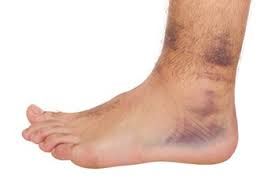
- Grade 3 — complete rupture of one or more ligaments. Significant pain, swelling, bruising, and instability. Weight bearing is often very difficult in the acute stage.
Despite being labelled as a "minor" injury by many, ankle sprains that are not properly rehabilitated have a very high rate of recurrence and can lead to chronic ankle instability — a persistent feeling of giving way that significantly affects sport and daily function.
Who does it Affect?
Ankle sprains can affect anyone at any age but are particularly common in:
- Athletes in court and field sports — basketball, netball, football, soccer, AFL, and volleyball where cutting, pivoting, and jumping are central to the sport
- Runners — particularly those training on uneven terrain or trails
- Active adults returning to sport after a period of inactivity
- People with a history of previous ankle sprains — the single biggest risk factor for re-injury
- Those with high arched feet (pes cavus) — a structural factor that increases inversion stress on the lateral ligaments
- Dancers and gymnasts — repetitive landing demands place high stress on ankle ligament integrity
- Anyone who has previously sprained an ankle and not completed a full rehabilitation program
Contributing Factors & Causes
- Previous ankle sprain — the most significant risk factor, particularly when rehabilitation was incomplete
- Reduced ankle proprioception and balance — the ability of the ankle to sense its position in space is often compromised after injury and needs specific retraining
- Weakness in the peroneal muscles — the main dynamic stabilisers of the lateral ankle
- Poor hip and gluteal strength — proximal weakness alters lower limb mechanics and increases ankle injury risk
- Inadequate footwear — particularly in sport
- Playing or training on uneven surfaces
- Fatigue — neuromuscular control deteriorates with fatigue, increasing injury risk late in games or training sessions
- Returning to sport too quickly after a previous sprain without completing rehabilitation
Symptoms & Signs
- Pain and tenderness over the outside of the ankle — particularly over the ATFL, just in front of the lateral malleolus
- Swelling and bruising, often developing within hours of injury
- Difficulty or pain with weight bearing, depending on severity
- A feeling of instability or giving way — particularly on uneven surfaces
- Stiffness and reduced range of motion — especially dorsiflexion
- In more severe sprains, a popping sensation at the time of injury
- Ongoing feelings of weakness or lack of confidence in the ankle during sport or activity
How Physiotherapy Can Help Hip Impingement
Physiotherapy is the most effective treatment for ankle sprains at every grade — from acute management in the first days after injury through to full return to sport.
Hands-on treatment in the acute and subacute stages uses soft tissue techniques, joint mobilisation, and taping to reduce pain and swelling, restore ankle range of motion, and improve joint mechanics. Early mobilisation — getting the ankle moving as soon as pain allows — consistently produces better outcomes than prolonged immobilisation or rest.
Load management is established from the start. We guide you on appropriate weight bearing, activity modification, and the use of bracing or support to protect the healing ligaments while keeping you as active as possible. For most sprains, complete rest is counterproductive.
Bracing & strapping plays an important role in ankle sprain management — both in the acute stage for protection and pain relief, and during the return to sport phase to provide mechanical support while proprioception and strength are being rebuilt. Your physio will advise on the right type of support for your stage of recovery and activity level.
Progressive strengthening targets the peroneal muscles, calf complex, and hip stabilisers — rebuilding the dynamic support around the ankle that protects the ligaments from re-injury. This is the phase most people skip, which is why re-sprain rates are so high.
Balance and proprioception retraining is a critical and often overlooked component of ankle sprain rehabilitation. Ligament injury disrupts the nerve endings within the ligament that provide feedback about joint position — and without specific retraining, this deficit persists and significantly increases re-injury risk. We use progressive balance and neuromuscular control exercises to restore this function fully.
Return to sport progression & testing is structured and objective. We use sport-specific drills, agility work, and functional testing to confirm your ankle is genuinely ready before you return to full training and competition — not just when it feels okay.
How Massage & Myotherapy Can Help
Significant muscle guarding and tension commonly develops in the calf, peroneal muscles, and surrounding lower leg musculature following an ankle sprain — both as a protective response and as a consequence of altered gait and loading patterns. Remedial massage and myotherapy targeting these areas reduces tension, improves circulation, and supports more normal movement mechanics during rehabilitation.
Cupping & soft tissue work to the calf and lower leg can be particularly effective for releasing deep tissue tension and improving local blood flow during the recovery phase. Manual lymphatic drainage techniques can also be helpful in the acute and subacute stages to assist with swelling management.
Our massage and myotherapy team works closely with your physio to ensure soft tissue treatment directly supports your rehabilitation program at every stage.
When to Seek Further Medical Advice
Most ankle sprains are safely managed with physiotherapy. However some presentations require prompt medical assessment to rule out more serious injury:
- Inability to weight bear at all — or significant pain with weight bearing immediately after injury — may indicate a fracture. The Ottawa Ankle Rules are a clinical tool used to determine when X-ray is needed, and your physio will apply these at assessment
- Significant deformity or abnormal position of the ankle or foot — requires urgent medical attention
- Severe bruising and swelling extending up the leg — may indicate a more significant ligament or tendon injury such as a peroneal tendon tear or syndesmosis (high ankle) sprain
- Pain over the base of the fifth metatarsal — the bony prominence on the outside of the midfoot — which may indicate an avulsion fracture rather than a simple sprain
- Symptoms that are not improving after two to three weeks of appropriate management — warrants further assessment and possible imaging
- Persistent instability or repeated giving way — may indicate chronic ankle instability or an osteochondral lesion requiring specialist review
- If any of these apply, we will identify them at your initial assessment and refer you promptly to the appropriate medical professional.
Progosis
The majority of ankle sprains — even significant Grade 2 and Grade 3 injuries — heal very well with appropriate management. The key is completing a full rehabilitation program rather than stopping when pain settles.
- Grade 1 sprains — one to three weeks with appropriate management
- Grade 2 sprains — three to six weeks for return to daily activities, six to ten weeks for return to sport
- Grade 3 sprains — six to twelve weeks for return to sport with a full rehabilitation program, occasionally longer for high-level athletes
The biggest predictor of a poor outcome is incomplete rehabilitation — particularly skipping the balance, proprioception, and strength phases. Re-sprain rates of up to 70% have been reported in people who return to sport without completing a structured program. With proper rehabilitation, recurrence risk is dramatically reduced.
Why Choose Active Balance Physio & Wellness?
Physio-led integrated care
Physio, massage, myo & rehab under one roof
Individualised treatment plans
Friendly, caring team focused on results
Convenient Adelaide location
After-hours appointments available
Frequently Asked Questions
Q: Should I get an X-ray after rolling my ankle? Not always. The Ottawa Ankle Rules — a validated clinical tool — guide when X-ray is genuinely needed based on the location of pain and ability to weight bear. Your physio will assess this at your first appointment and refer for imaging if indicated. Most ankle sprains do not require X-ray.
Q: Should I use ice or heat after an ankle sprain? In the first 48–72 hours, ice and elevation can help manage swelling and pain. Beyond that, the evidence for prolonged icing is limited. Gentle movement and graduated loading are more important for recovery than passive measures like ice and rest. Your physio will guide you on the most effective early management approach.
Q: My ankle sprain happened months ago and it still doesn't feel right — is that normal? Persistent instability, weakness, or lack of confidence in the ankle after a sprain usually means the proprioception and strength deficits from the original injury haven't been fully addressed. This is very common and very treatable — even months or years after the original injury. Come in for an assessment and we'll identify exactly what's still missing.
Q: Do I need a brace to play sport after an ankle sprain? In the short to medium term, bracing during sport is strongly recommended — particularly for the first six to twelve months after a significant sprain — as it provides mechanical support while your strength and proprioception are rebuilding. Long-term, the goal is to restore enough neuromuscular control that you don't need to rely on a brace. Your physio will guide you on when and how to wean off support.
Q: Can I walk on a sprained ankle? For Grade 1 and most Grade 2 sprains, walking with some discomfort is generally safe and encouraged — early movement promotes better healing than immobilisation. For Grade 3 sprains or if weight bearing is very painful, your physio will guide you on the appropriate level of loading for your stage of injury.
✅Private Health Rebates
✅Same Week Appointments
✅Experienced Team
✅Onsite Parking
Ready to Get Your Ankle Sorted?
Don't write off an ankle sprain as something that will just fix itself. With the right treatment and a complete rehabilitation program, full recovery and a significant reduction in re-injury risk is absolutely achievable.