Ankle Sprains: Not "Just a Rolled Ankle"

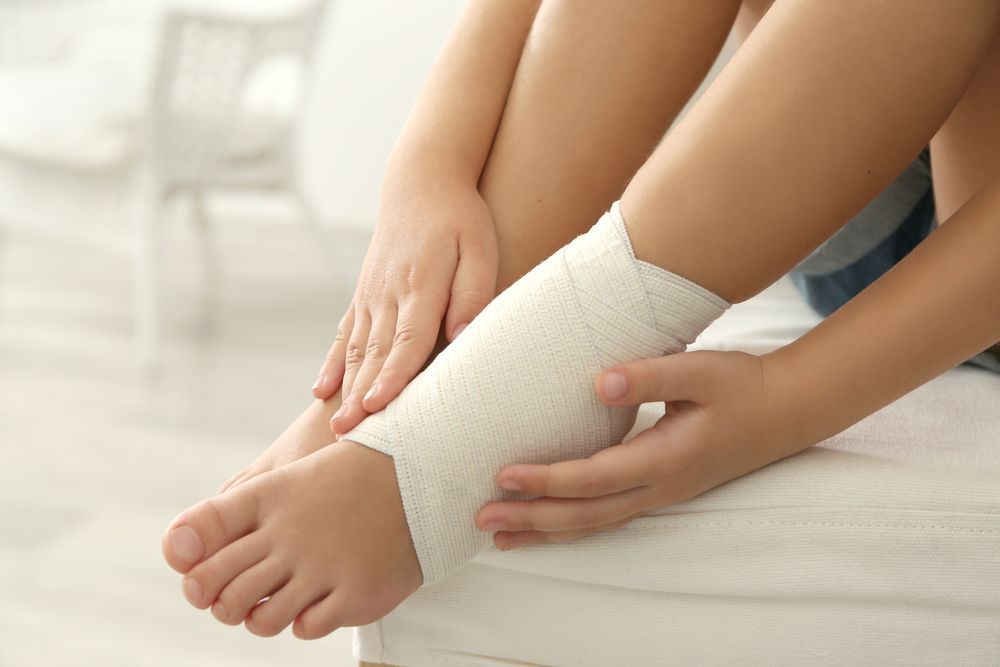
bandaged ankle

When someone mentions a rolled ankle, the typical response is a sympathetic wince followed by "oh it'll be fine in a few days." And sometimes it is. But as physios, we see a steady stream of people whose ankle "sorted itself out" months ago — yet still feels unstable, still gives way, and still stops them doing the things they love.


Ankle sprains are one of the most common musculoskeletal injuries we treat, and one of the most underestimated. Here's what's actually happening when you roll your ankle, and why proper management makes a real difference to your long-term outcome.


What Actually Happens When You Sprain Your Ankle?


An ankle sprain occurs when the ligaments that stabilise the joint are overstretched or torn — most commonly the lateral ligaments on the outside of the ankle. This typically happens when landing awkwardly from a jump, changing direction suddenly, or stepping on uneven ground.

Sprains are graded by severity:

  • Grade 1 — mild stretching of the ligament with no significant tearing. Some tenderness and swelling, but weight bearing is usually possible.
  • Grade 2 — partial tear of the ligament. More significant swelling, bruising and pain. Weight bearing is painful and the ankle may feel unstable.
  • Grade 3 — complete rupture of the ligament. Substantial swelling, bruising and instability. Weight bearing may be impossible in the acute phase.

Beyond the ligaments themselves, other structures can also be affected during a sprain — cartilage damage, tendon involvement, and even small fractures can occur alongside ligament injury. This is one of the reasons an accurate assessment matters rather than just assuming it's a straightforward sprain.


Why Ankle Sprains Are More Serious Than They Look


The statistic that surprises most people: up to 70% of people who sprain their ankle will re-injure it if they don't complete proper rehabilitation. That's not bad luck — it's a predictable consequence of what happens to the ankle after a sprain.

When ligaments are injured, the tiny nerve receptors within them that provide proprioception — your body's sense of joint position and movement — are also damaged. Even after the pain and swelling have settled, this proprioceptive deficit often remains. The result is an ankle that doesn't react quickly enough to protect itself when you step awkwardly, leading to repeated sprains and eventually chronic ankle instability.

Ligaments also don't always return to their original strength and length after a sprain. Without targeted rehabilitation to rebuild strength and retrain the neuromuscular system, the joint is left weaker and more vulnerable than it was before the injury.


Symptoms to Watch For


Common signs of an ankle sprain include:

  • Pain and swelling around the ankle joint, particularly on the outer side
  • Bruising that may spread into the foot or track up the leg
  • Stiffness and difficulty bearing weight
  • A feeling of instability or the ankle "giving way"
  • Reduced range of motion

If your pain is severe, you cannot bear weight at all, or there is significant bony tenderness, it's worth getting assessed promptly to rule out a fracture. The Ottawa Ankle Rules are a clinical tool physios and doctors use to guide whether imaging is needed — your physio can apply these at your initial assessment.


What Proper Rehabilitation Looks Like

The goal of ankle sprain rehabilitation isn't just to get the swelling down — it's to restore full strength, mobility, stability and confidence in the joint so that you can return to your activities without fear of re-injury.

At Active Balance, rehabilitation typically progresses through several phases:

  • Acute phase — first 48 to 72 hours Managing swelling and pain through the PEACE & LOVE principles (see our blog post on this), gentle range of motion work and protected weight bearing as tolerated.
  • Restoration phase Hands-on therapy to address stiffness and swelling, progressive exercises to rebuild ankle strength and mobility, and early balance work to begin retraining proprioception.
  • Strengthening and neuromuscular phase Progressive loading of the ankle and surrounding muscles — calves, peroneals, tibialis anterior and hip stabilisers all play a role in ankle stability. Balance and coordination exercises become more challenging as strength improves.
  • Return to sport or activity phase Sport-specific movement patterns, agility work and high-level testing to confirm the ankle is genuinely ready for the demands of your activity. This phase is where many people cut corners — and where re-injury most often occurs.


When to Seek Assessment


If you've recently sprained your ankle, we'd recommend getting it assessed even if it feels relatively minor. Early guidance on loading, movement and rehabilitation sets you up for a much smoother recovery than waiting to see how it feels.

You should seek prompt assessment if:

  • You cannot bear weight on the ankle
  • There is significant bony tenderness over the ankle or foot
  • The swelling or bruising is severe
  • The ankle feels grossly unstable
  • Symptoms are not improving after a few days of basic management


The Bottom Line


A rolled ankle deserves the same respect as any other injury. With the right assessment and rehabilitation, most people make a full recovery and return to everything they were doing before — often with a stronger, more resilient ankle than they had previously.


Don't just walk it off. Book online or call us on (08) 7123 4148 and let us help you get back on your feet properly.

Book Appointment Online

Written by Emily Clements, Senior Physiotherapist at Active Balance Physio & Wellness, St Marys Adelaide. Emily holds a Bachelor of Physiotherapy and has a special interest in shoulder rehabilitation, strength and conditioning, and helping active people manage and overcome injury.

woman experiencing back pain
May 17, 2026
Many women experience worsening back pain during menopause. Our physio team explains why — and what you can do about it. Active Balance, Adelaide.
women exercising
May 17, 2026
What does the research actually say about exercise during menopause? Our physio team explains what works, what doesn't and how to get the best results.
steroid injection
May 16, 2026
Considering a cortisone injection for a persistent injury? Our physio team explains the benefits, risks and how injections fit into a rehabilitation plan.
May 1, 2026
Don’t Hibernate This Winter: Why Keeping Moving Matters More Than Ever
alt=
March 20, 2026
Resting your injury but not improving? Rest treats the symptom, not the cause. Our physio explains why and what to do instead. Active Balance, Adelaide.
Creatine supplements
March 3, 2026
Creatine isn't just for bodybuilders. Our physio team explains the evidence for creatine in athletes, women, menopause and healthy ageing. Active Balance, Adelaide.
February 25, 2026
You may have heard (probably from Instagram physios 🙈) that manual therapy is useless and shouldn’t be used in physiotherapy. We respectfully disagree... Is it a magic fix? No. Does it break up scar tissue, “realign” your spine, or release fascia permanently? Also no. But can it reduce pain and help you move better so rehab is more comfortable and effective? Absolutely. What Is Manual Therapy? Manual therapy refers to skilled, hands-on techniques performed by a physiotherapist (or other manual therapists such as massage therapists, osteopaths, chiros and myotherapists). These may include: Joint mobilisations Soft tissue techniques Trigger point therapy Muscle energy techniques Joint mobilisation These techniques are generally chosen based on your presentation and goals. They are not random, they are applied with a clear purpose: usually to reduce pain, improve movement, and make rehab & recovery more achievable. What Manual Therapy Doesn’t Do There are some persistent myths around hands-on treatment. Current research tells us that manual therapy does not: Physically break up adhesions Permanently “release” fascia Push joints back into place Structurally remodel tissue in a short session Your connective tissue is strong and resilient. It is not being reshaped in 30 minutes of treatment. So if it’s not mechanically changing tissue, what is happening? It Influences the Nervous System Pain does not always mean damage. It is often a protective response created by your nervous system. When an area becomes irritated or overloaded, the nervous system may increase sensitivity. This can lead to: Muscle guarding Stiffness Reduced range of motion Increased pain with movement Manual therapy can provide sensory input to the body. Research suggests that this input can help change how the nervous system processes pain signals. In simple terms, it can: Reduce pain sensitivity Decrease muscle tension Improve short-term movement tolerance Help you feel more comfortable moving Rather than “fixing” injured or tight tissues, manual therapy often works by calming a sensitised nervous system. When the system is calmer, movement becomes easier — and that’s where progress begins. It Can Improve Circulation and Tissue Health Hands-on therapy can also increase local blood flow. Improved circulation may support: Oxygen delivery Nutrient exchange Removal of metabolic waste Overall tissue health This doesn’t mean instant healing, but healthy circulation supports the body’s natural recovery processes. Creating a Window for Rehabilitation This is where manual therapy becomes particularly useful, and where we see a huge benefit. If pain levels are high, exercise can feel: Too uncomfortable Too threatening Hard to perform properly If we can reduce your pain with some hands on treatment (even temporarily) that reduction can create a window of opportunity. During that window, we can: Introduce strengthening & rehab movements Improve joint mobility Retrain movement patterns Gradually increase load & tolerance Build confidence Long-term recovery for most musculoskeletal conditions relies on progressive strengthening and improved load tolerance. Manual therapy doesn’t replace exercise. It helps make exercise possible. What Does the Evidence Say? Clinical guidelines for conditions such as low back pain, neck pain, and some shoulder conditions suggest manual therapy can be helpful, especially when combined with exercise. Research generally shows: Manual therapy can reduce pain in the short term It can improve short-term range of motion Outcomes are better when combined with active rehabilitation On its own, manual therapy tends to produce temporary effects. But when paired with strengthening, mobility work, and education, results are typically more meaningful and longer lasting. This reflects modern physiotherapy practice: use hands-on treatment strategically, not exclusively. What About “Maintenance” Treatments? Work, sport & life in general can place repeated demands on the body. If you do things like: Work in a physically repetitive job Sit at a desk for long hours Play regular sport Lift and carry children Train intensely You are regularly placing load on your tissues, and even strong, healthy tissues can become temporarily overloaded. For some people, regular hands on treatments can: Settle flare-ups early Reduce accumulated muscle tension Improve movement quality Help manage symptom build-up Importantly, this should not replace strength, recovery strategies, and load management. It works best as part of a broader plan that includes: Appropriate exercise Good training progression Rest and recovery Self-management strategies The goal of “maintenance” care is not dependency. It’s about supporting a body that is regularly exposed to high or repetitive demands. Think of it less as “fixing something broken” and more as helping your system stay adaptable and resilient. A Balanced Approach Physiotherapy is not “hands-on versus exercise.” It shouldn’t be an either/or decision. At our clinic, manual therapy is: A tool Used when clinically appropriate More often than not, combined with strengthening and mobility work Generally phased out as independence improves Our goal is never to make you reliant on treatment. Our goal is to: Reduce pain Improve movement Build strength Increase confidence Help you manage your condition independently The Bottom Line Manual therapy does not: Permanently change tissue structure Realign your body Act as a stand-alone cure But it can: Reduce pain Calm a sensitive nervous system Improve short-term mobility Support circulation Create a window for effective rehabilitation When combined with tailored, progressive exercise, it can be a very useful part of your recovery. If you’re unsure whether manual therapy is appropriate for your condition, our physios can assess you and design a plan that supports both short-term comfort and long-term goals.
AI running apps
January 28, 2026
Can AI running apps replace your physio or running coach? Our physio team explores the risks of overreliance on training apps and how to use them safely in Adelaide.
More Posts