What Is TMD?
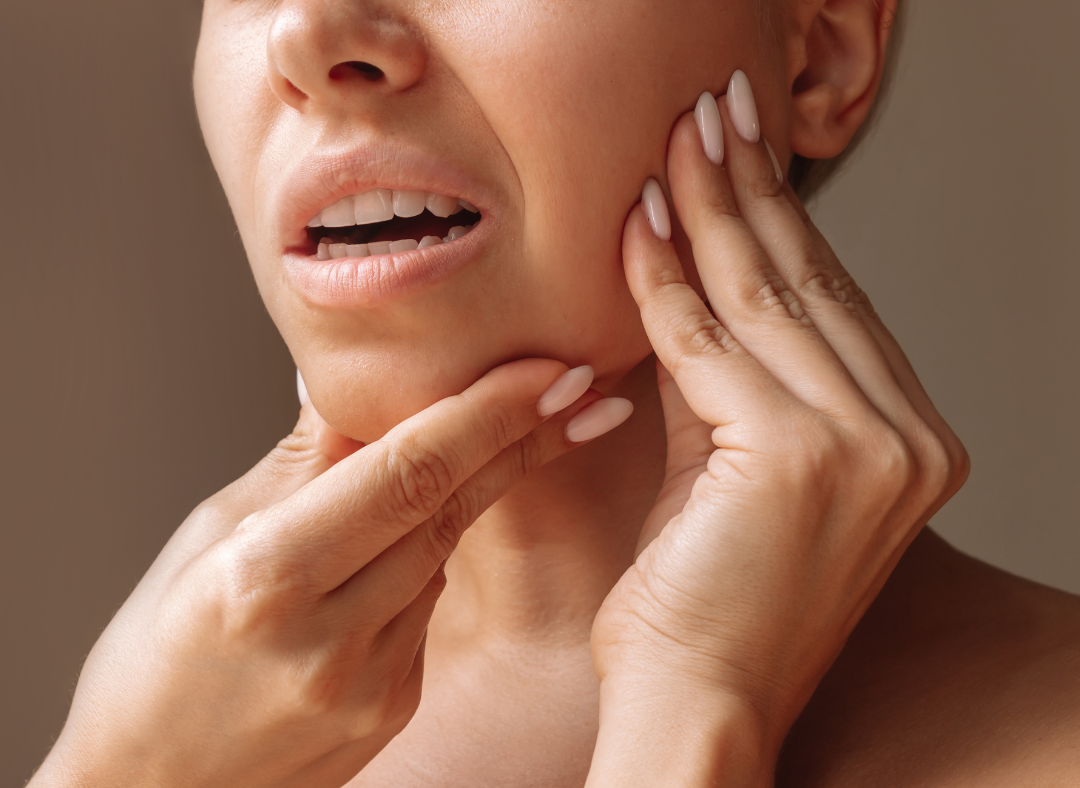
Temporomandibular disorder — TMD — is an umbrella term for problems affecting the temporomandibular joints (TMJ), the jaw muscles, and the surrounding nerves. The TMJ is the joint on each side of your face that connects your lower jaw to your skull. It's one of the most complex and frequently used joints in the body — involved in every bite, word and yawn.
When this system isn't working properly, the effects ripple outward — into the neck, shoulders, head and ears — which is why TMD often presents as headaches or neck pain rather than obvious jaw pain.
There are three main categories of TMD:
- Myofascial pain — the most common type, involving tightness, tension and pain in the jaw, neck and shoulder muscles. Around 80 to 90% of TMD presentations are primarily muscle-related rather than structural joint problems.
- Internal joint dysfunction — problems within the joint itself, such as disc displacement, joint clicking or locking, or injury to the joint structures.
- Degenerative joint disease
— conditions like osteoarthritis affecting the TMJ, more common in older adults and associated with wear and breakdown of the joint surfaces.
Many people experience more than one type simultaneously, which is why a thorough assessment is important before starting treatment.
What Causes TMD?
TMD rarely has a single cause. It typically develops from a combination of factors that place excessive or sustained load on the jaw muscles and joint:
- Teeth grinding or clenching (bruxism) — one of the most common contributors, often happening at night without awareness. The forces generated during grinding can be significant and sustained muscle contraction leads to pain and fatigue
- Stress — which drives both bruxism and general muscle tension through the jaw, neck and shoulders
- Neck pain and tightness — the muscles of the jaw and neck are intimately connected. Chronic neck tension frequently contributes to or perpetuates jaw pain, which is why treating TMD without addressing the neck often produces incomplete results
- Postural habits — forward head posture, prolonged screen use and jaw-forward positioning all increase load on the TMJ and surrounding muscles
- Previous jaw or facial injury — trauma to the jaw, face or neck can alter joint mechanics and muscle function
- Disc displacement or dysfunction — the cartilage disc within the TMJ can shift out of its normal position, causing clicking, locking or pain
- Dental factors — bite changes from dental work, missing teeth or tooth wear can alter how the jaw loads
- Degenerative changes — osteoarthritis and other joint conditions affecting the TMJ over time
Symptoms of TMD
TMD presents differently in different people. Common symptoms include:
- Clicking, popping or grinding sounds when opening or closing the mouth
- Jaw pain or aching — often worse in the morning after nighttime grinding, or late in the day after prolonged use
- Difficulty opening the mouth fully or pain with wide opening
- Pain with chewing, talking or yawning
- A feeling of the jaw locking or catching
- Referred pain into the face, ear, neck or shoulders
- Tension-type headaches — particularly across the forehead and temples or at the base of the skull
- Ear pain or a feeling of fullness in the ear without infection
- Awareness of clenching or grinding, sometimes only noticed on waking
One of the most common patterns we see is the person who has been treated repeatedly for headaches or neck pain without resolution — and whose jaw has never been assessed. TMD is a frequently missed contributor to chronic head and neck pain.
How Physiotherapy and Myotherapy Help
The good news is that the majority of TMD cases — particularly those that are primarily muscle-related — respond very well to manual therapy and a targeted self-management program. You don't have to just live with it.
At Active Balance, treatment for TMD may include:
- Soft tissue therapy and myofascial release: Hands-on treatment targeting the muscles of the jaw, face, neck and shoulders. The masseter, temporalis, pterygoids and suboccipital muscles are common areas of tension that contribute directly to jaw pain and headaches. Releasing these muscles reduces the load on the TMJ and provides significant symptomatic relief.
- Trigger point therapy: Targeted pressure into specific trigger points within the jaw and neck muscles can release stubborn areas of tension and reduce referred pain patterns — including the headaches and ear pain that often accompany TMD.
- Dry needling:
Fine needles placed into trigger points within the jaw and surrounding muscles can provide significant relief from muscle spasm and pain, and reduce the frequency of tension headaches linked to jaw tension.
- Joint mobilisation Gentle manual techniques to restore normal movement in the TMJ, improve joint mechanics and reduce pain with opening and closing.
- Neck assessment and treatment:
Because the neck and jaw are so closely connected, we always assess the cervical spine as part of a TMD presentation. Addressing stiffness, tension and movement dysfunction in the neck frequently produces meaningful improvement in jaw symptoms — even when the neck doesn't seem to be the primary problem.
- Education and self-management strategies: Understanding your TMD — what's driving it, what aggravates it and what helps — is a key part of treatment. We'll help you identify habits like jaw clenching, teeth touching at rest and postural patterns that may be perpetuating your symptoms, and give you practical strategies to manage them.
- This might include:
- Jaw relaxation exercises and awareness techniques
- Postural correction for screen use and desk work
- Sleep position advice if nighttime grinding is a factor
- Self-massage techniques for the jaw and neck
- Referral to a dentist or oral health specialist for a night splint if appropriate
When to Get Help
TMD is worth treating early. Left unmanaged, the muscle tension and joint loading that drives symptoms tends to compound over time — making treatment more complex and recovery slower.
You should consider seeking assessment if you experience:
- Jaw pain or clicking that has been present for more than a few weeks
- Headaches that seem to be linked to jaw tension or morning grinding
- Difficulty opening your mouth fully or pain with eating
- Neck pain that hasn't resolved with standard treatment
- Any combination of jaw, head, neck and ear symptoms that hasn't been properly assessed
Working With Your Dental Team
For some people with significant bruxism or bite-related contributors to TMD, we work in collaboration with dentists and oral health specialists. A custom night splint — designed to reduce the forces of grinding during sleep — can be a valuable adjunct to manual therapy for people whose symptoms are significantly driven by nocturnal bruxism.
If we feel a dental referral would benefit your management, we'll discuss this with you as part of your treatment plan.
If you've been putting up with jaw pain, clicking or tension headaches, book online or call us on (08) 7123 4148. Our team can assess your jaw, neck and surrounding muscles and put together a clear plan to get you moving, eating and talking comfortably again.