What Is Creatine and How Does It Work?
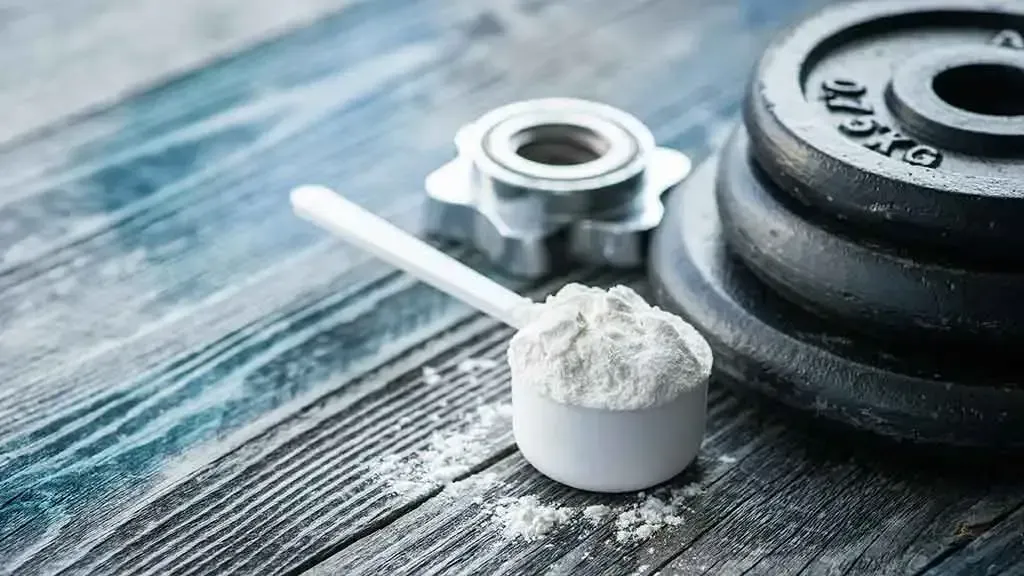
Creatine is a naturally occurring compound that is stored primarily in your muscles, with smaller amounts in your brain. You can also gain small amounts through foods like red meat and fish.
Its main role is to support the production of ATP (adenosine triphosphate), which is the body’s primary energy currency. During short bursts of effort (like lifting weights, sprinting, or even standing up from a chair), ATP is used quickly. Creatine helps regenerate ATP more quickly, allowing you to sustain force production for slightly longer.
That might sound minor, but those extra repetitions or slightly improved power outputs accumulate over time to big results.
With consistent supplementation (typically 3–5g daily), muscle creatine stores increase, which may lead to:
- Improved strength output
- Increased training capacity
- Better recovery between sets
- Greater long-term adaptation to resistance training
Creatine does not build muscle on its own (sorry 😂), but it does enhance your response to training.
So, who can benefit from creatine supplementation?
Creatine can benefit a wide range of people in number ways. From high level athletes, to everyday gym goers, to women navigating peri/menopause, creatine can have positive effects on muscle health, bulk and power output.
Creatine is one of the most evidence-backed supplements in sports nutrition.
Meta-analyses consistently show that when combined with resistance training, creatine can help improve:
- Maximal strength
- Power output
- Lean muscle mass
- Training volume
For athletes, this can mean better adaptation to structured training programs and improved performance potential.
You don’t need to be an athlete to benefit from creatine.
For someone who:
- Strength trains a few times per week
- Wants to build or maintain muscle
- Is working on body composition
- Feels fatigued from busy work or family life
- Simply wants to stay strong and capable long-term
Creatine can be helpful in enhancing the positive effects of training.
Even small improvements in training output can compound over months and years. If creatine allows you to perform one or two extra quality repetitions per set, that may seem small, but over time, that can contribute to greater strength and muscle preservation.
Muscle plays a critical role in:
- Metabolic health
- Blood sugar regulation
- Joint support
- Injury resilience
- Long-term independence
Current research also suggests that creatine may support cognitive performance during periods of stress or sleep restriction — something many everyday adults experience!
It’s not a magic supplement. But for someone already exercising and prioritising their health, it can provide a meaningful edge.
Creatine has historically been marketed toward men, but research shows women respond just as well, if not better, as they generally have lower baseline creatine stores than men.
Studies demonstrate that women supplementing with creatine alongside strength training experience:
- Improved strength
- Increased lean muscle mass
- No adverse hormonal effects
Importantly:
- Creatine does not cause fat gain
- It does not automatically make you “bulky”
- It is not a steroid
- For Perimenopause and Menopause
This is an area of growing interest, and understandably so.
During perimenopause and menopause, declining oestrogen levels are associated with:
- Accelerated muscle loss
- Reduced strength
- Increased visceral fat accumulation
- Reduced bone density
- Changes in energy and cognitive function
Oestrogen has a protective role in muscle and bone metabolism. As levels decline, maintaining muscle mass becomes more challenging.
Resistance training is one of the most powerful interventions during this stage of life, and creatine may help enhance the muscle-building response to that training.
Research in midlife and older women suggests that creatine combined with progressive resistance training can:
- Improve strength gains beyond training alone
- Increase lean muscle mass
- Improve functional performance
- Potentially support bone health indirectly through increased mechanical loading
There is also emerging research into creatine’s role in brain energy metabolism, as the brain is highly energy-dependent and influenced by hormonal shifts.
It’s important to be clear:
Creatine is not hormone therapy and does not “treat” menopause. But as part of a structured strength-based approach, it may be a helpful adjunct.
Age-related muscle loss (sarcopenia) contributes to:
- Falls risk
- Reduced independence
- Slower metabolism
- Increased chronic disease risk
Studies in older adults show that creatine supplementation alongside resistance training improves:
- Lean body mass
- Strength
- Functional capacity
Preserving muscle is one of the most powerful strategies for maintaining long-term health and resilience.
Safety and Dosage
Creatine monohydrate is the most studied form and is considered safe for healthy individuals.
- Typical dose:
3–5 grams daily
- There is no need to “load.”
- Long-term research shows no harmful effects on kidney function in healthy individuals. Anyone with existing kidney disease or significant medical conditions should consult their GP first.
Common myths
- It does not damage healthy kidneys when used appropriately
- It is not a steroid
- It does not cause dehydration when used appropriately
The most common side effect is mild gastrointestinal discomfort, which is usually resolved by taking it with food.
Frequently Asked Questions
- Will creatine make me gain weight?
Some people notice a small increase in body weight in the first 1–2 weeks due to water being stored inside muscle cells. This is not fat gain and typically stabilises.
- Do I need a loading phase?
No. A consistent 3–5g daily dose is effective.
Timing is not critical. Consistency matters more.
- Who shouldn’t take creatine?
Individuals with kidney disease, significant medical conditions, or who are pregnant or breastfeeding should consult their GP first.
What We Recommend at Active Balance
At Active Balance, we stock ATP NOWAY!® Creatine Monohydrate, a high-quality, pharmaceutical-grade creatine monohydrate with no unnecessary additives.
If you’re strength training, whether as an athlete, navigating midlife changes, or simply wanting to stay strong and capable, creatine may be a simple, evidence-based addition to your routine.
As always, supplementation works best alongside:
- Progressive resistance training
- Adequate protein intake
- Sleep and recovery
- A well-structured program
If you’re unsure whether creatine is appropriate for you, our team is happy to guide you 😊
Some of the evidence base…
• Kreider RB et al. (2017). International Society of Sports Nutrition position stand: safety and efficacy of creatine supplementation. JISSN.
• Chilibeck PD et al. (2017). Creatine supplementation and resistance training in older adults: a meta-analysis.
• Devries MC & Phillips SM. (2014). Creatine supplementation in older adults. Medicine & Science in Sports & Exercise.
• Smith-Ryan AE et al. (2021). Creatine supplementation in women’s health. Nutrients.
• Forbes SC et al. (2021). Creatine supplementation in females: review of literature. Nutrients.
• Avgerinos KI et al. (2018). Creatine and cognitive function: systematic review. Experimental Gerontology.
Written by Emily Clements, Senior Physiotherapist at Active Balance Physio & Wellness, St Marys Adelaide. Emily holds a Bachelor of Physiotherapy and a Bachelor of Psychology (Honours) and has a special interest in shoulder rehabilitation, strength and conditioning, and helping active people manage and overcome injury.