First, a word on surgery vs no surgery
Not every ACL tear requires reconstruction. This surprises a lot of people, because the dominant cultural narrative around ACL injuries is that surgery is automatic — but the evidence is more nuanced than that.
For some people, particularly those with specific functional demands like pivoting sports or physically demanding occupations, reconstruction significantly reduces the risk of re-injury and gives the best long-term outcome. For others — particularly those willing to commit to a rigorous rehabilitation program and whose activity goals don't involve high-level cutting and pivoting — non-operative management is a legitimate path with good outcomes in the research.
What the evidence is clear on is this: the rehabilitation process, not the surgery itself, is what determines your outcome. People who have reconstruction and do incomplete rehab fare worse than people who do thorough rehab regardless of whether they had surgery. The operation repairs the ligament. The rehabilitation restores the function.
The phases of
ACL rehabilitation
ACL rehab is not linear, and it doesn't run on a fixed calendar. The phases below describe the general progression — but how long you spend in each phase should be determined by whether you've met the criteria to move forward, not by how many weeks have passed.
This is one of the most important shifts in modern ACL rehabilitation thinking is that
time does not equal readiness.
The acute phase: weeks one to six approximately
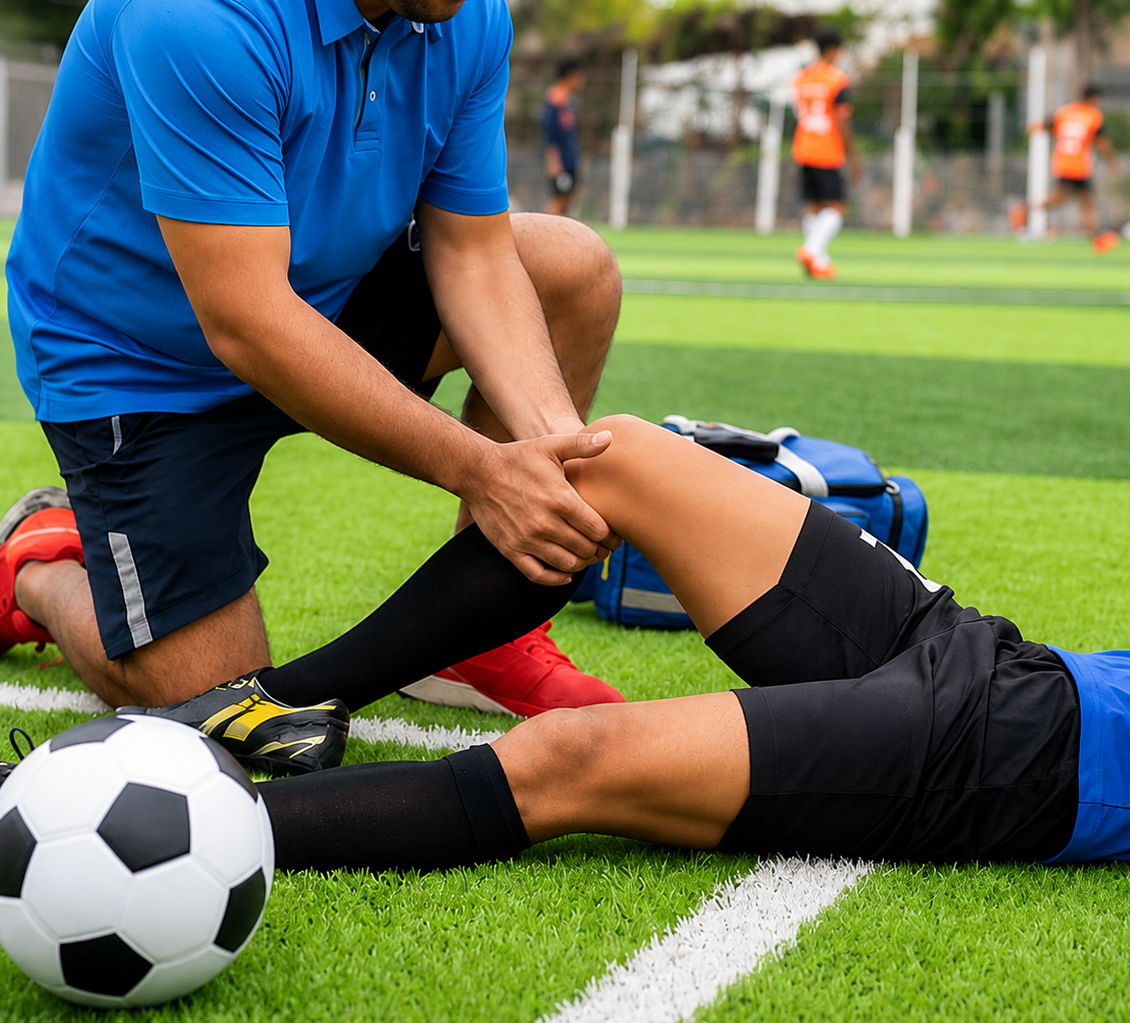
The first priority after injury or surgery is managing swelling, restoring range of motion, and re-establishing basic muscle activation. The quadriceps in particular tend to shut down after ACL injury — a neurological response to the trauma — and getting them firing again is one of the earliest and most important goals.
Walking normally, straightening the knee fully, and achieving basic quad control are the milestones here. Progress in this phase tends to feel slow, which is frustrating, but pushing too hard too early creates problems that compound later.
The strength phase: roughly two to four months
Once range of motion is restored and basic control is re-established, the focus shifts to rebuilding strength in the quadriceps, hamstrings, glutes, and calf — the entire kinetic chain, not just the knee in isolation.
This is where a lot of ACL rehab used to fall short. People would do their quad sets and straight leg raises, feel okay, and get cleared to return to activity far too early. The strength deficits that remained — often invisible to both patient and clinician without objective testing — left the knee vulnerable.
Strength targets at this phase are typically set relative to bodyweight and compared between limbs. A limb symmetry index below 85-90% in quadriceps strength is associated with significantly elevated re-injury risk. This is where VALD Dynamo testing gives us real data rather than an educated guess.
The power and neuromuscular phase: roughly three to six months
Strength is necessary but not sufficient. The knee also needs to be able to produce force quickly — what's called rate of force development — and to do so in response to unpredictable demands. Jumping, landing, changing direction, reacting to an opponent — these require neuromuscular qualities that don't automatically follow from strength work.
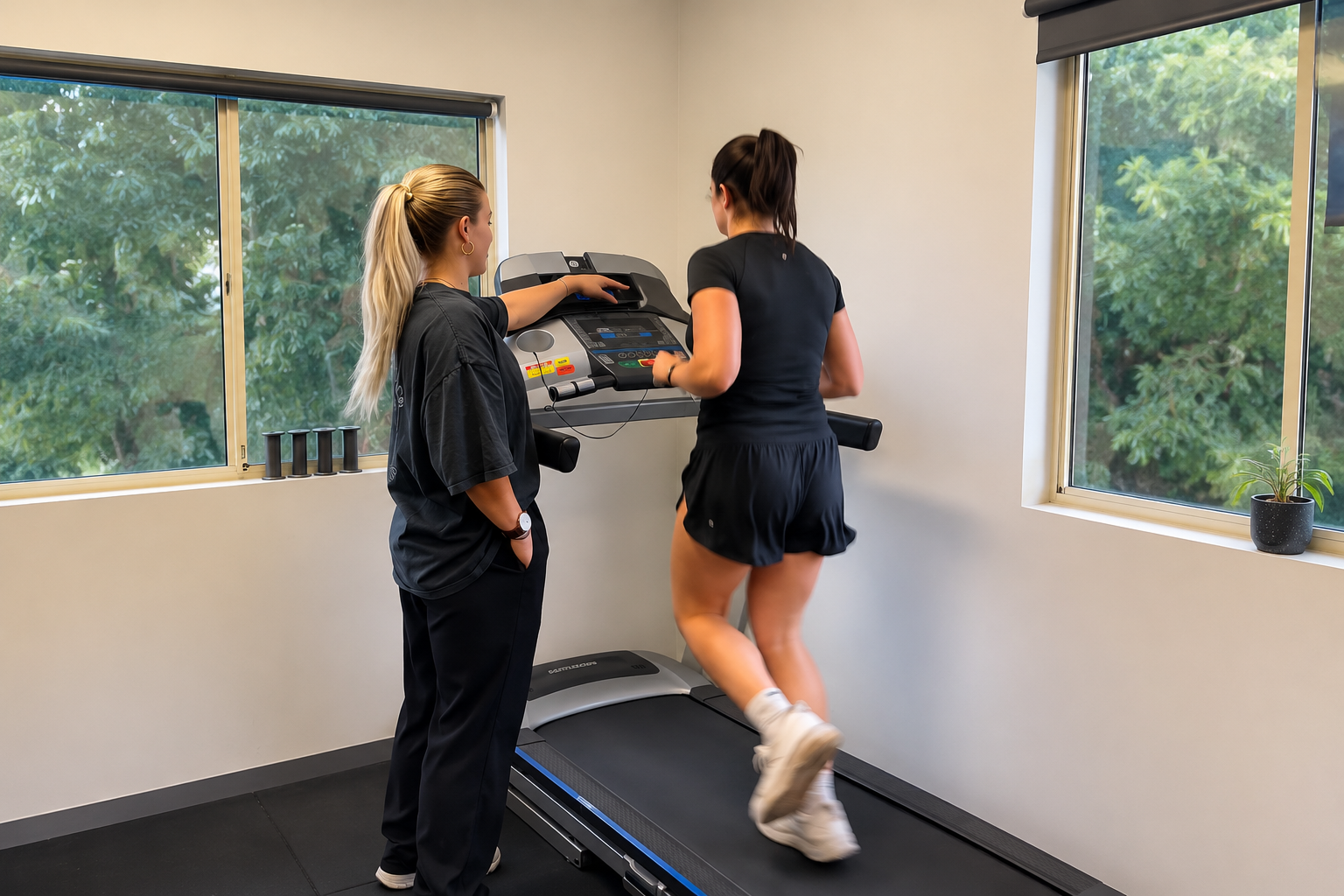
Plyometric training, agility work, and sport-specific movement patterns are introduced progressively in this phase. Landing mechanics are assessed carefully — how the knee behaves when absorbing force from a jump is one of the most important predictors of re-injury risk, and it's something the ForceDecks measure with a precision that observation alone cannot match.
Return to sport: typically nine to twelve months, criteria-dependent
The nine to twelve month timeframe cited for ACL return to sport is a guide, not a guarantee. The research on re-injury rates is sobering: athletes who return to sport before nine months have significantly higher re-injury rates than those who wait, and athletes who don't meet strength and symmetry criteria at the time of return have higher rates again.
The criteria that matter most — and that we assess objectively at Active Balance — include quadriceps and hamstring limb symmetry index above 90%, acceptable single-leg hop test performance, satisfactory landing mechanics, and psychological readiness. The psychological component is real and often underweighted: fear of re-injury affects movement patterns in ways that increase risk, and it needs to be addressed as deliberately as the physical components.
The most common mistakes we see
- Returning too early is the obvious one, and it remains stubbornly common despite everything the evidence says. The combination of feeling good, being bored, and having people around you who want you back in the team creates enormous pressure to rush the timeline. Resist it.
- Neglecting the uninjured side is less obvious but genuinely important. The non-surgical leg often deconditioned during the period of reduced activity, and asymmetries between limbs affect movement patterns in ways that increase load on the recovering knee.
- Stopping rehab when pain resolves is another common pattern. Pain is a poor proxy for tissue readiness. Many people feel essentially normal at four or five months post-surgery and interpret that as being ready to return. Feeling normal means the acute injury has settled — it doesn't mean the strength, power, and neuromuscular qualities required for sport have been fully restored.
- Skipping the gym after return to sport is the final one. The research on re-injury prevention is clear that ongoing strength training after return to sport significantly reduces risk. ACL rehab doesn't end at return to sport — it transitions into a maintenance phase that should continue for at least the remainder of that season.
What good ACL rehab actually looks like
It's criteria-based, not calendar-based. It uses
objective testing — strength, symmetry, power, landing mechanics — to make decisions rather than relying solely on time elapsed and how someone feels. It addresses the whole kinetic chain, not just the knee. It includes psychological readiness as a genuine component of return-to-sport clearance. And it treats return to sport as a milestone in a longer process, not an endpoint.
At Active Balance, our return-to-sport testing uses the VALD ForceDecks and Dynamo to give us data that informs every stage of that decision. If you're navigating ACL rehab — whether you're two weeks post-surgery or eight months in and unsure whether you're ready — we'd be glad to help you work through it properly.
Christian Rees — Physiotherapist (BPhysio Hons), Active Balance Physio
Book a return-to-sport assessment or ACL rehab consultation at activebalancephysio.com.au or call (08) 7123 4148.