
Osteoporosis Management Adelaide
Physiotherapy St Marys
Been told you have osteoporosis or osteopenia and not sure what to do next? You're not alone, and the good news is that exercise is one of the most powerful tools available for managing bone density, reducing fracture risk, and maintaining your independence as you age.
At Active Balance our physiotherapists can design evidence-based exercise programs specifically for people with low bone density, helping you build strength, improve balance, and move with confidence.
osteoporosis management in Adelaide
What Is Osteoporosis?
Osteoporosis is a condition characterised by reduced bone density and deterioration of bone tissue, making bones more fragile and significantly increasing the risk of fracture — particularly of the hip, spine, and wrist. It is often called a "silent disease" because bone loss occurs without symptoms until a fracture happens.
Osteopenia refers to bone density that is lower than normal but not yet in the osteoporosis range — think of it as an earlier stage on the same continuum. Both conditions are diagnosed via a DEXA scan, which measures bone mineral density and generates a T-score:
- T-score above -1.0 — normal bone density
- T-score between -1.0 and -2.5 — osteopenia
- T-score below -2.5 — osteoporosis
Bone is living tissue that constantly remodels itself throughout life. Up until our mid-30s, bone formation outpaces bone resorption — after that, the balance gradually shifts. The goal of osteoporosis management is to slow this process, stimulate bone formation where possible, and reduce the risk of fractures through improved strength, balance, and movement confidence.
Who does it Affect?
Osteoporosis affects an estimated 1 in 3 women and 1 in 5 men over the age of 50 in Australia — making it one of the most common chronic health conditions in the country. It is particularly prevalent in:
- Post-menopausal women — the most commonly affected group, as the drop in oestrogen after menopause significantly accelerates bone loss
- Men over 70 — often underdiagnosed due to the perception that osteoporosis is a women's condition
- People with a family history of osteoporosis or fragility fractures
- Those with a history of long-term corticosteroid use — one of the most significant secondary causes of bone loss
- People with low body weight or a history of disordered eating
- Those with conditions affecting nutrient absorption — coeliac disease, inflammatory bowel disease, and others
- People who are physically inactive or have spent prolonged periods immobilised
- Smokers and those with high alcohol intake
- Those with vitamin D deficiency — extremely common in Australia despite the sunny climate, particularly in older adults who spend less time outdoors
Contributing Factors & Causes
- Age — bone density naturally declines with age in both men and women
- Female sex and post-menopausal oestrogen decline
- Family history of osteoporosis or hip fracture
- Low calcium and vitamin D intake throughout life
- Physical inactivity — particularly lack of weight-bearing and resistance exercise
- Long-term corticosteroid use (e.g. prednisone)
- Smoking and excessive alcohol consumption
- Low body weight or low BMI
- Medical conditions affecting hormone levels — hypogonadism, hyperthyroidism, hyperparathyroidism
- Conditions affecting nutrient absorption — coeliac disease, Crohn's disease
- A history of eating disorders — particularly anorexia nervosa
Symptoms & Signs
Osteoporosis itself is largely asymptomatic until a fracture occurs. However there are some signs that may indicate significant bone loss:
- A fragility fracture — a fracture occurring from a fall from standing height or less, or with minimal trauma. The most common sites are the hip, spine, and wrist.
- Gradual loss of height over time — often the first noticeable sign of vertebral compression fractures
- Development of a stooped or rounded posture (kyphosis) — caused by vertebral compression fractures in the thoracic spine
- Sudden onset of back pain in an older adult — may indicate a vertebral compression fracture even without a significant fall
- Chronic back pain or rib pain — associated with multiple vertebral fractures
- Many people first discover they have osteoporosis after a fracture — reinforcing the importance of early screening, particularly in post-menopausal women and men over 70.
How Physiotherapy Can Help Manage Osteoporosis
Exercise is the most powerful non-pharmacological intervention for osteoporosis management — and physiotherapy is the most appropriate profession to design and supervise that exercise safely and effectively.
Assessment begins with a thorough evaluation of your bone density results, fracture history, balance, strength, posture, and movement confidence. We factor in any vertebral fractures, postural changes, or pain that may influence your exercise prescription.
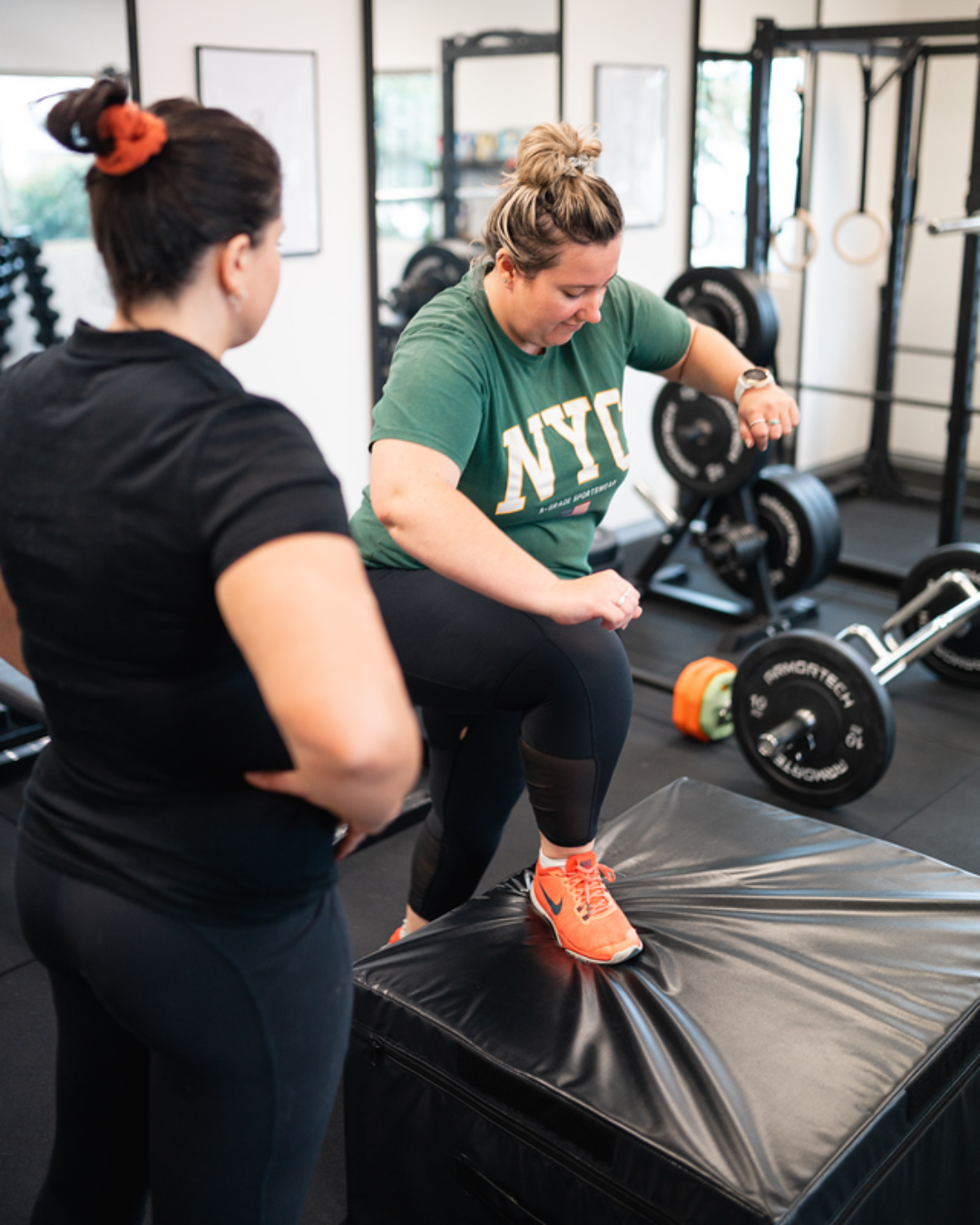
Bone-loading exercise prescription is the cornerstone of osteoporosis management. Research is clear that two specific types of exercise stimulate bone formation and slow bone loss — progressive resistance training and impact loading. We design a program that delivers the right type and magnitude of bone stimulus for your individual situation, progressed carefully to remain safe and effective. Not all exercise is equal for bone health — gentle walking alone is insufficient. We make sure your program is actually doing the job.
Balance and fall prevention is equally critical. Hip fractures — the most feared complication of osteoporosis — are almost always the result of a fall. Improving balance, lower limb strength, and reactive stepping ability significantly reduces fall risk and therefore fracture risk. This is a core component of every osteoporosis program we design.
Postural retraining addresses the kyphotic posture that commonly develops with vertebral compression fractures — improving thoracic extension, scapular stability, and postural endurance to reduce further vertebral loading and improve quality of life.
Education and activity guidance ensures you understand which activities are safe, which to approach with caution, and which to avoid — particularly high-risk movements such as forward trunk flexion under load, which increases vertebral fracture risk in people with significant spinal osteoporosis.
How Massage & Myotherapy Can Help
Chronic muscle tension, postural pain, and the aching associated with vertebral changes are common in people with osteoporosis — particularly those with established kyphosis or vertebral fractures. Remedial massage and myotherapy can provide meaningful relief from muscular pain, reduce thoracic and cervical tension, and improve postural comfort.
Gentle soft tissue work is adapted to suit the needs of people with osteoporosis — avoiding deep pressure over vulnerable bony areas and focusing on muscular and myofascial release in the surrounding tissues. Trigger point therapy to the thoracic paraspinals, trapezius, and hip musculature can help reduce the chronic aching and stiffness that many people with osteoporosis experience.
Our massage and myotherapy team works closely with your physio to ensure treatment is safe, appropriate, and directly complementary to your exercise program.
When to Seek Further Medical Advice
- Sudden onset of back or rib pain — particularly in an older adult after minimal or no trauma, which may indicate a vertebral compression fracture requiring imaging and medical review
- Significant loss of height or rapidly worsening kyphosis — warrants DEXA reassessment and medical review
- A fall resulting in significant pain, inability to weight bear, or deformity — requires urgent medical assessment to rule out fracture
- No DEXA scan despite being in a high-risk group — speak to your GP about arranging a scan. Early diagnosis allows earlier intervention and significantly better outcomes
- Symptoms suggesting secondary causes of bone loss — unexplained weight loss, fatigue, or other systemic symptoms should be investigated medically
Prognosis
With the right exercise program and medical management, the trajectory of osteoporosis can be meaningfully improved. While it is not possible to fully reverse established bone loss in most cases, research consistently shows that progressive resistance and impact exercise can slow bone density decline, and in some cases produce modest improvements in bone density — particularly at the hip and spine.
More importantly, the improvements in strength, balance, and movement confidence achieved through a well-structured exercise program dramatically reduce fall and fracture risk — which is the most meaningful outcome for most people.
People who engage in regular supervised exercise, optimise their nutrition, and work with their medical team on pharmacological management where appropriate can maintain excellent function, independence, and quality of life well into older age.
Why Choose Active Balance Physio & Wellness?
Physio-led integrated care
Physio, massage, myo & rehab under one roof
Individualised treatment plans
Friendly, caring team focused on results
Convenient Adelaide location
After-hours appointments available
Frequently Asked Questions
Q: Is exercise safe if I have osteoporosis? Yes — and it's essential. The right exercise is one of the most important things you can do for bone health and fracture prevention. The key is doing the right type and amount for your individual situation, with appropriate precautions — which is exactly what we help you with. Avoiding exercise out of fear of fracture is counterproductive and increases risk in the long run.
Q: What type of exercise is best for osteoporosis? Progressive resistance training and impact exercise (such as jumping, hopping, or brisk walking with impact) are the most effective for stimulating bone formation. Gentle exercise like swimming and cycling, while beneficial for general health, does not provide sufficient bone stimulus. Your physio will design a program that delivers the right bone-loading stimulus safely for your situation.
Q: I've already had a fracture — can I still exercise? Yes, though your program will be adapted to your fracture history and any restrictions it creates. Exercise is particularly important after a fracture to prevent further bone loss and reduce the risk of subsequent fractures. We work closely with your medical team to ensure your program is appropriate for your situation.
Q: Do I need a referral? No referral is needed to book directly with us. If you're accessing treatment through Medicare's Chronic Disease Management plan, your GP will need to set up a referral — this allows you to access Medicare-rebated allied health visits per year, which can be used for physiotherapy.
Q: How is osteoporosis different from osteoarthritis? Osteoporosis affects bone density and fracture risk — it is a metabolic bone condition. Osteoarthritis affects the cartilage surfaces of joints — it is a degenerative joint condition. They are completely different conditions that can coexist in the same person, particularly in older adults. Both respond well to exercise-based management.
✅Private Health Rebates
✅Same Week Appointments
✅Experienced Team
✅Onsite Parking
Ready to Take Control of Your Bone Health?
Osteoporosis is manageable, and the earlier you start, the better your long-term outcomes. Don't wait for a fracture to take action. Book an appointment with our experienced physios today.