The Traditional View — Surgery as Default
For many years, the standard advice for a complete ACL rupture — particularly in active people and athletes — was clear: you need surgery. This was based on two key assumptions:
- The ACL cannot heal on its own
- ACL reconstruction prevents the development of knee osteoarthritis long term
Both of these assumptions have been significantly challenged by recent research.
What the Evidence Now Shows
- ACLs can heal without surgery
The KANON trial — Knee Anterior Cruciate Ligament Nonsurgical vs Surgical Treatment — is one of the most important studies in this area. A secondary analysis by Filbay and colleagues published in the BMJ in 2022 examined MRI evidence of ACL healing across participants who had either rehabilitation alone or rehabilitation with optional delayed reconstruction.
The findings were striking. At the two year follow up, 53% of participants in the rehabilitation alone group showed evidence of ACL healing on MRI — rising to 58% at five years. This directly contradicts the long-held belief that the ACL is incapable of natural healing.
More importantly, participants who showed evidence of ACL healing reported better sport and recreational function and better knee-related quality of life at two years compared to those who had early or delayed reconstruction. The ligament was healing — and people were doing well because of it.
- Surgery doesn't prevent osteoarthritis
One of the primary arguments for ACL reconstruction has historically been that it protects the knee from developing osteoarthritis. A 20-year follow-up study by Yperen and colleagues published in the American Journal of Sports Medicine found no significant difference in the rate of knee osteoarthritis between operative and non-operative groups.
Interestingly, while the surgical group demonstrated greater objective knee stability on testing, their subjective and functional outcomes were actually poorer than the non-operative group. Greater stability on a clinical test did not translate to better real-world function.
This doesn't mean surgery is wrong — but it does mean the osteoarthritis prevention argument for reconstruction is weaker than previously thought.
So Should You Have Surgery or Not?
This is the question everyone wants a simple answer to — and the honest answer is that it depends. There is no universal right answer for ACL rupture, and anyone telling you otherwise isn't giving you the full picture.
Factors that favour conservative management (rehabilitation without surgery):
- Willingness to commit to a structured, long-term rehabilitation program
- Lower demand sports or activities that don't involve heavy pivoting and cutting
- Older age or lower activity level
- Absence of significant associated injuries (meniscus, cartilage)
- Good knee stability on clinical assessment despite the ACL tear
- Preference to avoid surgery and its associated risks and recovery time
- The "coper" profile — some people adapt remarkably well to ACL deficiency through neuromuscular compensation
Factors that may favour surgical reconstruction:
- High level competitive sport involving heavy pivoting, cutting and change of direction — particularly at elite or semi-elite level
- Significant associated injuries, particularly unstable meniscus tears requiring surgical repair
- Persistent instability despite adequate rehabilitation
- Young age with a very high activity level and many years of sport ahead
- Previous ACL reconstruction on the other knee
- Failure of conservative management — the "optional delayed surgery" pathway
The KANON trial approach
What the research supports is a treatment decision framework rather than a default pathway. The KANON trial used a "rehabilitation plus optional delayed surgery" model — participants started with structured rehabilitation, and surgery was only performed if conservative management failed to produce adequate knee function. This approach produced good outcomes and meant many people avoided surgery entirely.
This is increasingly being adopted as best practice — try rehabilitation first, assess the response, and make a more informed surgical decision with real data rather than defaulting to reconstruction on diagnosis.
What Rehabilitation Looks Like
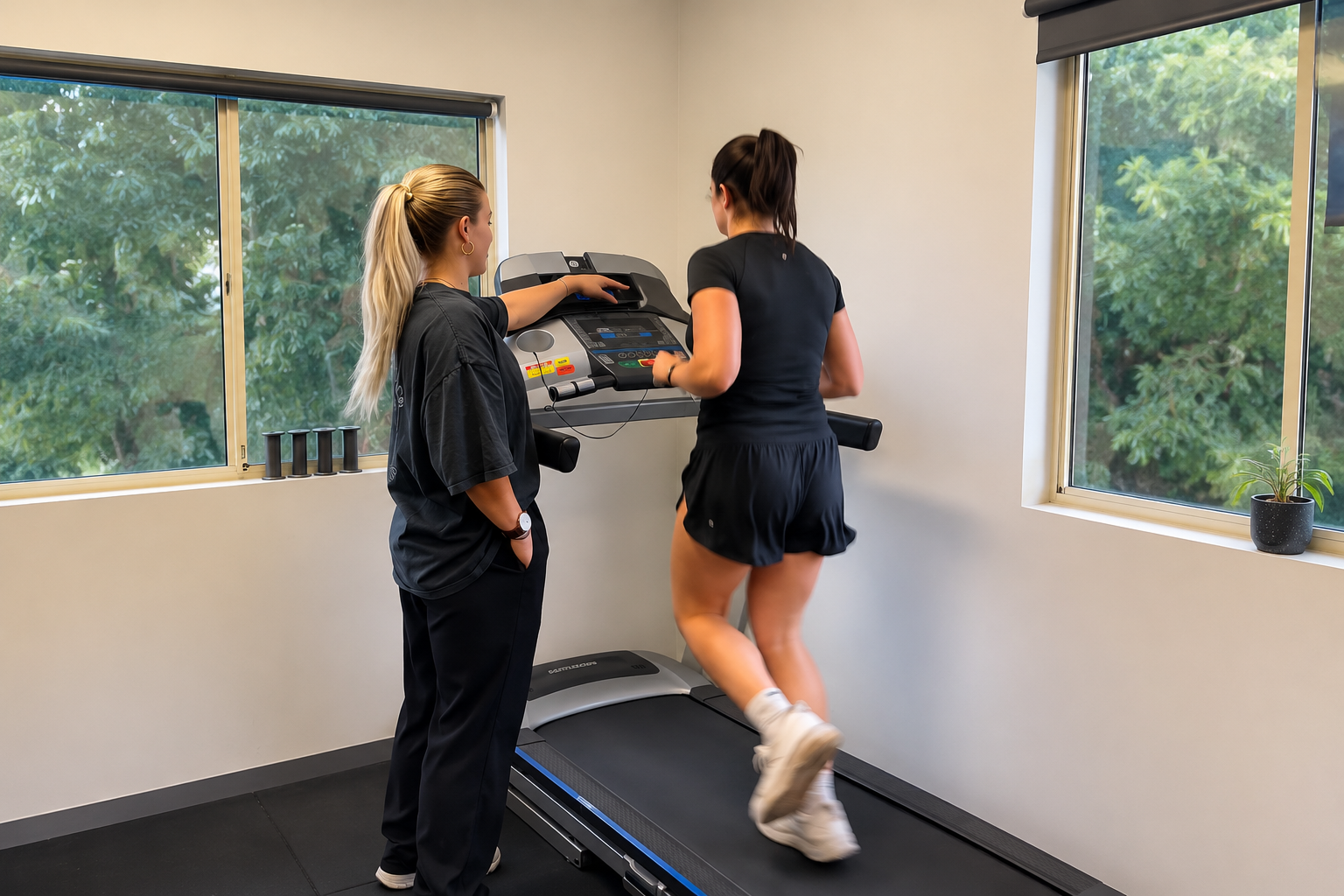
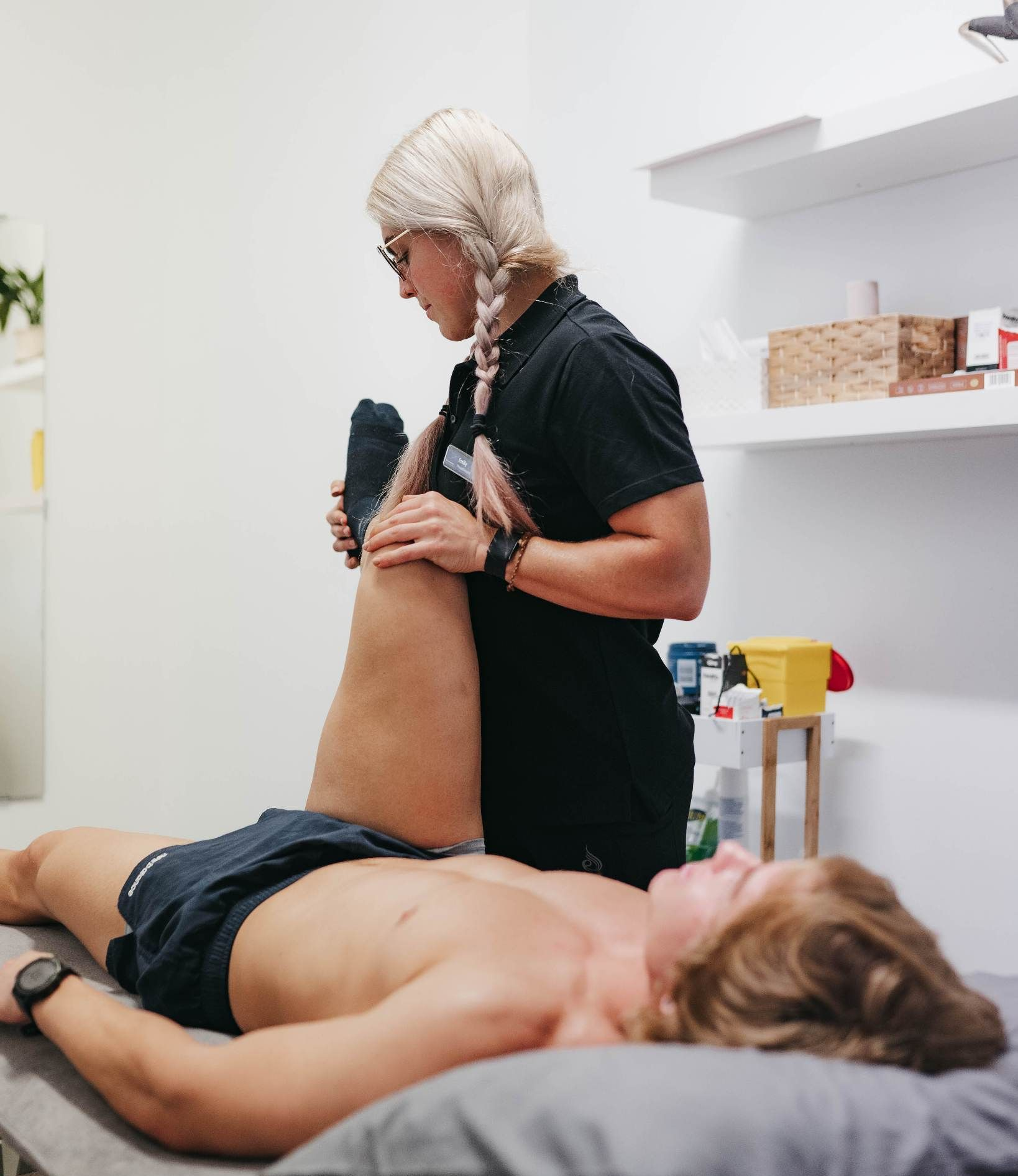
Whether you pursue conservative management or elect for surgery, rehabilitation is the cornerstone of ACL recovery. For reconstruction, pre-operative rehabilitation ("prehab") improves surgical outcomes. Post-operatively, rehabilitation is the primary determinant of return to sport success. For conservative management, rehabilitation is the entire treatment.
A comprehensive ACL rehabilitation program progresses through several phases:
- Acute phase — managing swelling, restoring range of motion, maintaining strength and beginning neuromuscular training. Goals: full range of motion, minimal swelling, normal walking pattern.
- Strength and neuromuscular phase — progressive strengthening of the quadriceps, hamstrings, glutes and hip stabilisers. Single leg strength and control. Balance and proprioception training. Goals: symmetrical strength, good single leg control.
- Running and loading phase — return to straight line running, progressive plyometric loading, sports-specific movement patterns. Goals: running without compensation, ability to perform sport-specific movements confidently.
- Return to sport phase — high intensity sport-specific training, agility, reactive drills and psychological readiness assessment. Return to sport testing using objective strength and performance measures. Goals: symmetrical performance on objective testing, confidence and readiness for return to competition.
- The timeline
- ACL rehabilitation takes time — typically nine to twelve months minimum for return to competitive sport, regardless of whether surgery is involved. Research consistently shows that returning before nine months significantly increases re-injury risk. Objective return to sport criteria — not just time — should guide the decision to return.
Return to Sport Testing
At Active Balance, we use VALD performance testing — including ForceDecks force plates and Dynamo handheld dynamometry — to objectively measure strength symmetry and functional performance as part of return to sport assessment. This removes the guesswork from the return to sport decision and gives athletes, coaches and surgeons real data to work with.
A limb symmetry index of 90% or greater across key measures is the standard used in current return to sport guidelines — meaning the injured leg needs to be performing at 90% or more of the uninjured leg before return to competitive sport is considered safe.
An Important Caveat
This post specifically addresses isolated ACL ruptures. The picture changes when the ACL tear is accompanied by significant meniscus injury, cartilage damage or multiligament involvement — these associated injuries often require surgical management regardless of the ACL decision.
Every ACL injury is different. The right pathway for you depends on your specific anatomy, injury profile, sport, age, goals and personal preferences. The decision should be made collaboratively with your physiotherapist, GP and orthopaedic surgeon if surgery is being considered — with a full understanding of the evidence on both sides.
If you've injured your ACL and want an evidence-based assessment of your options, book online or call us on (08) 7123 4148. We can help you understand your injury, discuss the research and design a rehabilitation plan whether you're pursuing conservative management or preparing for surgery.