What Is De Quervain's Tenosynovitis?
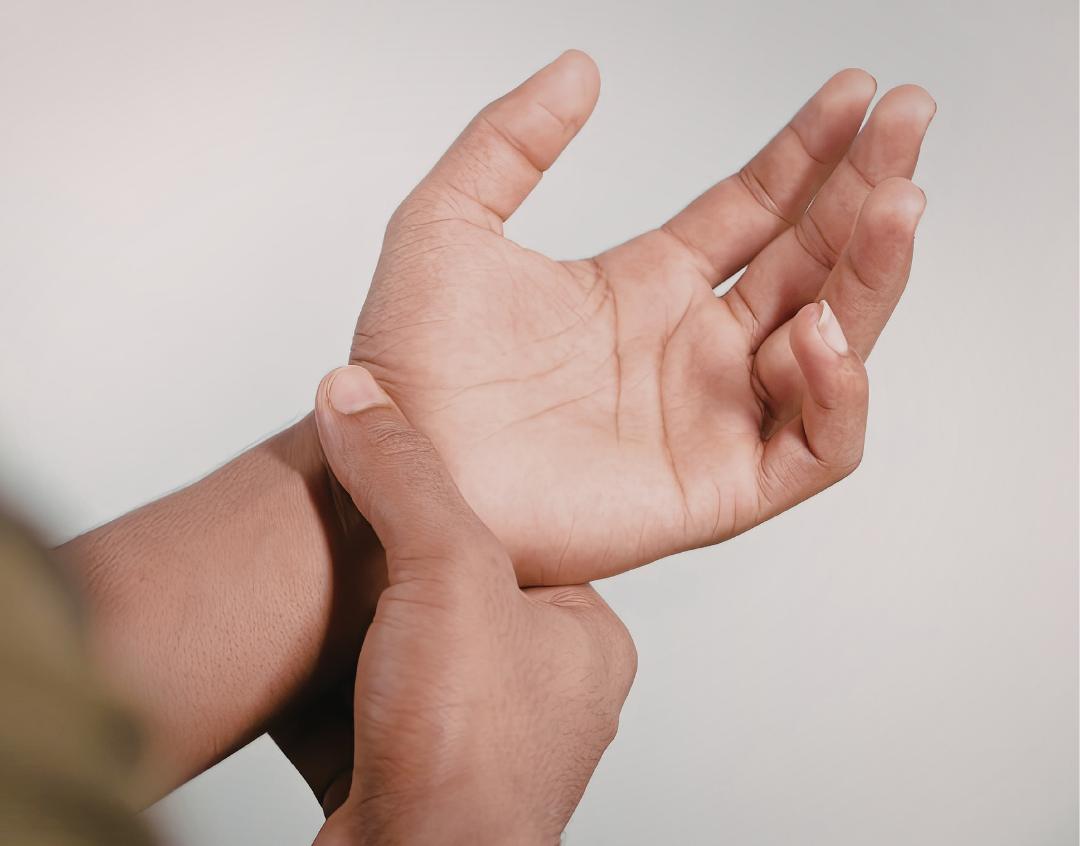
On the thumb side of your wrist, two tendons run through a narrow tunnel of tissue called a sheath. These tendons — the abductor pollicis longus and extensor pollicis brevis — control the movement of lifting and extending the thumb. Their job is to help you grip, pinch, and position your thumb for the thousand small tasks your hands perform every day.
De Quervain's tenosynovitis occurs when these tendons become irritated and inflamed — either from overuse, or from the sheath that surrounds them becoming thickened and constricted. The result is pain, swelling and that characteristic catching or sticking sensation when you move the thumb.
The Finkelstein test — wrapping your fingers over your thumb and bending the wrist downward — is the classic clinical test. If that movement reproduces your pain sharply, De Quervain's is very likely what you're dealing with.
Why New Mothers Are So Vulnerable
The connection between new motherhood and De Quervain's is well established in the literature — and makes complete sense when you think about what new mothers actually do with their hands all day.
The single biggest contributor is the way babies are lifted. When you scoop a baby up with your thumbs pointing upward and fingers spread beneath — which is the natural, instinctive way most people pick up an infant — the thumb tendons are placed under significant load in a lengthened position. Do this repeatedly across dozens of lifts a day, every day, and the cumulative load on those tendons is enormous.
Oestrogen and relaxin — hormones that are significantly elevated during pregnancy and the postpartum period — affect the laxity of tendons and ligaments throughout the body. This increased laxity can make tendons more susceptible to irritation and inflammation when placed under load. It's thought to be one of the reasons De Quervain's is so much more common in women than men generally, and why the postpartum period is a particularly vulnerable window.
Sustained wrist and thumb positions during feeding — particularly supporting the baby's head for extended periods — add further cumulative load to the thumb tendons. Poor feeding ergonomics, which most new mothers have never been shown, can significantly contribute.
- Sleep deprivation and recovery capacity
Chronic sleep deprivation affects tissue recovery and pain sensitivity. A tendon that might recover overnight from a day of load doesn't get that opportunity when sleep is fragmented and insufficient. The body's ability to repair accumulating microtrauma is reduced at exactly the time the load on the tendons is highest.
New mothers frequently assume wrist pain is from the weight of carrying the baby or from an awkward movement during birth. By the time they seek help it can be weeks or months after onset — by which point the condition has often become well established and takes longer to resolve.
What Actually Helps
- Load modification — not load elimination
- The first instinct is to rest completely — but with a newborn that's simply not realistic, and it's also not necessary. The goal is load modification, not elimination. That means:
- Changing how you lift — scooping with the wrists in a more neutral position rather than thumbs-up reduces tendon strain significantly. Your physiotherapist can show you the specific adjustment, which takes about 30 seconds to learn and makes an immediate difference.
- Breaking up prolonged positions — rather than sustaining the same wrist position for an entire feed, small position changes and gentle movement during feeding reduce cumulative load.
- Distributing load — using a feeding pillow, a pram rather than a carrier for longer walks, and enlisting a partner or support person for some lifts during the acute phase can all reduce daily tendon load without compromising care for your baby.
- Physiotherapy — hands-on treatment and rehabilitation
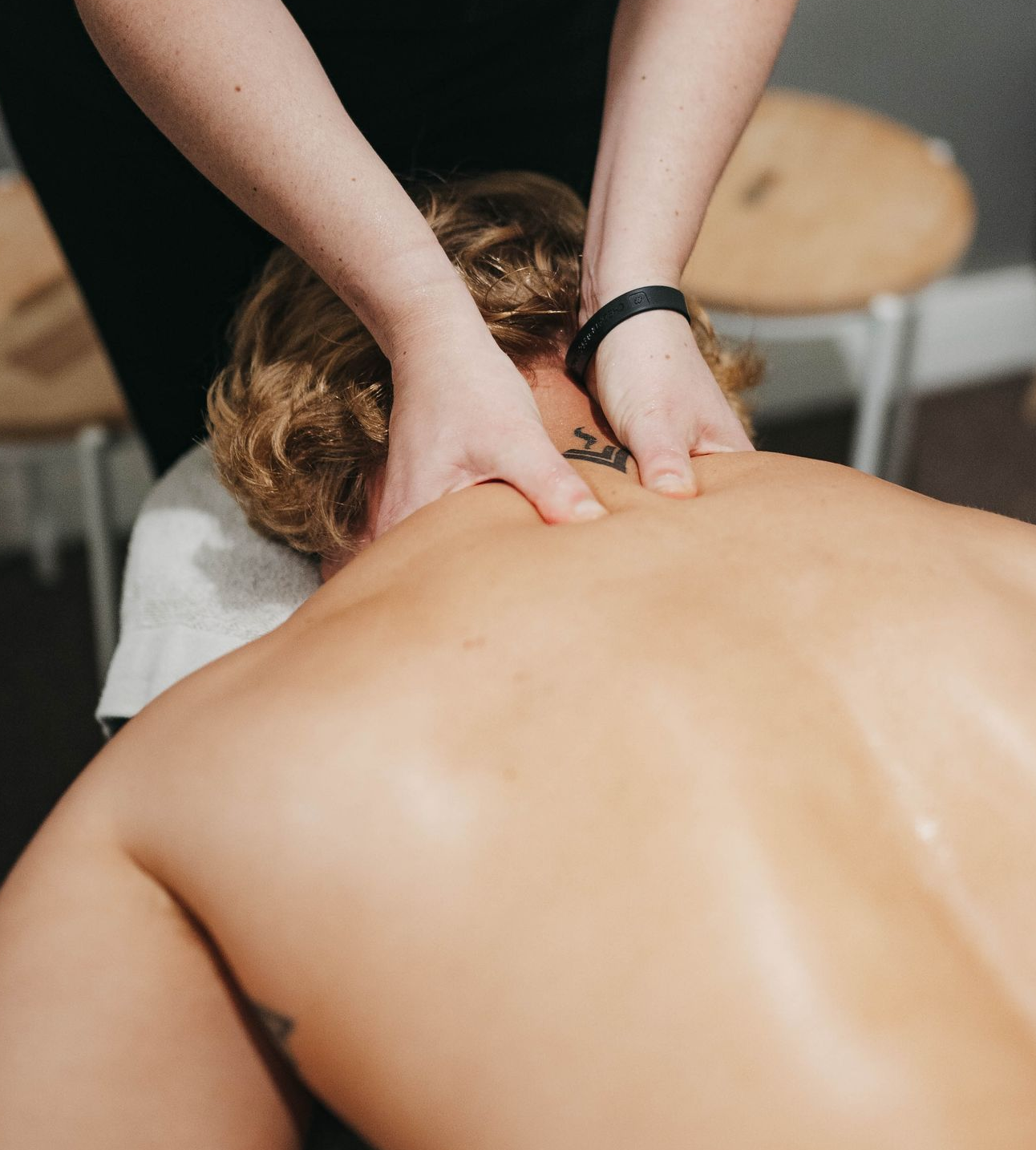
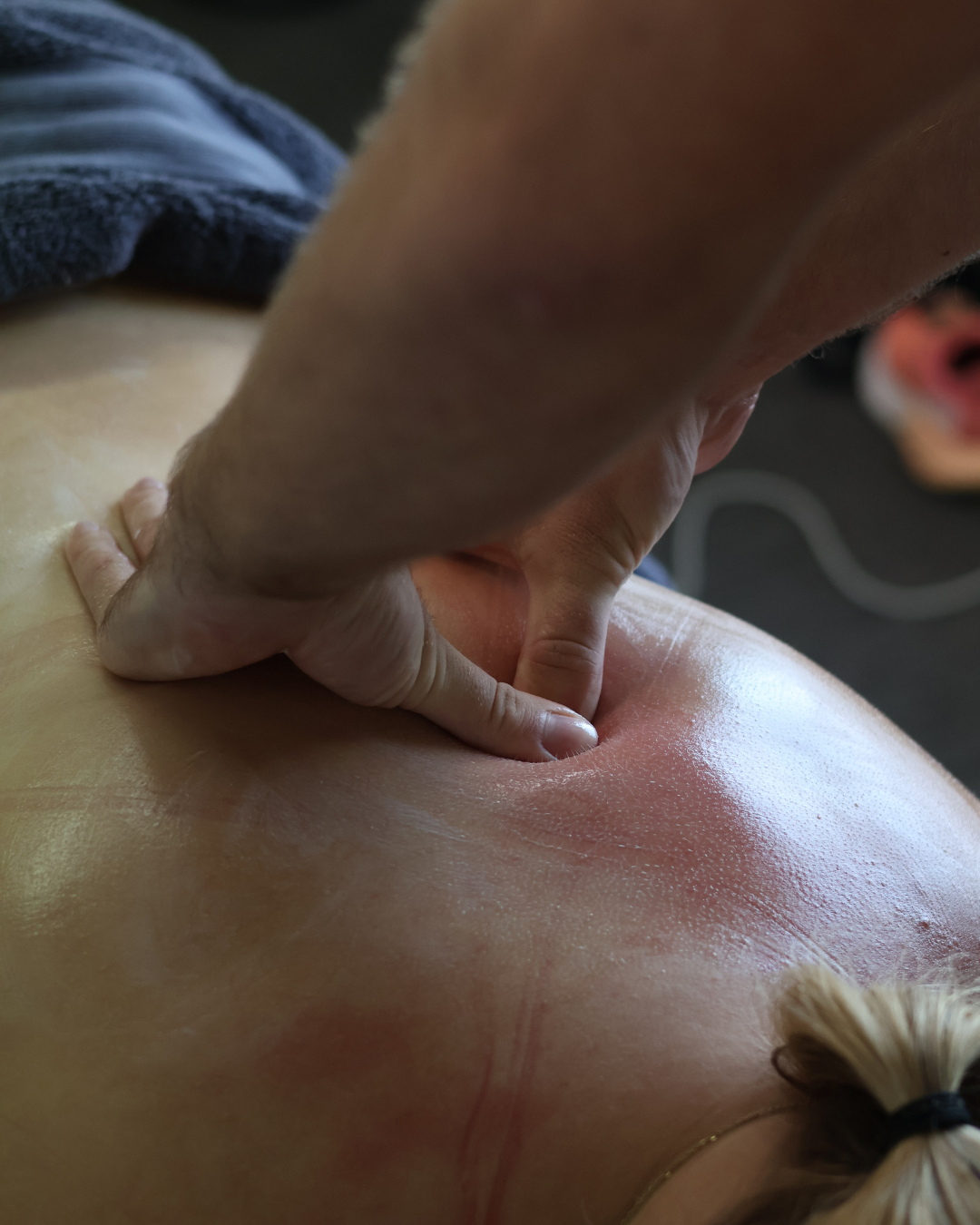
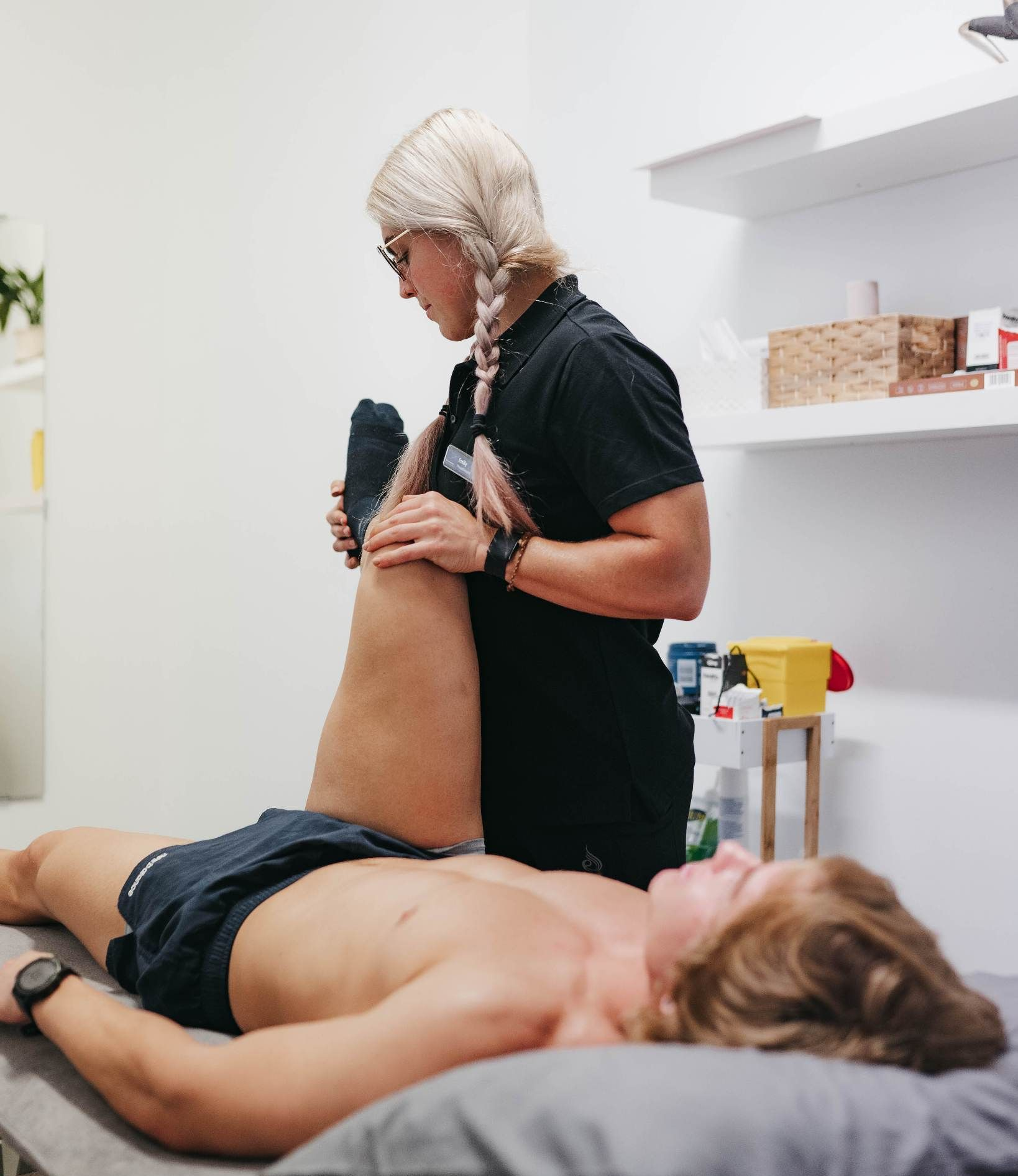
- Manual therapy targeting the thumb, wrist and forearm — including soft tissue release, joint mobilisation and dry needling where appropriate — can significantly reduce pain and inflammation. Importantly, treating the wrist in isolation often misses the picture — the forearm muscles, elbow and even the neck can all contribute to thumb tendon loading and are assessed as part of a thorough evaluation.
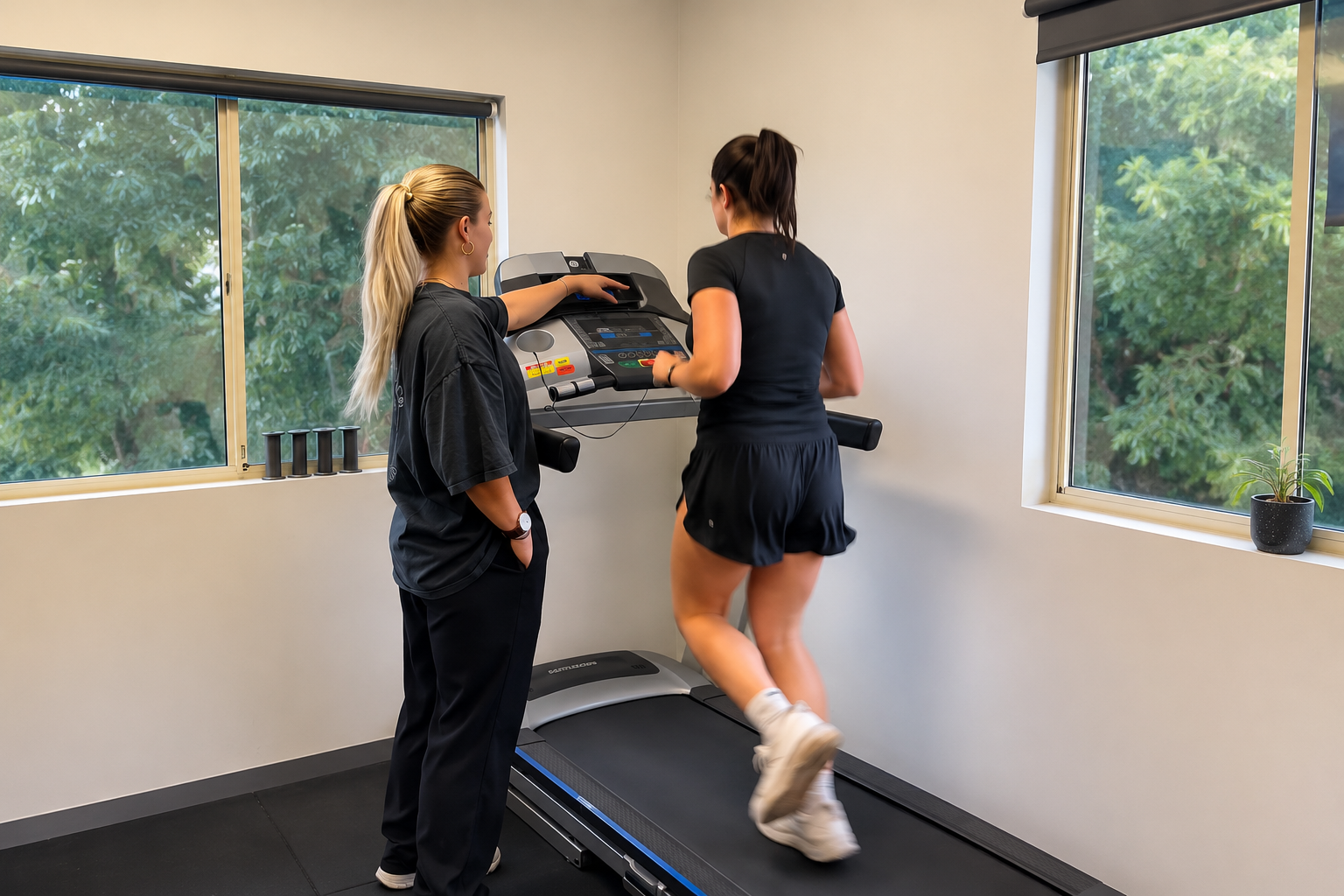
- Exercise-based rehabilitation addresses any weakness in the thumb and wrist muscles, builds tendon tolerance to load and helps prevent recurrence once symptoms settle.
- Taping and splinting
A thumb spica splint — a support that holds the thumb and wrist in a neutral position — can provide meaningful pain relief, particularly overnight and during feeding when sustained positions are unavoidable. Your physiotherapist can fit one and advise when and how to use it without creating dependency.
For more established or stubborn cases, a corticosteroid injection administered by a GP or specialist can provide rapid pain relief that allows rehabilitation to progress more effectively. The evidence for injection in De Quervain's is reasonably good for short-term relief — though it works best when combined with physiotherapy rather than used as a standalone treatment.
Surgery for De Quervain's — which involves releasing the constricted tendon sheath — is rarely necessary and generally only considered after extended conservative management has failed. The vast majority of cases resolve with physiotherapy, load modification and in some cases injection.
A Note on Timing
De Quervain's that is caught and treated early tends to resolve significantly faster than cases that have been present for months. If you're a new mother with thumb or wrist pain, don't put it in the "things to deal with later" pile. A single physiotherapy appointment can confirm the diagnosis, give you immediate practical strategies for load modification and set up a simple home program.
The lifting technique adjustment alone — which takes minutes to learn — can make a meaningful difference to symptoms within days.
It's Not Just New Mums
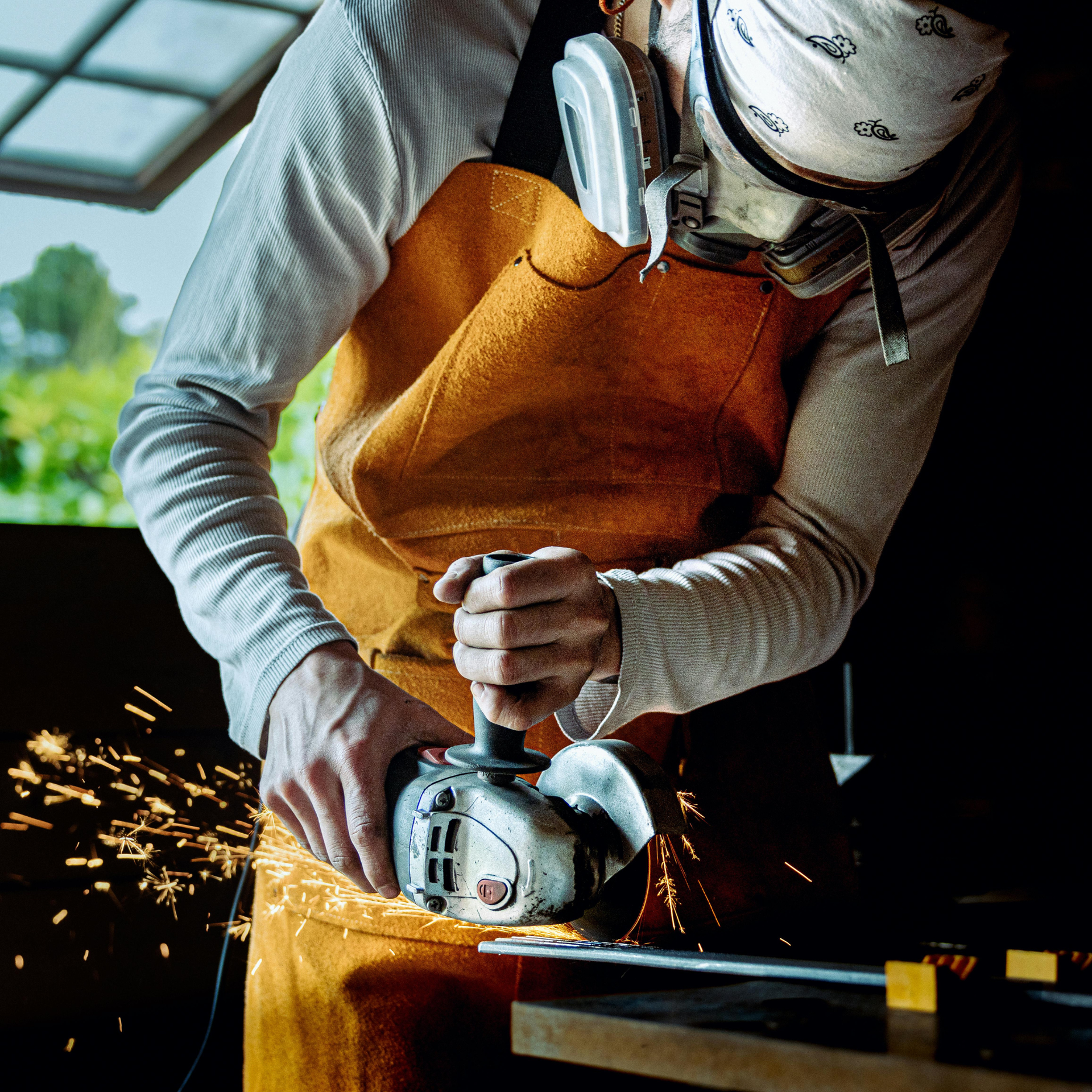
While new mothers are the most commonly affected group, De Quervain's affects anyone whose work or lifestyle involves repetitive thumb and wrist movements — gardeners, tradespeople, hairdressers, musicians, gamers, and anyone who spends significant time scrolling on a phone with one thumb. If the symptoms described in this post sound familiar regardless of whether you've recently had a baby, the same principles apply.
If you're dealing with thumb or wrist pain and think it might be De Quervain's, book online or call us on (08) 7123 4148. We can assess your wrist, confirm the diagnosis and put together a practical plan that works around the reality of your daily life — not a textbook that assumes you can rest.