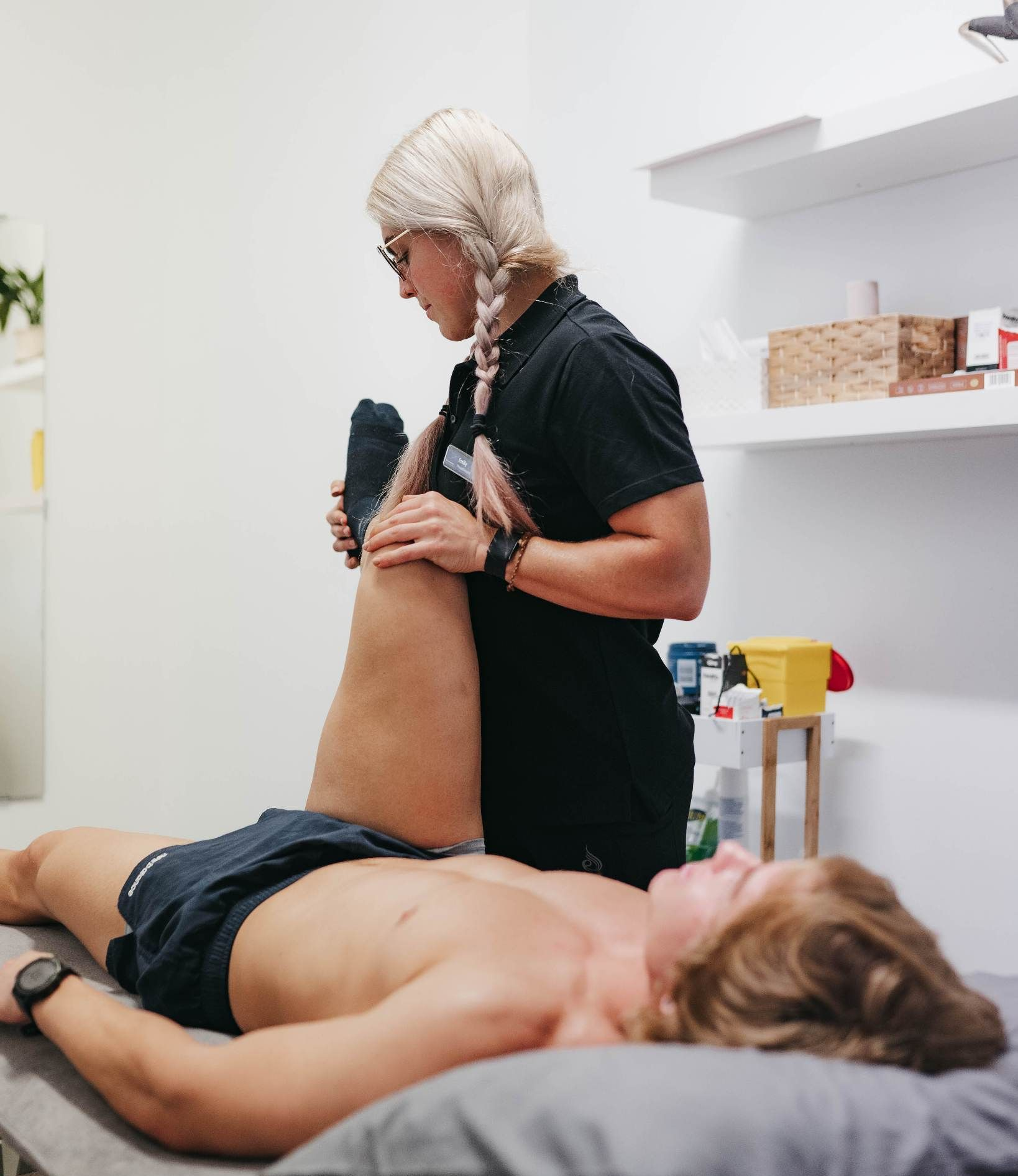
What Happens During Treatment
During a myotherapy session, several things are happening simultaneously in the tissues being treated.
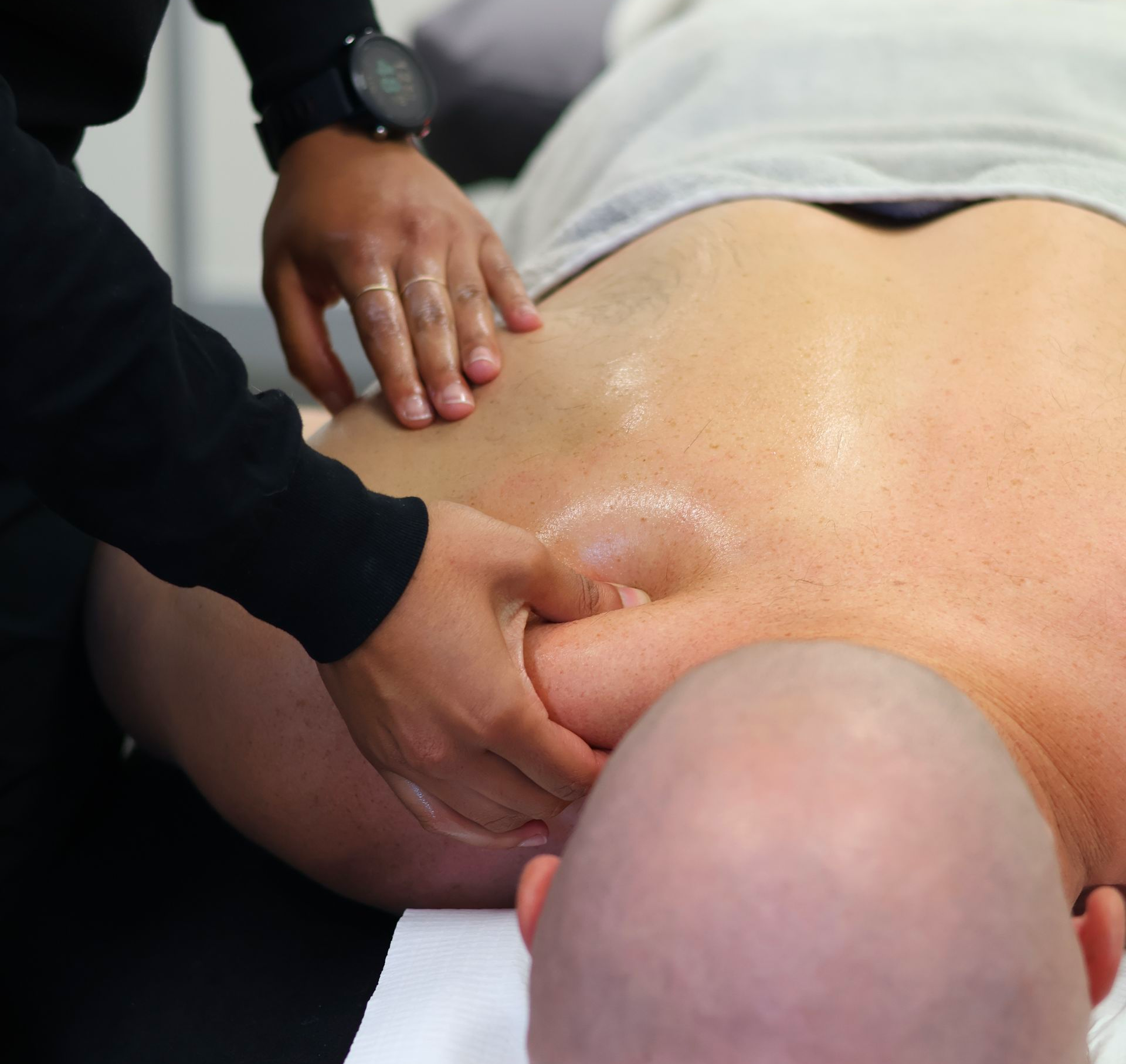
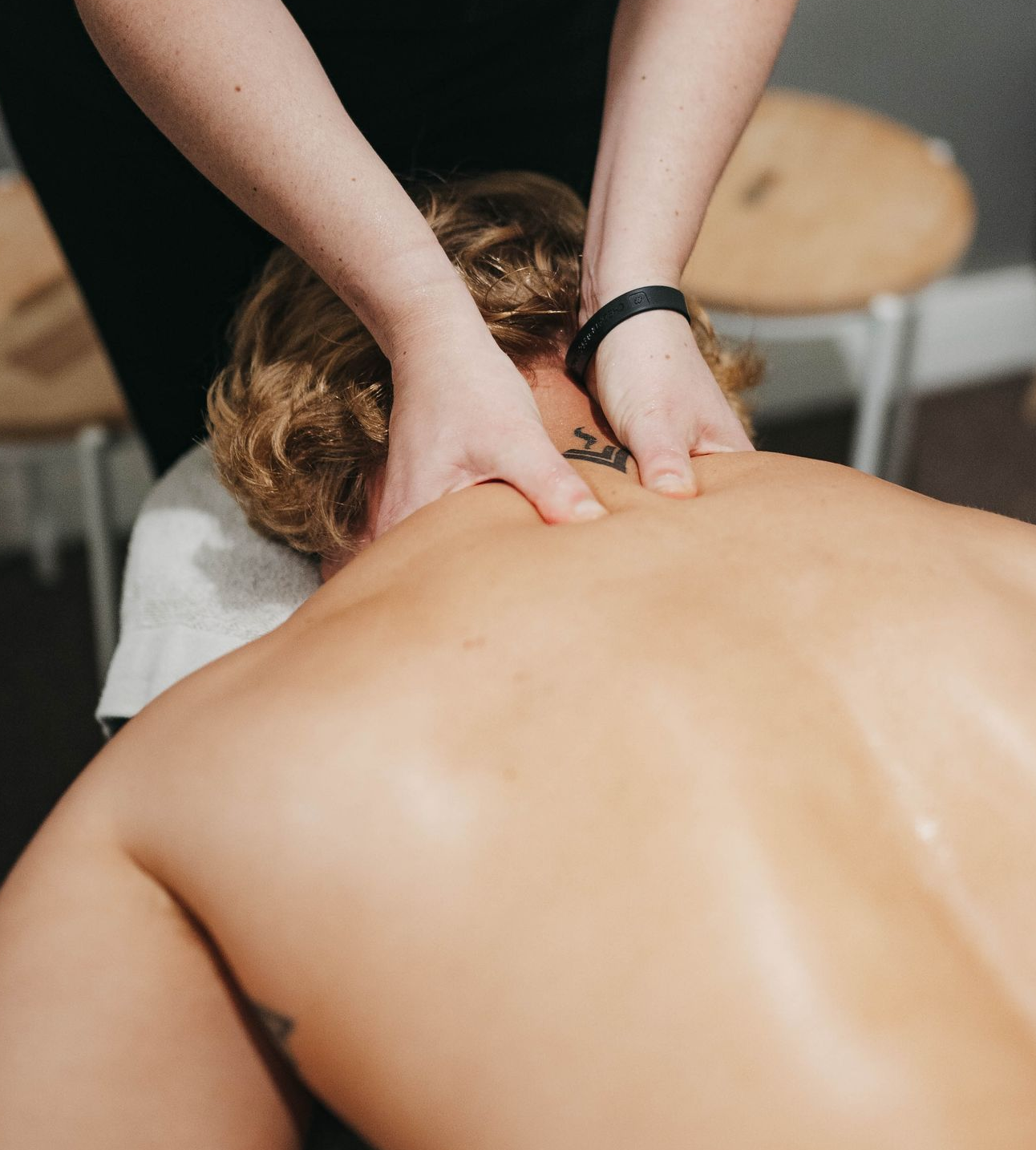
In the early part of a session, hands-on work produces pain inhibition and improved movement — the nervous system responds to the sensory input of treatment by reducing its protective guarding response. This is why many people experience an immediate improvement in range of motion and a reduction in pain during or immediately after treatment. It feels good, movement feels freer and the area feels less tense.
As treatment continues, deeper physiological responses occur. The autonomic nervous system shifts toward a parasympathetic state — the rest and recovery mode. Muscle tension reduces, blood flow to the treated tissues increases through vasodilation and the body enters a state of genuine relaxation. This is why many people feel drowsy, heavy or deeply relaxed after treatment — and why some describe it as feeling "floaty" or unusually calm.
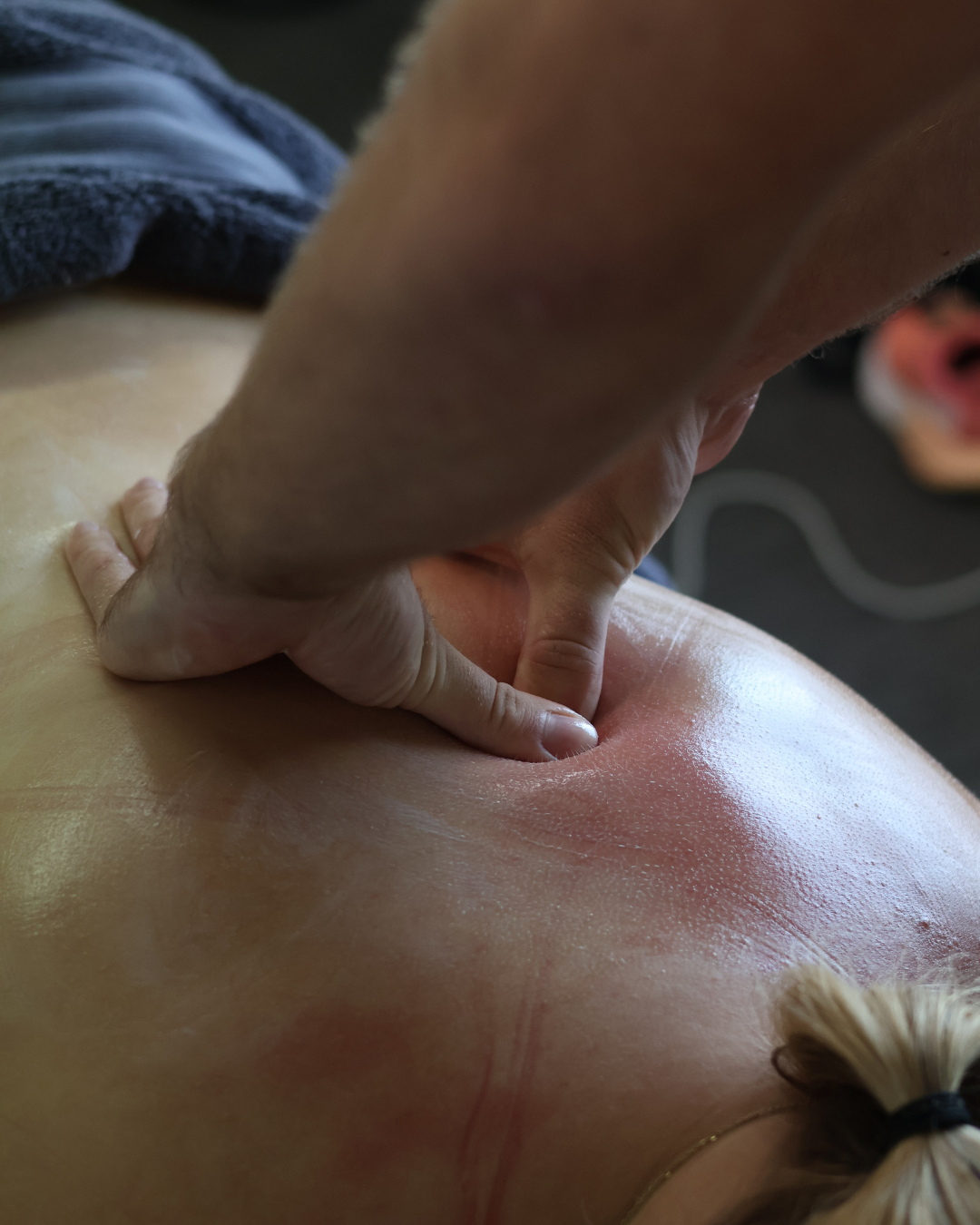
The skin may redden in treated areas and some people notice increased perspiration during or after treatment. These are normal signs of increased circulation and autonomic nervous system response — not cause for concern.
The 12 to 72 Hour Response
Here's where it gets interesting — and where most people's questions arise.
In the 12 to 72 hours following myotherapy treatment, it's common to experience muscular aching that feels similar to delayed onset muscle soreness — the kind of soreness you feel a day or two after a hard gym session. This can range from mild tenderness to more significant aching depending on several factors.
Why does this happen?
When myotherapy works into chronically tight or dysfunctional muscle tissue — particularly trigger points and areas of deep muscle hardening — it creates a localised inflammatory response as part of the healing process. The body is essentially treating the area as if it has experienced a new, controlled stimulus for repair. The soreness you feel is the tissue responding to this stimulus, not evidence of damage.
Think of it as the treatment starting a conversation with tissues that have been stuck in a dysfunctional pattern for a long time. That conversation isn't always comfortable initially.
- The more chronic the condition, the more pronounced the response
This is an important pattern to understand. If you have had muscle tension, pain or dysfunction for weeks, months or years, the tissue response to treatment tends to be more intense and longer lasting than for someone with a recent, acute issue. Chronically tight and fibrotic muscle tissue has a bigger response to being worked through than recently overloaded but otherwise healthy tissue.
This means that if you've been dealing with something long-standing and your post-treatment soreness is significant, it's actually reflecting the chronicity of the problem — not that anything went wrong.
- Symptoms may temporarily return or intensify
One of the more disconcerting post-treatment experiences is when symptoms that had been absent — referred pain, tingling, numbness or aching in other areas — return briefly after treatment. This happens when trigger points that have been contributing to referred symptoms are directly treated. Reproducing and then releasing a trigger point can temporarily activate its referral pattern before it settles.
This is actually a positive sign — it confirms the trigger point was contributing to your symptoms and that it has been directly addressed. It typically settles within 24 to 48 hours.
What to Do in the Days After Treatment
- Hydrate well — increased circulation and the physiological response to treatment means your body benefits from good hydration in the days following a session. Drink water consistently rather than waiting until you're thirsty.
- Move gently — light movement and gentle stretching in the days after treatment supports the healing response and prevents the treated areas from stiffening back up. Avoid intense training for 24 to 48 hours after a significant treatment session.
- Stretch through the chain, not just the sore muscle — if you're doing stretching after myotherapy, focus on movements that take the whole muscular chain through range rather than isolated muscle stretches. Stretching the entire posterior chain — rather than just the hamstring or just the calf — is more effective because muscle groups work together and restricting one part of the chain limits the others.
- Apply heat if needed — gentle heat to sore areas can help with the post-treatment aching. Avoid ice unless there is significant swelling from an acute injury.
- Don't judge the treatment by how you feel the next day — the 24 to 48 hour window is not a good measure of whether the treatment worked. How you feel after the soreness resolves — typically three to five days post-treatment — is the more meaningful indicator.
Why Treatment Spacing Matters
A common question is how frequently to come in for myotherapy — and the post-treatment response is part of why the answer matters.
Treatment every 10 to 14 days allows the body to complete the acute healing processes initiated by each session before the next one begins. Treating too frequently before the tissue has had time to respond and recover can mean the body never fully processes the changes from each session.
As treatment progresses and the post-treatment soreness decreases, it's a sign that the superficial layers of muscle tension are resolving and treatment is reaching the deeper layers of dysfunction. This is the process working as intended.
Over successive treatments, the interval between sessions typically increases — from weekly or fortnightly to monthly and eventually to maintenance sessions as needed. The goal is always progressive improvement toward independence, not ongoing dependency on treatment.
When to Be Concerned
Post-treatment soreness that follows the pattern described above — appearing 12 to 48 hours after treatment, feeling like muscle soreness, and resolving within two to three days — is normal and expected.
You should contact your therapist if:
- Pain is severe or significantly worsening beyond 48 hours
- You notice unusual swelling, bruising or skin changes that weren't there before
- You experience chest pain, difficulty breathing or other systemic symptoms
- Post-treatment soreness is not improving with subsequent treatments over time
If you have questions about what to expect from your myotherapy treatment or want to discuss whether your post-treatment response is normal, call us on (08) 7123 4148 or raise it at your next appointment. We're always happy to talk through what's happening in your body.