Physiotherapy for Patella Tendinopathy: Getting You Back on Track
If you’ve ever had pain just below your kneecap, especially during sport or exercise, you may have experienced something called patella tendinopathy. Often called “jumper’s knee”, this condition is common in people who play sports involving running, jumping, or sudden changes of direction, but it can affect anyone for a number of reasons.
While it can be frustrating and sometimes stubborn, the good news is that physiotherapy is often highly effective for managing patella tendinopathy and helping you get back to the activities you love.
What is Patella Tendinopathy?
The patella tendon connects your kneecap (patella) to your shin bone (tibia). Its main job is to transfer the force of your quadriceps (thigh muscles) so you can straighten your knee when walking, running, or jumping.
With patella tendinopathy, this tendon becomes painful and sometimes thickened due to overuse and overload. Unlike an acute “tear” or “strain,” tendinopathy develops gradually when the tendon is stressed more than it can adapt to.
Common signs and symptoms:
• Pain just below the kneecap, especially with jumping, running, or squatting
• Stiffness or ache after exercise, sometimes the next morning
• Pain that warms up with activity but can worsen if you keep pushing through
• Reduced performance — difficulty with explosive movements or keeping up with training volume
Why Does Patella Tendinopathy Happen?
It usually develops due to a combination of:
• Sudden increases in training load (e.g., more jumping, hill running, or gym work)
• Poor movement mechanics (landing technique, hip/knee alignment)
• Weakness or tightness in surrounding muscles like the quads, glutes, and calves
• Not enough recovery between sessions
It’s especially common in sports like basketball, volleyball, netball, football, and athletics — hence the nickname jumper’s knee.
How Physiotherapy Can Help
When you come to see one of our physios, we’ll start with a full assessment. This includes looking at your pain history, activity levels, biomechanics, strength, and training loads. From there, we’ll put together a tailored plan to not just help reduce pain, but also restore tendon health and prevent recurrences.
- Hands-On Treatment
- In the short term, we can use manual techniques to help reduce pain and help you move more freely. These may include:
- Soft tissue release or massage for tight quads, hamstrings, or calves
- Trigger point therapy or dry needling to release overloaded muscles around the knee
- Myofascial release or cupping to improve flexibility and reduce tension
- Electrotherapy to help with pain relief in acute cases
- While these treatments can provide quick relief, the long-term solution comes from exercise, rehab & training smart.
- Targeted Exercise Therapy
- This is the gold standard for patella tendinopathy. Research consistently shows that a structured strengthening program can help restore tendon capacity and function better than rest or passive treatments alone.
- Your physio will guide you through a progressive exercise plan that may include:
- Isometric exercises (like static wall sits) for early pain relief
- Slow, heavy strength training (such as squats, leg presses, split squats) to rebuild tendon tolerance
- Eccentric loading (controlled lowering movements) to stimulate tendon repair
- Plyometric drills to retrain jumping mechanics once pain is under control
- Education and Load Management
- One of the most important roles we play is helping you understand how to manage training loads. Tendons don’t like sudden spikes in activity, so we’ll help you find the right balance between exercise, sport, and recovery.
- We’ll also give you practical advice on warm-ups, footwear, and movement patterns to reduce strain on the tendon.
What the research says
• Exercise therapy is the cornerstone: The strongest evidence supports progressive loading exercises as the most effective treatment. (British Journal of Sports Medicine reviews highlight heavy slow resistance training as highly effective.)
• Manual therapy & adjuncts (needling, cupping, massage) are helpful for pain relief and short-term function, but must be paired with exercise for long-term success.
• Education & load management are essential — athletes who understand and adjust their training recover more successfully.
• Surgery is rarely needed: Most cases respond well to conservative physiotherapy when managed properly.
A Partner in Your Recovery
Patella tendinopathy can be very frustrating, especially when it lingers or flares up every time you return to sport or try to increase your training. We don’t just treat the symptoms — we aim to help you understand why the problem developed, give you the right tools to rebuild tendon health, and support you step by step until you’re confident and pain-free.
Whether you’re an elite athlete or someone who just wants to enjoy movement & exercise without knee pain, we’ll work with you to create a treatment plan that works for your lifestyle and goals.
Key Takeaways
• Patella tendinopathy (jumper’s knee) is an overuse injury affecting the tendon below your kneecap.
• Physiotherapy helps by combining hands-on pain relief, progressive strengthening exercises, and education.
• Evidence shows exercise-based rehab is the most effective long-term solution.
• With the right plan, most people return to sport and activity without ongoing pain.
If knee pain is holding you back, don’t wait until it becomes a bigger issue. Book an appointment with one of our physiotherapists, and we can help you find relief now, and get back to doing what you love.
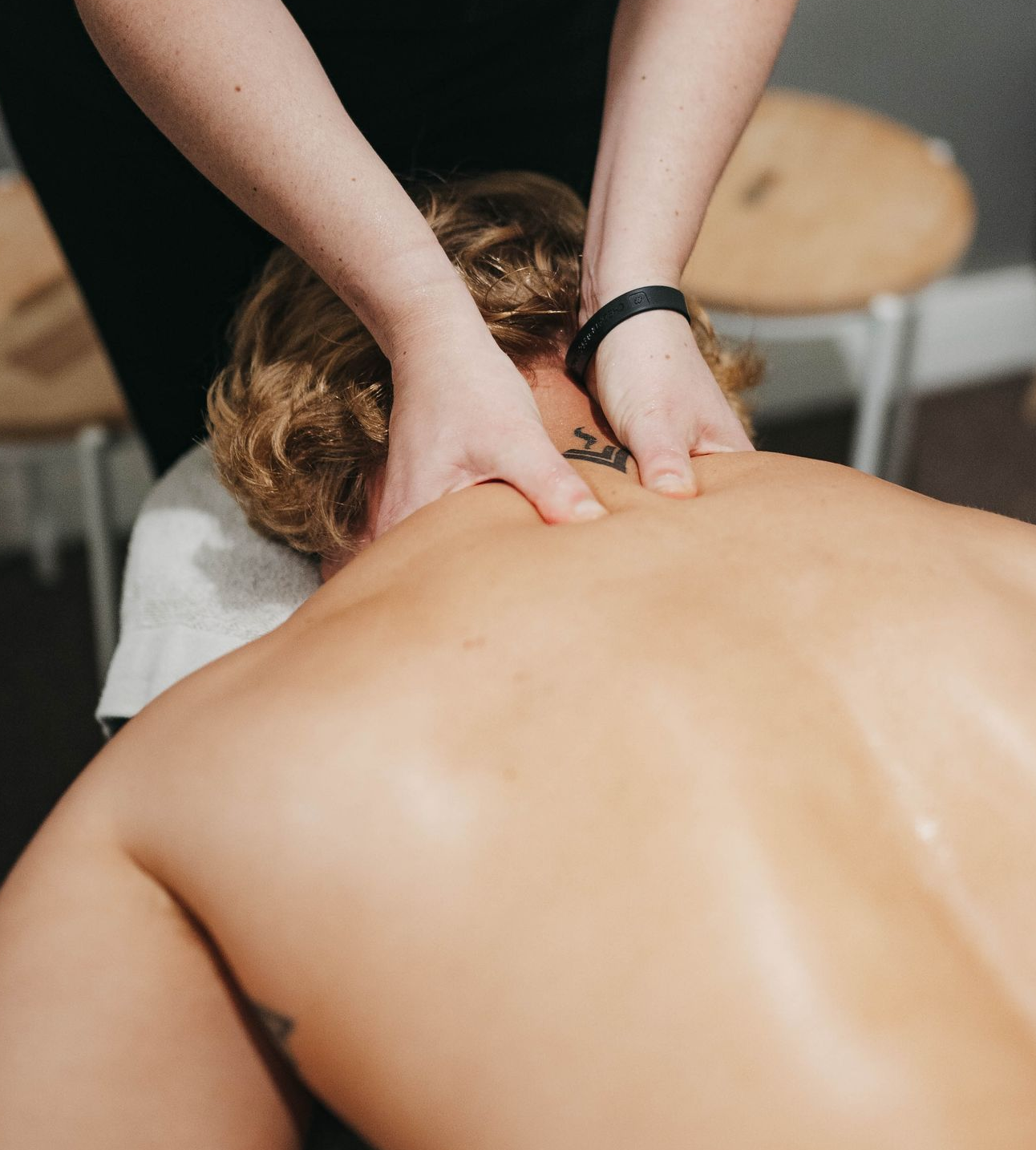
You may have heard (probably from Instagram physios 🙈) that manual therapy is useless and shouldn’t be used in physiotherapy. We respectfully disagree... Is it a magic fix? No. Does it break up scar tissue, “realign” your spine, or release fascia permanently? Also no. But can it reduce pain and help you move better so rehab is more comfortable and effective? Absolutely. What Is Manual Therapy? Manual therapy refers to skilled, hands-on techniques performed by a physiotherapist (or other manual therapists such as massage therapists, osteopaths, chiros and myotherapists). These may include: Joint mobilisations Soft tissue techniques Trigger point therapy Muscle energy techniques Joint mobilisation These techniques are generally chosen based on your presentation and goals. They are not random, they are applied with a clear purpose: usually to reduce pain, improve movement, and make rehab & recovery more achievable. What Manual Therapy Doesn’t Do There are some persistent myths around hands-on treatment. Current research tells us that manual therapy does not: Physically break up adhesions Permanently “release” fascia Push joints back into place Structurally remodel tissue in a short session Your connective tissue is strong and resilient. It is not being reshaped in 30 minutes of treatment. So if it’s not mechanically changing tissue, what is happening? It Influences the Nervous System Pain does not always mean damage. It is often a protective response created by your nervous system. When an area becomes irritated or overloaded, the nervous system may increase sensitivity. This can lead to: Muscle guarding Stiffness Reduced range of motion Increased pain with movement Manual therapy can provide sensory input to the body. Research suggests that this input can help change how the nervous system processes pain signals. In simple terms, it can: Reduce pain sensitivity Decrease muscle tension Improve short-term movement tolerance Help you feel more comfortable moving Rather than “fixing” injured or tight tissues, manual therapy often works by calming a sensitised nervous system. When the system is calmer, movement becomes easier — and that’s where progress begins. It Can Improve Circulation and Tissue Health Hands-on therapy can also increase local blood flow. Improved circulation may support: Oxygen delivery Nutrient exchange Removal of metabolic waste Overall tissue health This doesn’t mean instant healing, but healthy circulation supports the body’s natural recovery processes. Creating a Window for Rehabilitation This is where manual therapy becomes particularly useful, and where we see a huge benefit. If pain levels are high, exercise can feel: Too uncomfortable Too threatening Hard to perform properly If we can reduce your pain with some hands on treatment (even temporarily) that reduction can create a window of opportunity. During that window, we can: Introduce strengthening & rehab movements Improve joint mobility Retrain movement patterns Gradually increase load & tolerance Build confidence Long-term recovery for most musculoskeletal conditions relies on progressive strengthening and improved load tolerance. Manual therapy doesn’t replace exercise. It helps make exercise possible. What Does the Evidence Say? Clinical guidelines for conditions such as low back pain, neck pain, and some shoulder conditions suggest manual therapy can be helpful, especially when combined with exercise. Research generally shows: Manual therapy can reduce pain in the short term It can improve short-term range of motion Outcomes are better when combined with active rehabilitation On its own, manual therapy tends to produce temporary effects. But when paired with strengthening, mobility work, and education, results are typically more meaningful and longer lasting. This reflects modern physiotherapy practice: use hands-on treatment strategically, not exclusively. What About “Maintenance” Treatments? Work, sport & life in general can place repeated demands on the body. If you do things like: Work in a physically repetitive job Sit at a desk for long hours Play regular sport Lift and carry children Train intensely You are regularly placing load on your tissues, and even strong, healthy tissues can become temporarily overloaded. For some people, regular hands on treatments can: Settle flare-ups early Reduce accumulated muscle tension Improve movement quality Help manage symptom build-up Importantly, this should not replace strength, recovery strategies, and load management. It works best as part of a broader plan that includes: Appropriate exercise Good training progression Rest and recovery Self-management strategies The goal of “maintenance” care is not dependency. It’s about supporting a body that is regularly exposed to high or repetitive demands. Think of it less as “fixing something broken” and more as helping your system stay adaptable and resilient. A Balanced Approach Physiotherapy is not “hands-on versus exercise.” It shouldn’t be an either/or decision. At our clinic, manual therapy is: A tool Used when clinically appropriate More often than not, combined with strengthening and mobility work Generally phased out as independence improves Our goal is never to make you reliant on treatment. Our goal is to: Reduce pain Improve movement Build strength Increase confidence Help you manage your condition independently The Bottom Line Manual therapy does not: Permanently change tissue structure Realign your body Act as a stand-alone cure But it can: Reduce pain Calm a sensitive nervous system Improve short-term mobility Support circulation Create a window for effective rehabilitation When combined with tailored, progressive exercise, it can be a very useful part of your recovery. If you’re unsure whether manual therapy is appropriate for your condition, our physios can assess you and design a plan that supports both short-term comfort and long-term goals.