What we have and what it does (in plain English)
At Active Balance we use two VALD devices: the ForceDecks and the Dynamo.
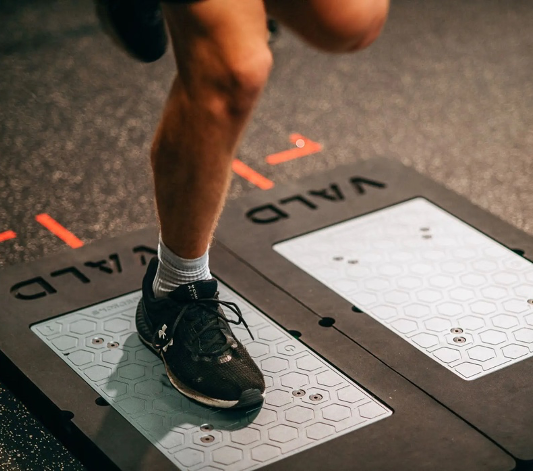
The ForceDecks are two plates that sit on the floor. Think of them as very sophisticated scales that measure not just how much weight you're putting through each leg, but how you're moving, how quickly you're producing force, and how evenly you're sharing load between your left and right side. We use them during tasks like squats, jumps, and single leg movements. They capture data a thousand times per second, which means they pick up things that are completely invisible to even the most experienced eye.
The Dynamo is a handheld device that measures muscle strength objectively. Rather than a physio using their hands to estimate how strong a muscle group is, which is subjective and affected by the clinician's own strength, the Dynamo gives us an actual number. That number can be compared between your left and right side, tracked over time, and measured against research-based benchmarks for your age, weight, and activity level.
Not long ago, this kind of technology lived exclusively in the performance labs of professional sporting clubs and university research facilities. AFL teams, NRL clubs, Olympic programmes, the kind of environments where marginal gains matter enormously and the budget exists to pursue them. The fact that it's now accessible in everyday clinical settings is genuinely a good thing. It means the tools that were once reserved for elite athletes are now available to the weekend runner, the person recovering from a knee reconstruction, the tradie trying to get back to work, and the 60-year-old wanting to know where their strength is really at.
But that shift also comes with a risk. When a technology moves from elite sport into mainstream clinical practice quickly, it doesn't always bring the expertise along with it. And that's the part worth having a conversation about.
The gimmick risk is real…
Something the industry doesn't talk about enough: owning this equipment and using it well are two completely different things.
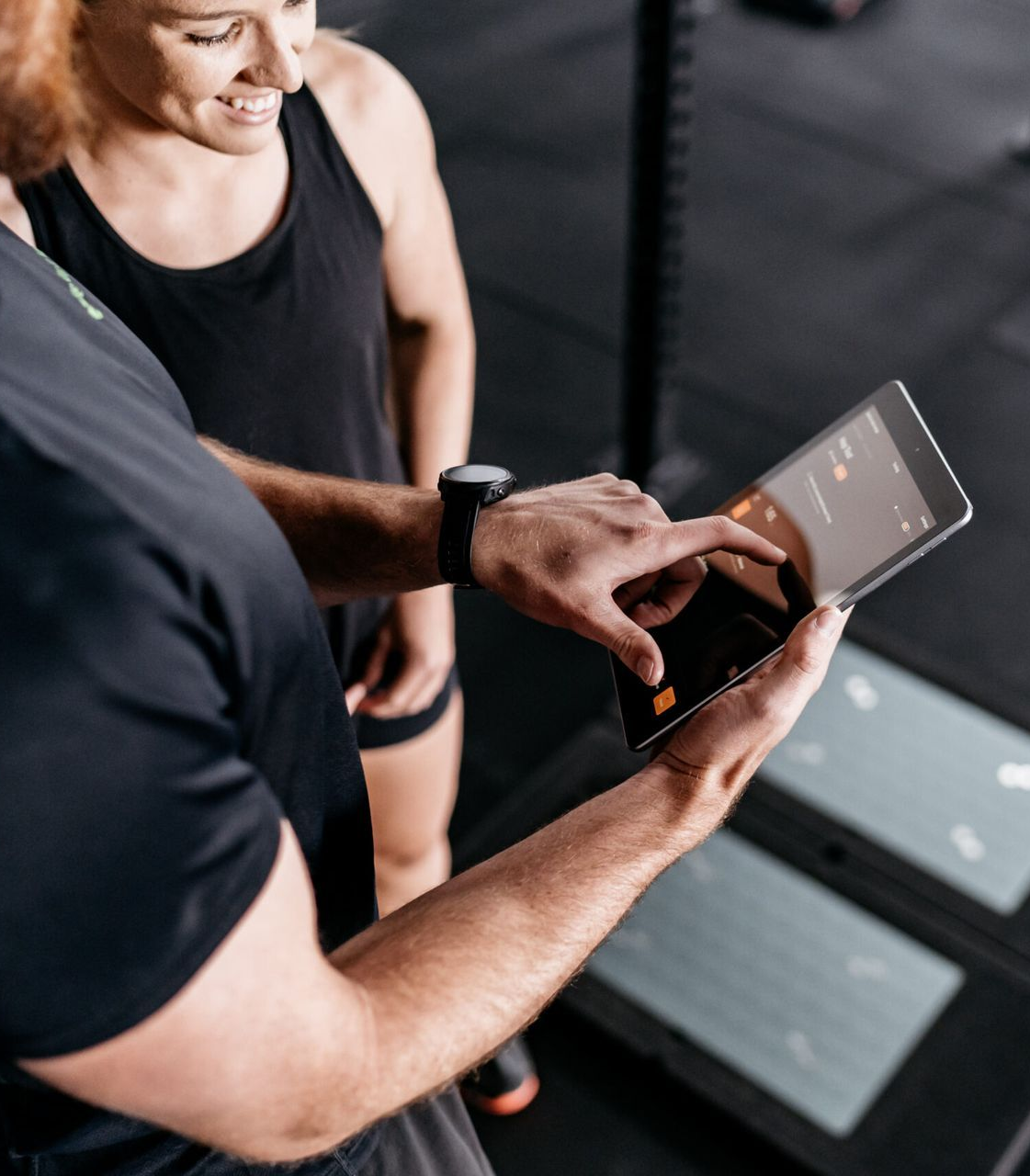
Any clinic can purchase force plates, run someone through a few tests, and produce a report full of graphs and percentages in fifteen minutes. It looks impressive. But if the clinician on the other side of the desk can't explain what those numbers mean for your specific situation, your injury history, your goals, your body, your sport or job, then it's an expensive PDF.
We've had patients come to us after testing elsewhere, printout in hand, with no real understanding of what it showed or how it was going to affect their treatment. That's not clinical testing. That's theatre.
The data is only as good as what happens with it. Which brings us to what we actually use it for.
Where it genuinely makes a difference..
Finding out why you keep getting niggles -
running assessments
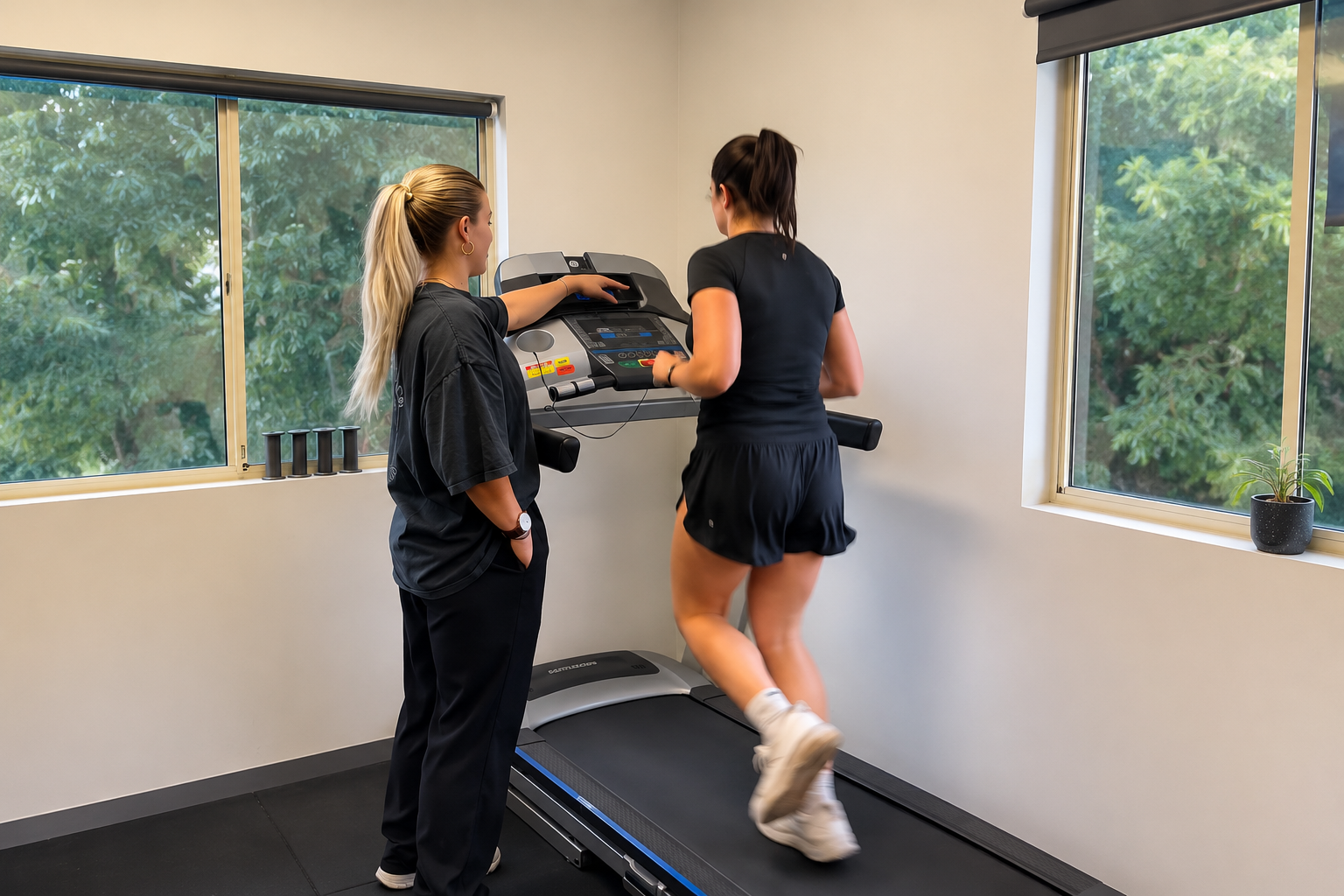
One of the areas we find the ForceDecks and Dynamo most valuable is in running assessments, and it's one that surprises people.
When a runner comes in with a recurring issue (e.g. ITB syndrome that keeps flaring, a calf that goes every few months, a knee that grumbles on longer runs etc) the question isn't just what is sore. It's why it keeps happening. And the answer is often in how load is being distributed.
The ForceDecks can show us during a squat or a single leg task whether you're consistently overloading one side, whether your landing mechanics are putting excessive stress through a particular structure, or whether one hip or quad is doing significantly less work than it should. The Dynamo can identify strength deficits that feel normal to you because they've always been there, but that are quietly driving the problem.
Combined with a full running assessment looking at your technique, training load, and history, this gives us a much more complete picture than observation alone. We're not just treating the sore spot. We're identifying why it became sore in the first place, which is really the only way to actually stop it coming back.
Injury prevention and performance screening
You don't have to be injured to benefit from this kind of testing. For athletes heading into a pre-season, people ramping up training for an event, or anyone who wants to understand where their body is at before something goes wrong, a strength and movement screen using the ForceDecks and Dynamo can identify asymmetries and deficits that are risk factors for injury.
Think of it like a warrant of fitness. Everything might feel fine, but if one leg is producing significantly less force than the other, or if your landing mechanics are consistently putting stress through a structure that isn't conditioned for it, that's worth knowing before it becomes a problem rather than after.
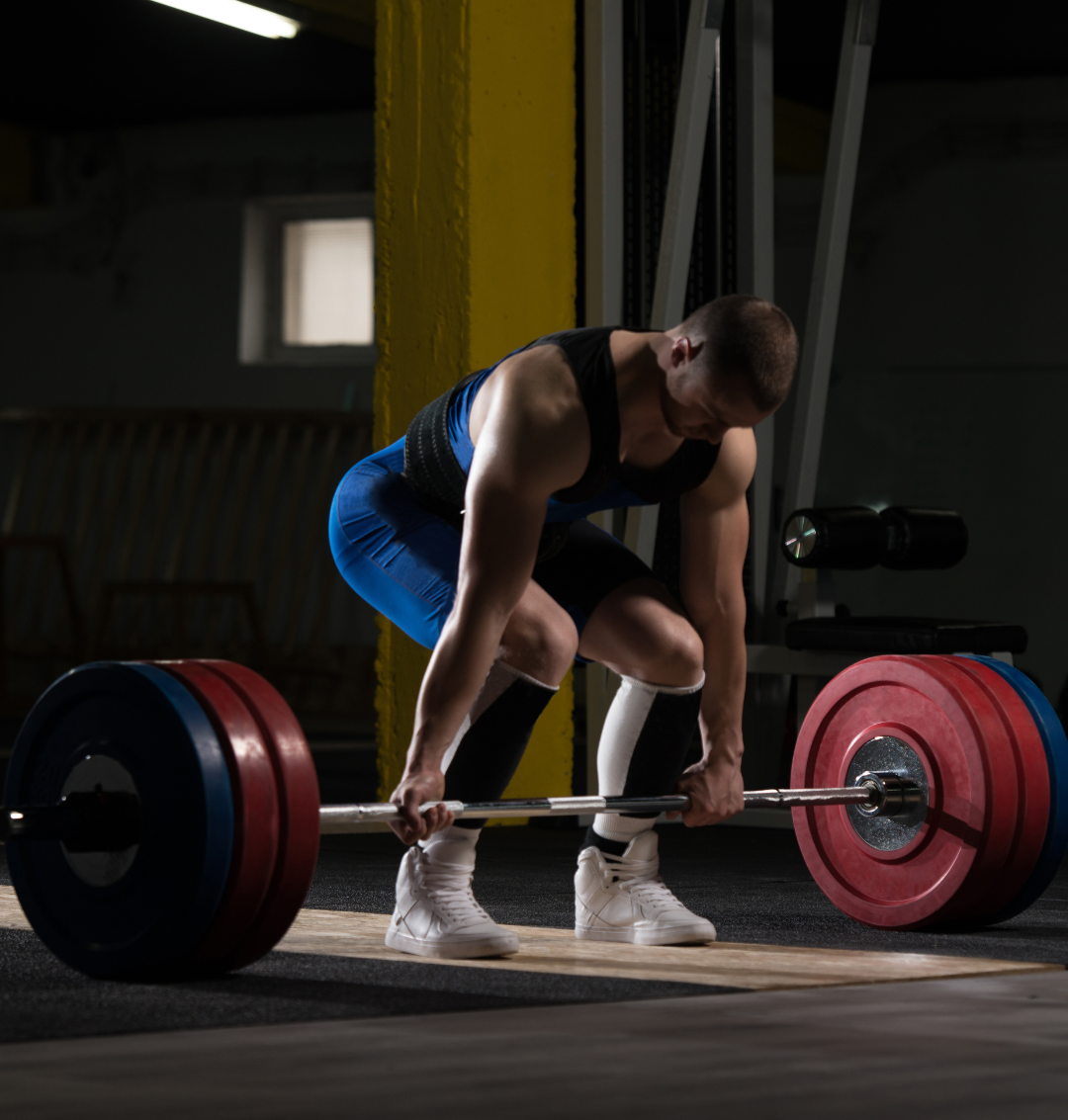
For coaches and strength and conditioning staff working with athletes, this data is particularly useful. We can provide detailed reports that give an objective picture of where an athlete is at, not just a clinical opinion, but numbers that can inform programming and load management decisions.
Rehabilitation - tracking what you can't feel
During rehabilitation, people often feel like they're progressing well before their body has actually restored the capacity needed to return to what they were doing. Pain settles. Movement improves. Things feel pretty normal. And then they go back to training and something goes wrong again.
The ForceDecks and Dynamo give us an objective check on that perceived progress. If your strength symmetry between legs is at 74%, we can see it, even if you feel fine. If your landing mechanics are still showing a significant asymmetry at four months post-surgery, we can address it specifically rather than assuming things have sorted themselves out.
This is particularly important for people returning from significant injuries where the stakes of going back too early are high.
Return to sport and
return to work
Deciding when someone is ready to return to sport after a significant injury is one of the most important calls in rehabilitation, and historically it's been made on a combination of time elapsed, how someone feels, and clinical observation. None of those three things are sufficient on their own.
The research on
ACL re-injury rates, for example, is sobering. Athletes who return before meeting objective strength and symmetry criteria have significantly higher re-injury rates than those who do. The nine-to-twelve month timeframe you'll often hear quoted is a guide, not a guarantee, and without objective data, it's genuinely difficult to know which side of the line someone is on.
Using the ForceDecks and Dynamo, we can assess quadriceps and hamstring strength symmetry, single leg power output, landing mechanics, and force production, all benchmarked against research-supported return-to-sport thresholds. That gives both the clinician and the patient something concrete to work toward, and a defensible basis for the clearance decision.
The same principle applies to return to work. For someone in a physically demanding job, a tradie, a nurse, someone who works on their feet, returning before their body is genuinely ready creates real risk. Objective data from a Dynamo strength assessment and ForceDecks movement testing gives a clear picture of functional capacity that goes well beyond "feels okay."
Reports that actually mean something to the people who need them
Who is this testing actually for?
To be direct about it, not everyone needs this, and we'll tell you honestly if you don't. But these are the people where it genuinely changes what we do and what we know:
- Runners and athletes with recurring injuries that haven't fully resolved with standard treatment. If something keeps coming back, the answer is usually in the data.
- Anyone returning to sport after ACL reconstruction, knee or hip surgery, or a significant muscle injury. Criteria-based return to sport using objective testing is the current best-practice standard, and the ForceDecks and Dynamo are among the best tools available for it.
- People preparing for a season, an event, or a significant increase in training load who want to know where their body is at before committing.
- Anyone in a physically demanding job navigating a return to work after injury — particularly where there's a WorkCover or insurance component and objective evidence of capacity is required.
- Coaches, S&C staff, or sporting clubs wanting objective athlete screening data that can feed directly into programming.
- Older adults where tracking genuine strength progress matters both for motivation and for making good clinical decisions about what to do next.
For a straightforward presentation that doesn't involve any of these questions, you generally don't need force plates or advanced data. Knowing when not to use a tool is as important as knowing how to use it well.
The honest version
We’ve invested in the ForceDecks and Dynamo because the data makes us better clinicians for the right patients, not because it looks good on the website. The technology has made its way from elite sport into everyday clinical practice, and that's a really positive development. But it only delivers on its potential when the clinician using it knows what they're looking for, why it matters, and what to do about it.
If you're considering testing anywhere, the questions worth asking aren't about which devices the clinic owns. They're about what the clinician will actually do with the results, how the testing fits into your overall management, and whether the person interpreting your data has the experience to make it genuinely useful.
We'd like to think we can answer those questions well. If you'd like to find out whether testing makes sense for your situation, come in and have a conversation first.